President Prabowo Subianto's signature free nutritious meal programme faces a critical juncture as beneficiaries, programme operators, and civil society groups voice escalating concerns about food quality, administrative failures, and the programme's actual reach to those most in need. The initiative, originally designed to combat childhood stunting and malnutrition across Indonesia, has encountered mounting resistance from its intended recipients, who are increasingly vocal about their willingness to forgo assistance entirely if it means the government can redirect resources toward addressing fundamental operational shortcomings.
The backlash gained particular momentum following the case of Nesti Nagari, a 29-year-old mother from Kediri in East Java, who discovered her eight-month-old infant's meal consisted of an unidentifiable clumped white paste that she deemed unsuitable for consumption. Rather than feed the meal to her child, she ultimately gave it to her chickens—a decision she documented and shared publicly on social media platform Threads, where the post accumulated over 11,000 likes. Nagari's experience, while striking, represents merely the most visible among numerous complaints emerging from beneficiaries across multiple provinces about the quality, nutritional balance, and presentation of meals being distributed under the programme.
For Nagari, the incident crystallized a deeper concern about the programme's necessity for her household. Speaking to The Jakarta Post, she explained that she possesses sufficient means and knowledge to prepare nutritious meals for her child independently, making her inclusion in the programme questionable from a targeting perspective. More significantly, she voiced support for a temporary suspension of the entire initiative to allow comprehensive evaluation and potential reallocation of funds toward other pressing social needs, particularly education and healthcare infrastructure. Her position reflects a growing sentiment among middle-income beneficiaries that the programme's benefits could be better deployed elsewhere in Indonesia's stretched social budget.
Similar frustrations emerge from Diah Farika, a breastfeeding mother in Semarang, Central Java, who enrolled in the programme in May and has documented repeated issues with meal quality and appropriateness. Her photographs reveal portions she considers inadequate alongside items including unripe fruit, suggesting serious lapses in meal planning and procurement standards. When Diah raised these concerns with the nutrition fulfillment service unit (SPPG) responsible for meal preparation, she encountered dismissive responses rather than corrective action. Like Nagari, Diah has come to support programme suspension, but for a specific purpose: she believes the National Nutrition Agency (BGN), which oversees the initiative's implementation, should conduct comprehensive kitchen inspections across the network before resuming operations.
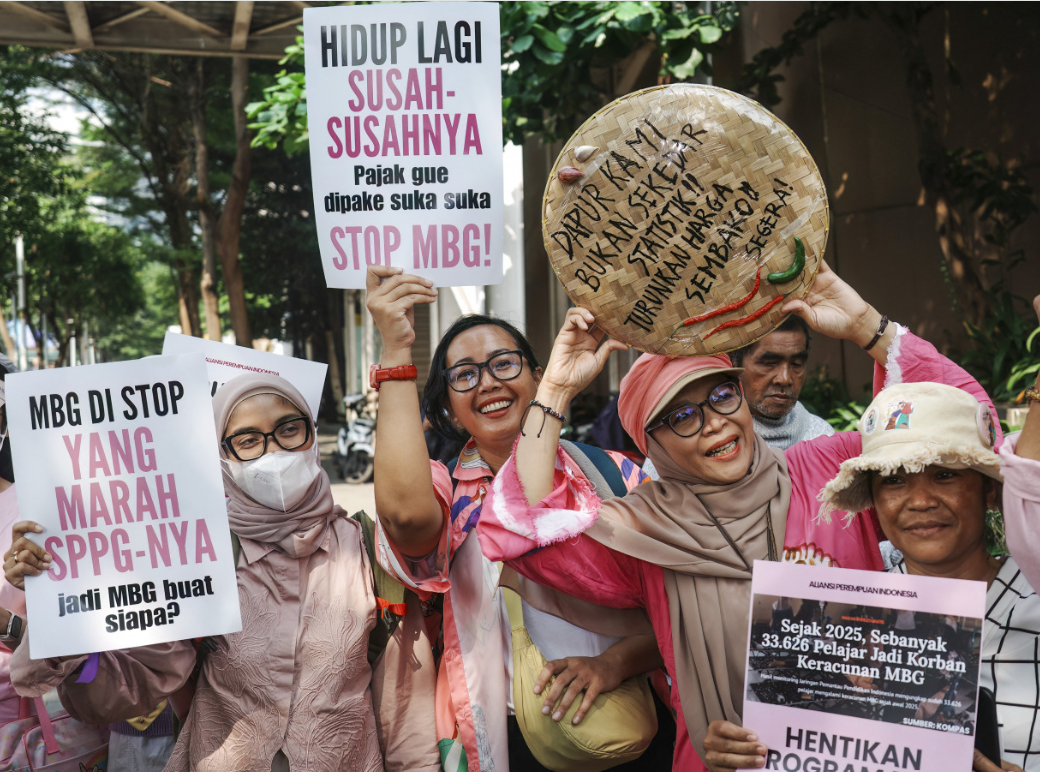
The concerns articulated by individual beneficiaries have resonated with broader advocacy movements. On Thursday, dozens of women's rights activists organized under the Indonesian Women's Alliance (API) staged a public rally in Central Jakarta explicitly calling for the government to halt and thoroughly review the programme. This convergence of individual complaints and organized activism signals that opposition extends beyond isolated incidents to represent systematic concerns about programme design, kitchen management, and resource allocation. The rallies reflect growing public scepticism about whether the substantial government investment translates into genuine benefits for vulnerable populations.
Paradoxically, even as beneficiaries demand improvements, programme operators and investors face mounting uncertainty about the initiative's future viability and profitability. A recent corruption scandal involving former BGN leaders has prompted the agency's new leadership to freeze further expansion of the SPPG kitchen network, which currently comprises approximately 27,000 facilities nationwide. This decision has alarmed investors who have committed hundreds of billions of rupiah toward establishing these kitchen operations. Reports indicate that investor delegations visited BGN offices seeking assurances regarding their capital recovery should the programme be terminated or significantly downsized—a scenario that now appears plausible given mounting public and official scrutiny.
Operational disruptions have compounded investor anxieties. Several SPPG facilities reported temporary closures in early June due to delayed government funding transfers, though some subsequently reopened following budget disbursement. These funding gaps underscore deeper questions about the programme's fiscal sustainability and the government's capacity to manage such an ambitious initiative. MBG Watch, an independent civil society oversight platform, has highlighted how these cumulative problems have progressively eroded public confidence in the programme, with parents and citizens questioning whether the enormous budget allocation genuinely serves nutritional needs or primarily benefits intermediaries and service providers.
The scale of the financial commitment remains staggering. The 2026 budget for the programme was initially set at Rp 335 trillion (US$18.74 billion) before being reduced to Rp 268 trillion following public pressure over the programme's cost and its implications for education funding—demonstrating that controversies surrounding the initiative have reached sufficient magnitude to influence government budget priorities. Policy researcher Isnawati Hidayah from the Center of Economic and Law Studies (CELIOS) emphasizes that this extraordinary expenditure demands rigorous scrutiny regarding its actual beneficiary base and outcomes. A CELIOS study revealed that approximately 34 per cent of current programme recipients—roughly 61 million children and pregnant women—do not belong among Indonesia's most economically vulnerable populations, instead including households with adequate nutrition access and secure economic status.
Recognizing these targeting failures, the BGN has initiated a beneficiary recalibration process, removing recipients assessed as capable of meeting nutritional needs independently. As of the latest reporting, the agency had discontinued the programme across 76 schools throughout Java, directly affecting more than 39,000 beneficiaries. Deputy head and spokesperson Agustina Arumsari characterized this contraction as necessary refocusing to concentrate resources on Indonesian citizens genuinely requiring government nutritional assistance, indicating official acknowledgement that the programme's original scope exceeded appropriate targeting parameters.
Beyond beneficiary reductions, the agency is implementing efficiency measures including the termination of daily kitchen incentives during non-operational periods and systematic evaluation of underperforming facilities. These administrative adjustments suggest that while the programme's fundamental approach remains intact, the Prabowo administration is responding to mounting pressure by introducing stricter operational controls and fiscal discipline. However, critics argue these incremental adjustments may prove insufficient without addressing deeper structural problems concerning kitchen management quality, meal preparation standards, and the overall programme's contribution to measurable nutritional outcomes.
The unfolding situation presents a critical test for the Indonesian government's capacity to implement large-scale social programmes effectively. The willingness of beneficiaries to forgo assistance in exchange for improved quality represents a significant challenge to the narrative of universal enthusiasm for expanded social safety nets. It suggests that Indonesian citizens, particularly those with modest means who genuinely require support, prioritize tangible quality and appropriateness over programme expansion for its own sake. For policymakers across Southeast Asia monitoring Indonesia's experience, the lesson is clear: scale and funding alone cannot substitute for rigorous targeting, operational competence, and sustained quality management in social assistance programmes.

