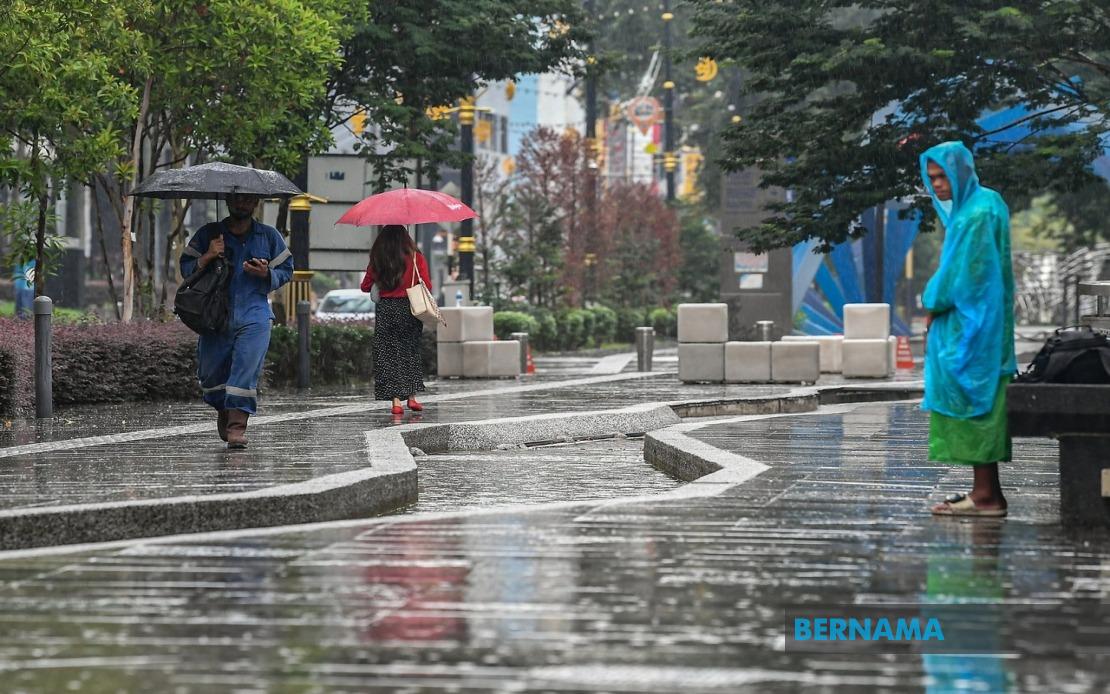
Weather officials have cautioned that rainfall will hamper nomination day activities across a significant portion of Johor on June 27, with seven of the state's ten districts expected to experience wet conditions during the morning hours when prospective candidates formally register their candidacies for the state election.
Azlai Ta'at, Johor's representative at the Malaysian Meteorological Department, indicated that Johor Bahru, Muar, Batu Pahat, Kota Tinggi, Pontian, Tangkak and Kulai face the likelihood of morning precipitation. In contrast, the remaining three districts—Segamat, Kluang and Mersing—are expected to enjoy generally clear skies during the early part of the day, though conditions will deteriorate across much of the state by afternoon. The meteorological outlook underscores a pattern of instability that will characterise the opening of formal campaigning.
Temperature readings throughout Johor are anticipated to remain within typical patterns for the season. Minimum values will hover between 24 and 25 degrees Celsius, while peak daytime temperatures are projected to range from 31 to 34 degrees Celsius. Segamat, situated inland away from coastal moderating influences, is expected to record the highest maximum temperature, potentially reaching 34 degrees Celsius. These readings, though not extreme, combined with the moisture-laden conditions, may create uncomfortable circumstances for campaign workers and voters navigating polling logistics.
The afternoon period presents a particularly challenging forecast, with thunderstorm development anticipated across multiple zones. Johor Bahru, Segamat, Kluang, Kota Tinggi, Pontian, Mersing and Kulai are all expected to experience afternoon thunderstorms with associated strong winds and potential heavy downpours. Batu Pahat and Tangkak will face rainfall, though without the thunderstorm intensity of other regions. Only Muar appears likely to remain largely dry and hot. This concentrated afternoon instability means that the campaign period, which formally commences immediately after the nomination process concludes, will begin under decidedly wet conditions.
Nomination proceedings are scheduled to run between 9 am and 10 am across 56 designated centres throughout the state, with returning officers subsequently announcing the roster of eligible candidates. The compressed two-hour window, combined with the rain forecast for much of the state, may create logistics challenges as supporters accompany candidates to registration centres. MetMalaysia has advised both the public and campaign supporters to remain vigilant regarding weather developments and to take appropriate precautions against the approaching precipitation.
The candidate slate reflects the ongoing fragmentation of Malaysia's political landscape. Pakatan Harapan is contesting all 56 seats through its constituent parties, with PKR fielding 20 candidates, Amanah 19 and DAP 17. Barisan Nasional maintains its traditional competitive presence by also contesting the entire state, deploying 36 UMNO candidates alongside 16 from MCA and four from MIC. Perikatan Nasional, meanwhile, has pursued a selective strategy, with PAS contesting 11 seats, Bersatu 16, the Malaysian Indian People's Party five, and Pejuang one. Newer entrants to the contest include the Malaysian United Democratic Alliance with four candidacies, Parti Sosialis Malaysia with one, and Parti Bersama Malaysia, which is making its electoral debut with 15 nominations.
The electoral exercise encompasses 2,727,926 registered voters across the state, comprising 2,703,175 ordinary voters and 24,751 personnel from the military, police and their respective spouses. This voter base represents the pool from which officials will draw support during early voting on July 7 and the main polling day scheduled for July 11. The scale of the electorate underscores the significance of this contest within Malaysia's devolved political structures and the strategic importance Johor maintains within the broader national political calculus.
For Malaysian and regional observers, the Johor election serves as a barometer of shifting political allegiances in one of the nation's most established political jurisdictions. The state has historically functioned as a stronghold for establishment political forces, yet recent years have witnessed increasing electoral competitiveness. The expanded slate of contesting parties, particularly the emergence of Parti Bersama Malaysia as a new entrant, signals ongoing realignment within the political spectrum. The weather disruptions on nomination day, while superficially administrative matters, may subtly influence voter perception regarding campaign momentum and organisational capacity of competing coalitions as they commence their appeal to the electorate.
The coordination required to manage a 56-seat contest across ten geographically dispersed districts, particularly under adverse weather conditions, tests the institutional capacity of the Election Commission and the participating political organisations. Rain-related delays or difficulties during nomination could create scheduling pressures throughout the abbreviated campaign period, potentially constraining the time available for candidates to engage voters directly. For state governments and local authorities, the weather forecast necessitates contingency planning to ensure uninterrupted service delivery at nomination centres and to maintain security arrangements for candidates and officials.

