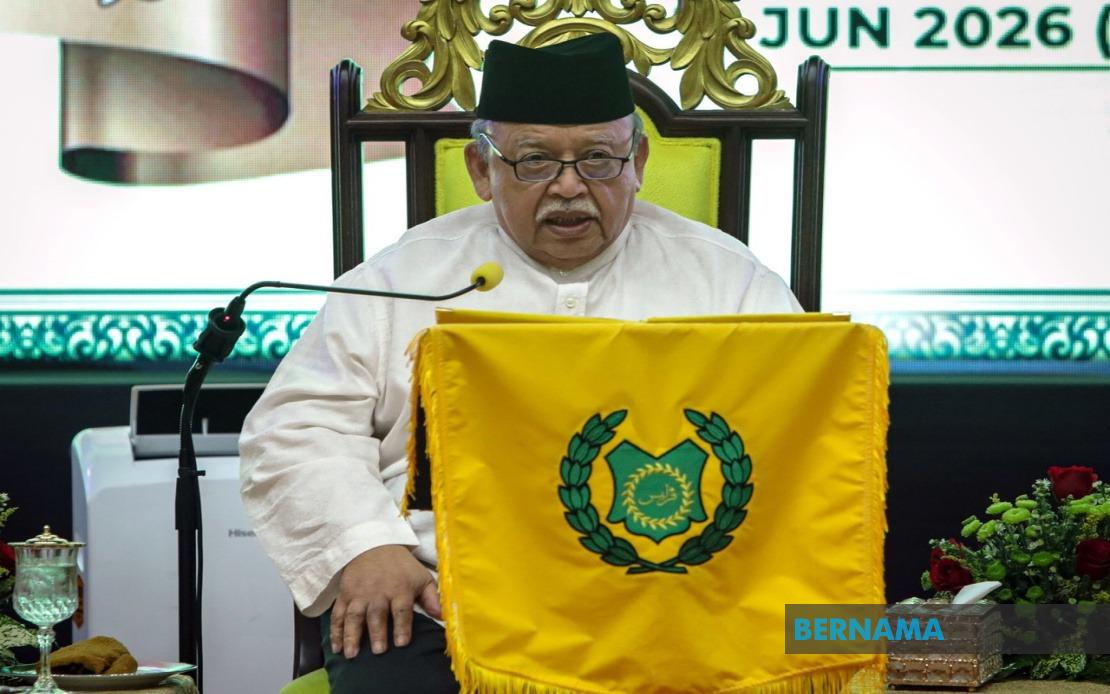
At the state-level Maal Hijrah 1448H/2026M celebration in Kangar on June 18, the Raja of Perlis, Tuanku Syed Sirajuddin Jamalullail, delivered a forceful message about the moral foundations necessary for national advancement. The Ruler emphasised that meaningful progress cannot be reduced to concrete and steel, but instead requires a population grounded in knowledge, ethical conduct and shared purpose.
The Raja's intervention arrives at a moment when Malaysia continues grappling with governance challenges and public trust in institutions remains a live concern. By anchoring his call to anti-corruption efforts within a broader framework of character development and spiritual orientation, Tuanku Syed Sirajuddin positioned integrity not merely as a compliance issue but as a civilisational necessity. He urged citizens to view their work as an act of worship and to discharge their responsibilities with sincerity, framing professional ethics within a religious context that resonates deeply in the Malaysian context.
Central to the Ruler's vision is a reframing of what the MADANI concept—the government's ongoing nation-building initiative—should genuinely encompass. Rather than accepting the conventional metric of economic growth and infrastructure projects, Tuanku Syed Sirajuddin argued for a holistic understanding of progress that includes intellectual advancement, cultural preservation, mature deliberation and the strength of communal bonds. This represents a significant philosophical statement about priorities, implicitly suggesting that material development divorced from moral grounding produces hollow gains.
The emphasis on knowledge and learning reflects recognition that Malaysia's future competitiveness depends on human capital rather than natural resources alone. By coupling this with explicit calls for integrity and accountability, the Ruler connected educational ambition to ethical practice—a necessary pairing often overlooked in technical discussions of productivity and growth. The message carries particular weight coming from a hereditary ruler, whose position itself depends on traditions of honour and trustworthiness.
Perlis, as one of Malaysia's smaller northern states, occupies a distinctive position in the federation. The Raja's pronouncements therefore carry significance beyond provincial boundaries, offering moral leadership that the federal establishment can either embrace or ignore. In recent years, various Malaysian leaders have made similar calls for ethical governance, yet implementation gaps remain substantial. Tuanku Syed Sirajuddin's intervention adds weight to growing pressure from multiple institutional spheres for genuine cultural change rather than rhetorical commitment.
The Ruler also sounded a clarion call regarding Malaysia's preparedness for structural transformations reshaping the global economy and society. Technological disruption, artificial intelligence proliferation, rapid social change and international economic volatility represent headwinds that demand proactive engagement rather than passive adaptation. By urging Malaysians to become initiators and leaders rather than observers, Tuanku Syed Sirajuddin articulated a vision of national agency—the notion that Malaysia can shape its destiny rather than merely react to external pressures. This perspective challenges complacency and assumes capability within the population.
The integration of Islamic scholarship into his framework—emphasising authentic understanding grounded in the Quran and Sunnah—reflects the central role that religious identity and interpretation play in Malaysian public discourse. The Ruler's call for religious and political maturity operates on multiple registers simultaneously: it addresses the pious dimension of citizenship while implicitly cautioning against ideological rigidity or sectarian excess. The balancing of religious conviction with civilised political culture suggests a model of nation-building that acknowledges Malaysia's religious composition whilst maintaining pluralistic governance norms.
The ceremony also recognised contributions through the Perlis Tokoh Maal Hijrah award, presented to Datuk Izham Mahmud in his capacity as Yayasan Tuanku Syed Putra board member. This ceremonial element embedded the abstract exhortations about integrity and accountability within concrete recognition of individual effort, suggesting that the Ruler's words carried practical intent rather than mere philosophical musing. Awards and public recognition function as incentive mechanisms and behavioural signals within organisational and social systems.
The presence of the Raja Muda of Perlis, Tuanku Syed Faizuddin Putra Jamalullail, and the Raja Puan Muda, Tuanku Dr Hajah Lailatul Shahreen Akashah Khalil, underscored the family's collective commitment to the occasion and its messaging. Palace involvement in state-level commemorations carries symbolic weight, suggesting that the institution itself endorses the values being promoted. This institutional backing matters in contexts where hierarchical respect and traditional authority remain culturally significant.
For Malaysian readers and policymakers, the Raja's address offers a framework for evaluating national progress that extends beyond GDP figures and infrastructure completion rates. It poses uncomfortable questions about whether Malaysia's pursuit of developed-nation status has neglected the human and moral dimensions that sustainable progress requires. The call for courage, intelligence and self-reliance as defining characteristics of Perlis's people represents an aspirational vision that other states and the federal government might usefully consider.
The emphasis on preparing for contemporary challenges whilst maintaining cultural and religious authenticity reflects tensions that all Muslim-majority nations navigate. Malaysia's challenge involves embracing technological and intellectual advancement whilst preserving the values and traditions that give citizens identity and social cohesion. The Ruler's framing suggests these objectives need not conflict if pursued with wisdom and intentionality.
Looking forward, the effectiveness of such pronouncements ultimately depends on whether they catalyse institutional change and individual behavioural transformation. Public statements by respected figures carry influence but remain insufficient without supporting systems, incentive structures and accountability mechanisms. The test of Tuanku Syed Sirajuddin's message will lie not in its rhetorical appeal but in whether it galvanises genuine commitment to integrity and competence across Malaysian society.