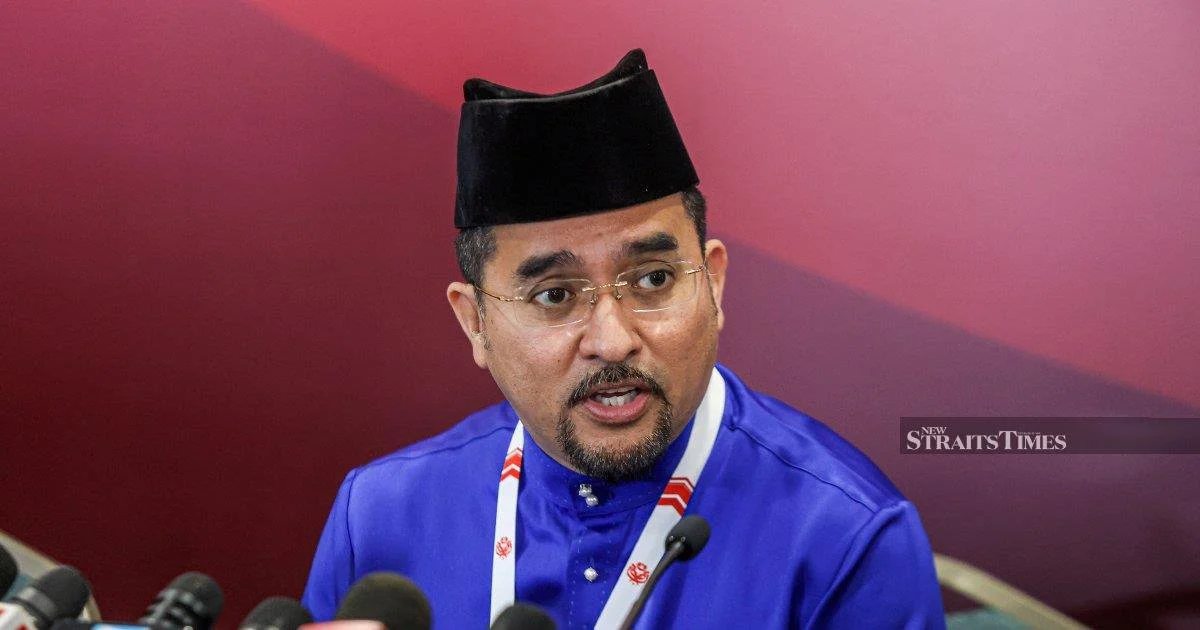
Barisan Nasional's delayed announcement of its candidates for the Johor state election stemmed from an intensive evaluation procedure designed to ensure quality nominations, Umno secretary-general Datuk Dr Asyraf Wajdi Dusuki disclosed on Monday. The coalition coalition faced mounting pressure from observers and rival parties following the extended timeline for revealing its candidate slate, prompting the party leadership to publicly explain the circumstances behind the postponement.
The vetting mechanism implemented by the BN selection committee represented a deliberate commitment to scrutinising potential nominees across multiple dimensions before formal endorsement. Rather than rushing announcements to meet arbitrary deadlines, the coalition's leadership opted for a measured approach that examined candidates' track records, community standing, financial probity, and ability to represent their constituencies effectively. This methodology, while extending the timeline, reflected an effort to strengthen the coalition's electoral positioning through careful personnel selection.
For Malaysian political observers, the explanation carries significance beyond routine administrative procedure. Coalition politics in Malaysia demands balancing the interests of multiple parties—Umno, MCA, MIC, and others—each with competing claims to particular constituencies and negotiating power. The vetting delay likely masked complex negotiations among these coalition partners over seat allocations, with each party pushing for advantageous nominations in the Johor state assembly races. What the Umno secretary-general framed as quality control may equally have reflected the time required to reach consensus among coalition heavyweights.
Johor holds particular strategic importance for Barisan Nasional's broader political recovery. As a traditionally Umno-stronghold, the state remains crucial for the coalition's credibility and financial resources. Recent political shifts in Malaysia have threatened BN's dominance in several key states, making Johor a testing ground for whether the coalition can reassert control and begin reversing electoral losses suffered in 2018 and subsequent contests. The calibre of candidates selected thus affects not merely the state election but signals the coalition's capacity to field competitive nominees nationwide.
Datuk Dr Asyraf Wajdi Dusuki's public defence of the vetting process also served to reframe what critics characterised as organisational sluggishness into a virtue of diligence. In Malaysian political discourse, where accusations of corruption, nepotism, and cronyism have damaged BN's public perception, emphasising rigorous screening procedures—whether implemented strictly or not—represents an attempt to rebrand the coalition as reformed and merit-conscious. The narrative control aspect of the announcement cannot be separated from its substantive content.
The Southeast Asian context further illuminates this episode. Across the region, coalition governments face similar challenges reconciling multiple partners' demands with coherent electoral strategy. Thailand's complex coalition arrangements, Indonesia's regional power-sharing agreements, and the Philippines' factional dynamics all require extensive negotiation before candidate announcements. BN's experience reflects broader patterns whereby multiparty coalitions struggle to balance inclusivity with decisiveness, transparency with necessary confidentiality during negotiations.
For Malaysian voters in Johor, the delayed announcements created uncertainty about which candidates would represent their interests and which coalition members would contest particular seats. Extended timelines can disadvantage candidates who have less opportunity to campaign and build grassroots momentum, potentially affecting their electoral prospects regardless of their actual suitability. Conversely, the additional preparation period allows selected nominees to strengthen their organisational networks and refine their campaign messaging before official campaigning commences.
The screening methodology's comprehensiveness also carries implications for governance quality post-election. Candidates subjected to rigorous vetting regarding financial transparency, ethical standards, and administrative competence may theoretically produce more effective state assemblymen and better governance outcomes. However, the gap between stated vetting standards and actual implementation often proves substantial in Malaysian politics, where personal connections and party loyalty frequently override formal criteria during selection processes.
Government and opposition alike maintain stakes in candidate quality perceptions. Strong BN nominations strengthen the ruling coalition's electoral prospects and reinforce public confidence in institutional structures. Conversely, if selected candidates prove subsequently embroiled in scandals or demonstrate incompetence, the vetting process itself faces retroactive criticism as inadequate or merely theatrical. The coming Johor state election will partly serve as a referendum on whether BN's extended deliberation period genuinely produced superior nominees or simply delayed the inevitable.
Looking forward, the timing of the Johor election—and more broadly, when Malaysia holds its next general election—creates political rhythm pressures that inevitably constrain how extensively coalitions can vet nominees. Electoral calendars and campaign logistics impose practical limits on deliberation regardless of leaders' preferences for thoroughness. Understanding these structural constraints helps explain why even well-intentioned vetting processes may appear inadequate in hindsight when elected representatives subsequently underperform.

