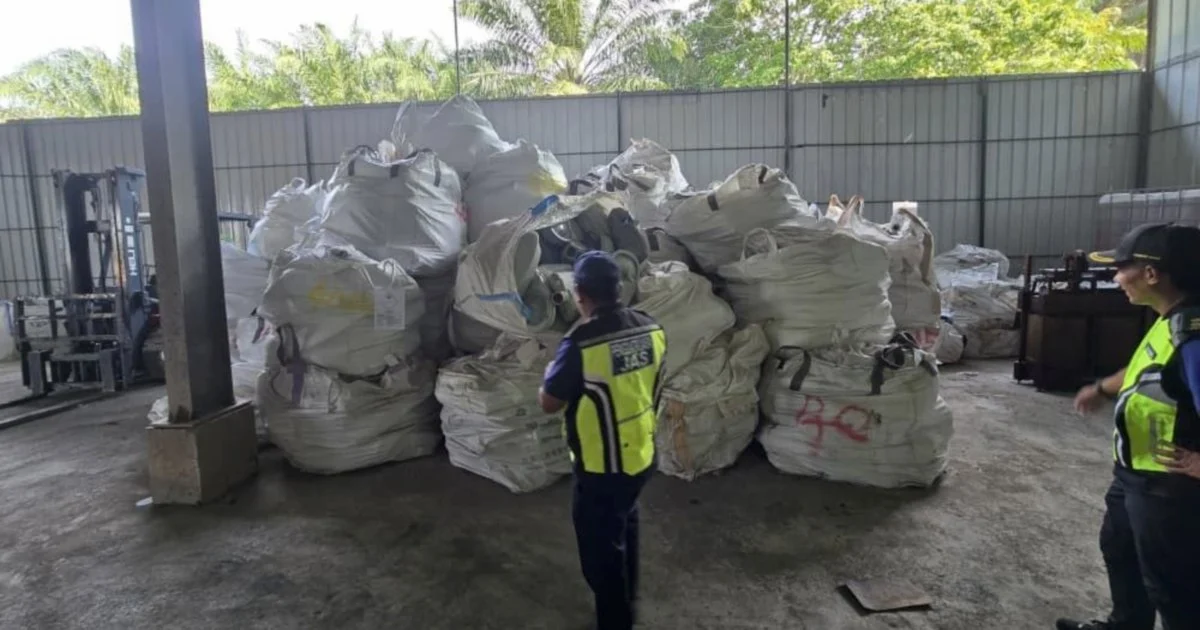
The General Operations Force (GOF) has dismantled a significant illegal e-waste recycling operation in Gambang, Kuantan, following a large-scale enforcement action that resulted in the seizure of materials valued at RM6.4 million. The operation represents a substantial effort by authorities to combat the growing problem of unregulated electronic waste handling in Pahang, where such illicit facilities often operate outside environmental and workplace safety regulations.
The facility, which operated without proper licensing or oversight, housed various categories of electronic refuse that had been stockpiled for what investigators believe was unauthorised processing and disposal. The sheer volume and value of confiscated materials underscores the scale of the illegal e-waste trade in the region, a parallel market that thrives where legitimate recycling infrastructure remains limited. The detained factory manager is currently assisting authorities with their inquiries regarding the operation's supply chain, storage methods, and intended distribution of processed materials.
E-waste constitutes one of the fastest-growing waste streams globally, and Malaysia faces particular challenges in managing the influx of discarded electronics from both domestic consumption and imported devices. The presence of illegal processing facilities reflects insufficient capacity within the formal recycling sector and the financial incentives created when operators ignore environmental compliance costs. Such unregulated operations typically extract precious metals and recyclable components using crude methods that expose workers and surrounding communities to hazardous substances including lead, mercury, and cadmium.
The Gambang discovery occurs amid intensifying regulatory scrutiny of e-waste management across Southeast Asia, where rapid technological adoption has outpaced the development of circular economy infrastructure. Malaysia's Department of Environment has previously identified illegal dismantling and recycling sites as significant sources of soil and water contamination. The Kuantan seizure demonstrates the GOF's renewed commitment to dismantling these operations, though the persistence of such facilities suggests enforcement remains challenged by the scale of the problem.
Worker safety represents a critical concern within these illicit recycling operations. Individuals employed at such sites typically lack protective equipment, occupational safety training, and access to medical monitoring for exposure to toxic materials. The working conditions in these facilities frequently contravene Malaysian labour standards and occupational safety regulations, creating additional legal exposure for facility operators beyond environmental violations. Authorities are investigating whether other workers were present at the Gambang site and assessing their potential exposure to hazardous substances.
The environmental implications of illegal e-waste processing extend beyond the immediate facility location. Without proper containment systems, hazardous leachates can infiltrate groundwater supplies, affecting both agricultural areas and residential communities surrounding industrial zones. Pahang's natural resource base, including its reputation for mineral wealth and agricultural productivity, faces contamination risks from uncontrolled electronic waste disposal. Previous investigations have documented illegal dumping of residual materials from unregulated processing operations in remote areas throughout the state.
From a regional perspective, the Kuantan seizure highlights Malaysia's vulnerability to becoming a dumping ground for e-waste generated in developed economies. International trafficking networks have previously identified Southeast Asian destinations as preferred locations for establishing informal recycling hubs, capitalising on lower labour costs and weaker enforcement mechanisms compared to developed nations. The scale of the RM6.4 million haul suggests sophisticated supply networks capable of acquiring and transporting significant quantities of electronic refuse across state and potentially international borders.
The investigation into the facility's operations will likely reveal interconnections with broader waste trading networks operating throughout the region. Authorities have indicated they are tracing the sources of materials delivered to the Gambang factory and identifying recipients of processed outputs. Such supply chain mapping is essential for disrupting the economic viability of illegal e-waste operations and identifying other unlicensed facilities that may be operating in Pahang and surrounding states. The detained manager's cooperation could prove instrumental in identifying upstream suppliers and downstream purchasers.
The seizure also underscores the importance of enhancing Malaysia's formal e-waste recycling capacity. Despite the country's designation as an upper-middle income nation with sophisticated manufacturing sectors, legitimate e-waste recycling facilities remain limited, creating supply-demand imbalances that incentivise illegal operations. Policy initiatives to support infrastructure development, provide tax incentives for licensed recyclers, and impose stricter penalties on unlicensed facilities require coordinated action across multiple government agencies and industry stakeholders.
Looking forward, the Gambang raid serves as a deterrent signal to potential operators considering establishment of similar facilities. However, sustained enforcement outcomes depend on consistent resource allocation and inter-agency coordination between environmental protection authorities, labour departments, and law enforcement agencies. Malaysian consumers also bear responsibility for channelling end-of-life electronics through formalised collection and recycling systems rather than informal intermediaries who facilitate illegal disposal. Public awareness campaigns highlighting environmental and health risks associated with unregulated e-waste processing could reinforce compliance with prescribed disposal protocols.

