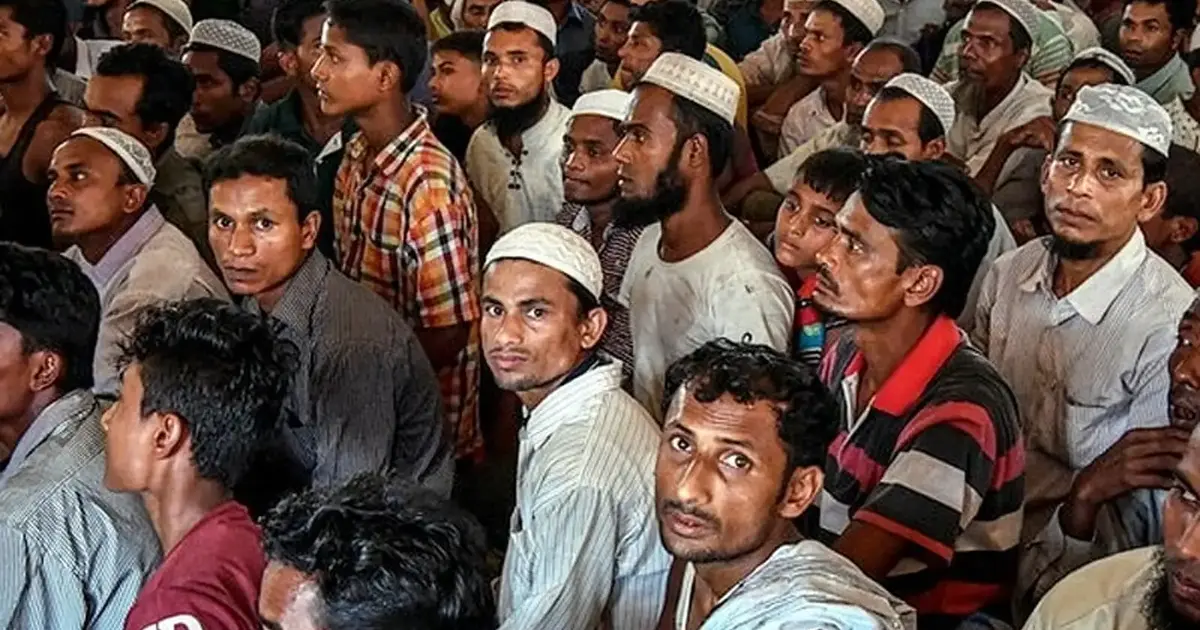
The Rohingya Ulama Council has firmly rejected allegations that the displaced Myanmar community is pursuing Malaysian citizenship, with its leadership accusing detractors of manufacturing false narratives to provoke communal tension. Rahimullah Hussain, chairman of the council, addressed the controversy head-on, describing such claims as deliberately fabricated propaganda intended to damage the Rohingya's standing among Malaysian society and undermine their vulnerable position as refugees.
The denial comes amid growing scrutiny of the Rohingya presence in Malaysia, where an estimated 180,000 members of the stateless community reside following their flight from Myanmar. The allegations, though unsubstantiated, have circulated on social media and in certain community forums, reflecting deeper anxieties about refugee absorption and citizenship policy in the country. Malaysia has not granted citizenship to any Rohingya refugees, and international agreements generally prohibit refugees from obtaining citizenship without explicit government intervention and formal processes.
The Rohingya Ulama Council represents the religious leadership and community institutions within the refugee population, serving as a mediating voice between the displaced community and Malaysian authorities. Hussain's statement represents an attempt to preemptively address what the council perceives as a coordinated misinformation campaign designed to shift public opinion against the Rohingya. The timing of such allegations suggests broader political tensions surrounding refugee policy that extend beyond the immediate community to encompass national identity and resource allocation debates.
Malaysia's approach to the Rohingya refugee crisis has always been framed as humanitarian rather than integrative. The government has provided temporary identification documents allowing refugees access to basic services and employment in designated sectors, yet has consistently maintained that citizenship is not on the table. This distinction between humanitarian protection and formal citizenship is crucial to understanding the council's refutation—such claims, if believed, could jeopardize even these limited protections by inflaming public resistance.
The accusation that narratives are being weaponized to incite hatred touches on a sensitive aspect of Malaysia's multicultural fabric. Historical communal tensions and ongoing debates about bumiputera rights and citizenship eligibility make claims about outsiders seeking formal membership particularly inflammatory. The council's characterization of these allegations as deliberately fabricated suggests an awareness that such rumors operate as tools of political mobilization rather than factual assertions grounded in policy advocacy.
Regional dynamics further complicate the Rohingya situation in Malaysia. Bangladesh hosts over 900,000 Rohingya in sprawling camps, facing its own capacity and security challenges, while Thailand and Indonesia have also encountered waves of maritime Rohingya arrivals. Malaysia's positioning as a relatively developed economy with established refugee management infrastructure has made it a focal point for regional displacement flows. Accusations of citizenship-seeking play into broader Southeast Asian anxieties about population movements and demographic change.
The council's response underscores the precarious position of the Rohingya community within Malaysian society. Dependent on government goodwill for continued protection and basic service access, the community remains vulnerable to reputational attacks that could trigger policy reversals. Hussain's intervention suggests the council views proactive denial as essential damage control, preventing harmful narratives from hardening into public opinion that could influence policy decisions at the federal or state level.
International observers monitoring the Rohingya situation recognize that misinformation about refugee populations often serves to justify restrictive policies and reduce public sympathy. The fabrication of citizenship claims follows a pattern seen globally where marginalized communities face coordinated disinformation campaigns. In Malaysia's context, where citizenship carries particular weight as a gateway to rights, employment stability, and social belonging, such claims carry disproportionate rhetorical power.
The denial also reflects internal community organization among the Rohingya. The establishment of formal councils and institutional representatives allows the refugee population to engage in public discourse and counter false narratives collectively. This institutional capacity, while limited compared to citizen-based civil society, enables the community to articulate its own perspective rather than remaining silent in the face of accusations.
Looking ahead, the council's statement is likely to have limited immediate impact on circulating rumors, suggesting that longer-term efforts to improve community integration and public understanding will be necessary. Government endorsement of the Rohingya's actual intentions and parameters, combined with community-level engagement, may prove more effective than council denials alone in addressing persistent suspicions about the refugee community's long-term aspirations in Malaysia.

