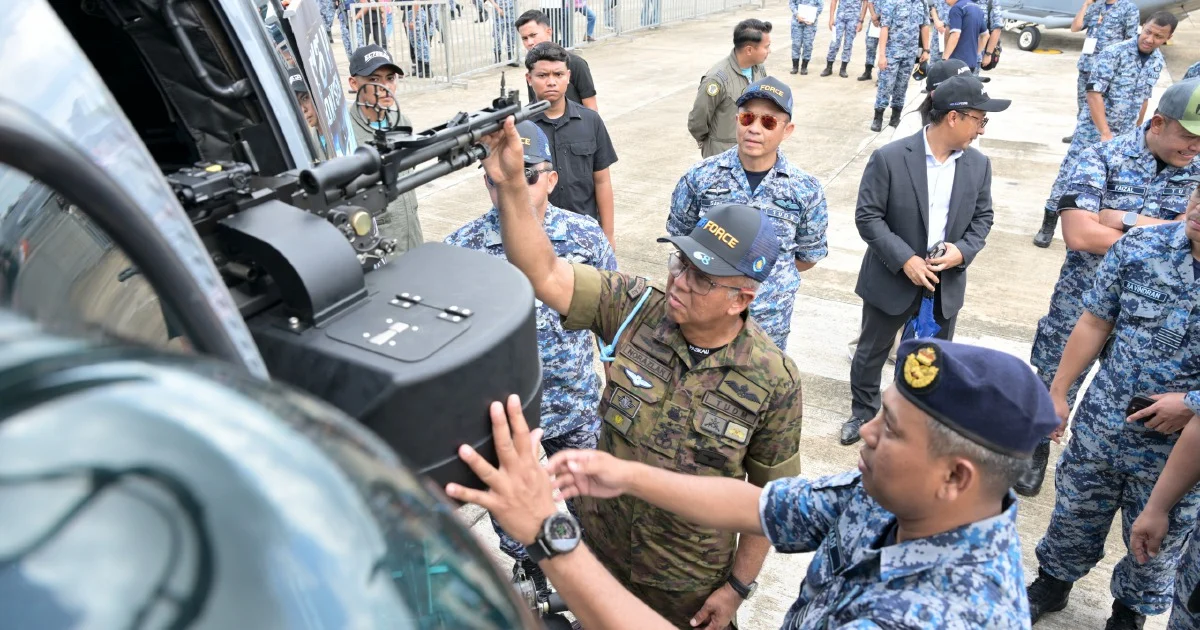
The Royal Malaysian Air Force (RMAF) has undertaken a significant modernisation initiative by integrating advanced weaponry into its EC725 helicopter platform, substantially expanding the aircraft's operational envelope in complex security environments. This strategic upgrade represents a critical enhancement to Malaysia's rapid-response aerial capabilities, particularly for missions requiring both personnel recovery and tactical self-defence in areas where conventional civilian rescue protocols prove inadequate.
The EC725, a medium-lift helicopter derivative of the Airbus Helicopters H225 lineage, forms a cornerstone of the RMAF's airborne operations across both maritime and terrestrial domains. Originally configured primarily for transport and general duties, the introduction of combat-oriented modifications transforms these airframes into genuinely multi-role platforms capable of defending themselves whilst executing their primary search and rescue mandates. This dual-capability approach reflects evolving operational doctrine within regional air forces, where the distinction between humanitarian response and tactical engagement has become increasingly blurred in contemporary conflict zones.
Combat search and rescue operations represent some of the most demanding missions within modern military aviation. Crews must penetrate denied or contested airspace to locate and extract downed personnel or injured combatants whilst simultaneously managing threats from hostile ground forces and air defence systems. Without adequate defensive armament, such missions carry catastrophic risk—the rescue platform itself becomes vulnerable to the very threats it must overcome. By arming the EC725, the RMAF substantially improves crew survivability and mission success rates whilst maintaining the aircraft's primary transport and evacuation capabilities.
The firepower enhancement programme demonstrates Malaysia's commitment to strengthening its expeditionary response capabilities at a time when regional security challenges have intensified. Whether responding to humanitarian disasters requiring rapid medical evacuation, supporting joint operations with allied forces, or conducting independent rescue operations in contested areas, the upgraded EC725 fleet now operates with substantially greater tactical flexibility. The weapons integration does not fundamentally alter the aircraft's transport role but rather provides protective capability when circumstances demand armed response.
From a regional perspective, Malaysia's air force modernisation signals confidence in maintaining advanced operational capabilities across the Southeast Asian theatre. The EC725 upgrade sits within a broader RMAF fleet modernisation programme aimed at ensuring the service remains technologically current and operationally relevant. Within a region experiencing growing military competition and increasingly complex security dynamics, nations that allow their capabilities to stagnate risk strategic disadvantage. The RMAF's proactive approach to modernisation positions Malaysia as a capable military operator able to respond effectively to diverse threat scenarios.
The technical dimensions of integrating weapons systems onto the EC725 platform involve substantial engineering and certification challenges. Airframe modifications must accommodate additional weight without compromising flight characteristics or structural integrity. Electronic systems require integration with fire control and targeting apparatus. Logistical supply chains must support new ammunition and ordnance types. Training programmes must prepare aircrew for employment of unfamiliar systems whilst maintaining proficiency in core helicopter operations. These cumulative requirements represent considerable investment beyond the hardware acquisition itself.
Operational doctrine development necessarily accompanies platform modernisation. RMAF commanders must establish clear protocols governing weapon employment during search and rescue missions, distinguishing between self-defence scenarios permitting immediate response and situations requiring command authority approval before engagement. Rules of engagement must address whether armed helicopters operate as dedicated rescue assets with defensive weapons or as close air support platforms that secondarily execute rescue functions. These doctrinal questions carry profound implications for mission planning and personnel training.
The upgrade programme also reflects Malaysia's recognition that humanitarian and military operations increasingly occur in overlapping contexts. A helicopter conducting medical evacuation from a disaster zone might operate in an environment where hostile actors threaten the operation. Armed capability allows commanders to respond immediately to emerging threats without aborting the rescue attempt. This operational flexibility potentially saves lives by ensuring rescue missions can continue despite escalating danger rather than forcing aircraft to withdraw when threats develop.
International partnerships likely facilitated the EC725 upgrade programme. Equipment integration, technical training, and operational doctrine development often benefit from collaboration with nations possessing advanced helicopter weaponisation experience. Such partnerships extend beyond mere equipment provision to encompass knowledge transfer and capability building that strengthen the RMAF's institutional competence. The resulting enhancement represents not simply imported capability but absorbed expertise that enables sustained independent operation.
The EC725 modernisation fits within Malaysia's broader defence industrial strategy of maintaining advanced technological capabilities whilst managing finite defence budgets. Rather than acquiring entirely new helicopter platforms, upgrading existing airframes costs substantially less whilst delivering significant capability improvements. This pragmatic approach resonates throughout the RMAF, where modernising legacy systems often proves more cost-effective than wholesale replacement. The EC725 upgrade therefore serves as both tactical enhancement and resource management strategy.
Looking forward, the armed EC725 fleet enhances Malaysia's readiness for diverse operational scenarios across the maritime and terrestrial domains where the air force operates. Whether supporting multinational coalition operations, responding to regional crises, or conducting independent operations, the enhanced helicopters provide commanders with greater tactical options and improved force protection. This modernisation investment reflects the RMAF's professional commitment to maintaining capabilities that protect Malaysian interests whilst fulfilling the service's core mission of safeguarding national airspace and supporting broader strategic objectives.

