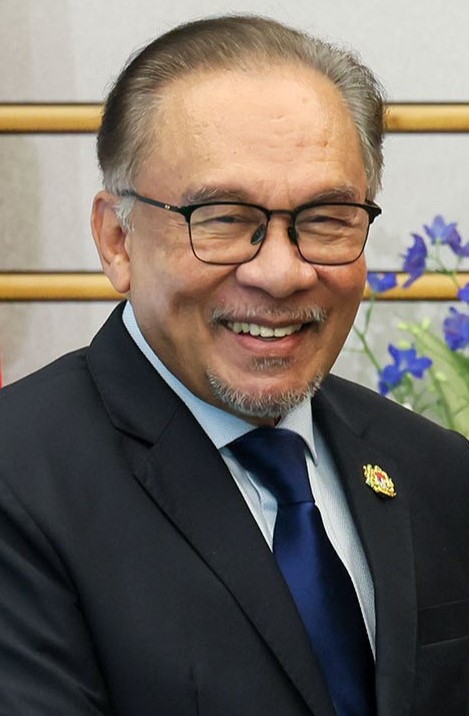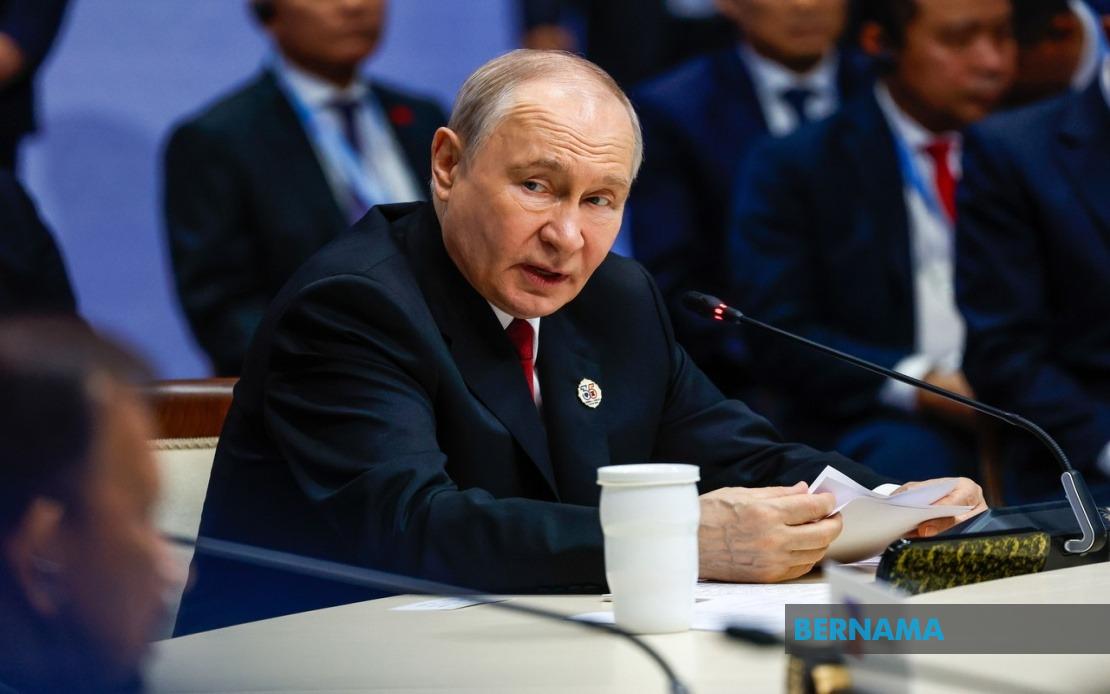
Russia and ASEAN marked a significant milestone in their diplomatic relationship at a two-day commemorative summit in Kazan, with President Vladimir Putin emphasizing how three and a half decades of engagement have created a robust partnership capable of navigating contemporary geopolitical complexities. The gathering brought together leaders from across Southeast Asia, including Prime Minister Datuk Seri Anwar Ibrahim and Philippine President Ferdinand Marcos Jr, who chairs ASEAN for the current year, to reflect on past achievements and map out future collaborative endeavours in an increasingly uncertain global environment.
The formal foundation of Russia-ASEAN ties stretches back to 1991, when Moscow established initial relations with the bloc in Kuala Lumpur. This relatively recent connection has nonetheless matured substantially, transitioning through distinct phases of institutional development that demonstrate both parties' commitment to sustained engagement. By 1996, Russia attained full Dialogue Partner status within ASEAN's dialogue framework, a designation that acknowledges a nation's significance to the region's political and economic interests. The relationship achieved further elevation in 2018 when Moscow and ASEAN formally designated their association a Strategic Partnership, signalling a qualitative deepening beyond conventional diplomatic protocols into concrete collaborative mechanisms.
Putin articulated at the summit's opening that the partnership rests upon a comprehensive architecture of legal agreements and operational frameworks spanning multiple domains. Security cooperation has emerged as a central pillar, alongside trade and investment initiatives that generate mutual economic benefits. Energy collaboration represents another critical component, particularly relevant given Southeast Asia's substantial energy requirements and Russia's significant hydrocarbon resources. Agricultural cooperation addresses regional food security concerns, while digitalisation projects position both sides to navigate the technological transformation reshaping global commerce and communications. Science and technology partnerships, including educational exchanges, foster human capital development across the region, complementing tourism initiatives that strengthen people-to-people understanding beyond government channels.
The summit's timing carries particular significance, occurring against a backdrop of escalating global uncertainties that have fundamentally reshaped international relations. Geopolitical tensions have created pronounced instability across multiple regions, whilst economic pressures stemming from trade disputes and supply chain disruptions have challenged established patterns of international commerce. Within this context, Putin characterised the Russia-ASEAN relationship as a stabilising influence capable of contributing to a balanced security architecture in the Asia-Pacific. This framing suggests that Moscow views its Southeast Asian partnerships as instrumental to developing a multipolar international order that distributes power across various centres rather than concentrating it among a narrow group of Western-aligned nations.
For Southeast Asian nations, Russia's strategic value extends beyond security considerations into practical domains where Moscow possesses distinctive strengths. Energy security represents perhaps the most consequential area, as ASEAN members pursue diversified supply sources to reduce vulnerability to any single provider. Russian expertise in hydrocarbon extraction, liquefied natural gas production, and nuclear technology offers pathways to address rising energy demands whilst managing transition concerns in an era of climate consciousness. Agricultural capabilities, encompassing grain production and food processing technologies, address food security preoccupations that carry particular weight across a region prone to climate variability. Russian contributions to higher education and scientific research create opportunities for Southeast Asian students and researchers to access advanced training and collaborative opportunities.
Malaysia's representation at the highest levels underscores the country's interest in maintaining balanced relationships across the region's major powers. Prime Minister Anwar Ibrahim's participation signals Kuala Lumpur's commitment to engaging comprehensively with diverse partners rather than gravitating exclusively toward any single alignment. This approach reflects Malaysia's historical emphasis on non-aligned positioning, a principle that remains relevant as nations navigate contemporary great power competition. For Malaysian policymakers, engagement with Russia across multiple sectors—including defence cooperation, energy investments, and educational exchanges—provides leverage in bilateral negotiations whilst diversifying Malaysia's strategic options.
The commemorative summit explicitly focused on reviewing cooperation outcomes across the 35-year timespan whilst establishing priorities for future engagement. Both sides recognised that expanded cooperation in trade and investment constitutes a natural priority, particularly as economic uncertainties encourage nations to develop alternative partnership arrangements. Food and energy security emerged as shared concerns requiring sustained collaborative attention, reflecting how regional vulnerabilities create mutual incentives for partnership. Digital transformation initiatives address aspirations across Southeast Asia to harness technological advances for economic competitiveness, an area where Russian expertise in mathematics, computer science, and encryption technology offers complementary capabilities. Education and scientific collaboration promise long-term benefits through capacity building and innovation networks that transcend immediate political considerations.
Russia's strategic calculus regarding ASEAN participation reflects broader geopolitical objectives beyond Southeast Asia itself. As Western sanctions and diplomatic isolation have constrained Russia's integration into conventional Western-led international structures, developing robust partnerships with non-Western regions has assumed heightened importance. ASEAN's collective economic significance, its strategic location spanning crucial shipping lanes, and its diplomatic weight within regional forums make the bloc an attractive partner for a Russia seeking to construct alternative international networks. Simultaneously, ASEAN's principle of non-interference in internal affairs and consensus-based decision-making align with Russia's preferences for partnerships that respect national sovereignty and avoid prescriptive governance conditions.
The summit's recognition of challenges emerging from global economic and geopolitical uncertainties highlights how contemporary circumstances have elevated the perceived value of such partnerships. Trade tensions involving major powers, supply chain vulnerabilities exposed during recent crises, and shifting technology competition create pressures on all nations to cultivate diverse relationships. ASEAN members, navigating between established relationships and emerging partnerships, benefit from Russia's willingness to engage across multiple dimensions without imposing institutional conditions or political demands characteristic of some Western partnerships. This flexibility, combined with Russia's resource endowments and technological capabilities, generates mutual interest in sustained collaboration despite periodic international tensions.
The partnership's evolution over 35 years demonstrates that sustained engagement across different political systems remains feasible when grounded in pragmatic recognition of mutual interests. Neither side has required ideological convergence or complete alignment on international issues to deepen cooperation in specific domains where complementary capabilities exist. This incremental approach—building dense networks of interaction across security, economic, scientific, and cultural domains—has created institutional inertia that persists through periodic political tensions. The commemorative summit's emphasis on reviewing achievements whilst projecting future cooperation suggests confidence that this partnership model can weather contemporary uncertainties.
Looking forward, the depth and breadth of Russia-ASEAN cooperation will likely expand as both sides perceive value in sustained engagement despite international pressures. Malaysia and other ASEAN members will continue balancing relationships with Russia alongside partnerships with other major powers, reflecting the region's traditional commitment to non-alignment. Investment flows, technology transfers, and educational exchanges will probably intensify as demonstrated mutual benefits encourage deeper integration. The Asia-Pacific's strategic centrality in contemporary geopolitical competition ensures that Russia-ASEAN relations will retain significance, with the partnership's stabilising potential increasingly valued as nations seek to preserve regional equilibrium amidst great power rivalry.