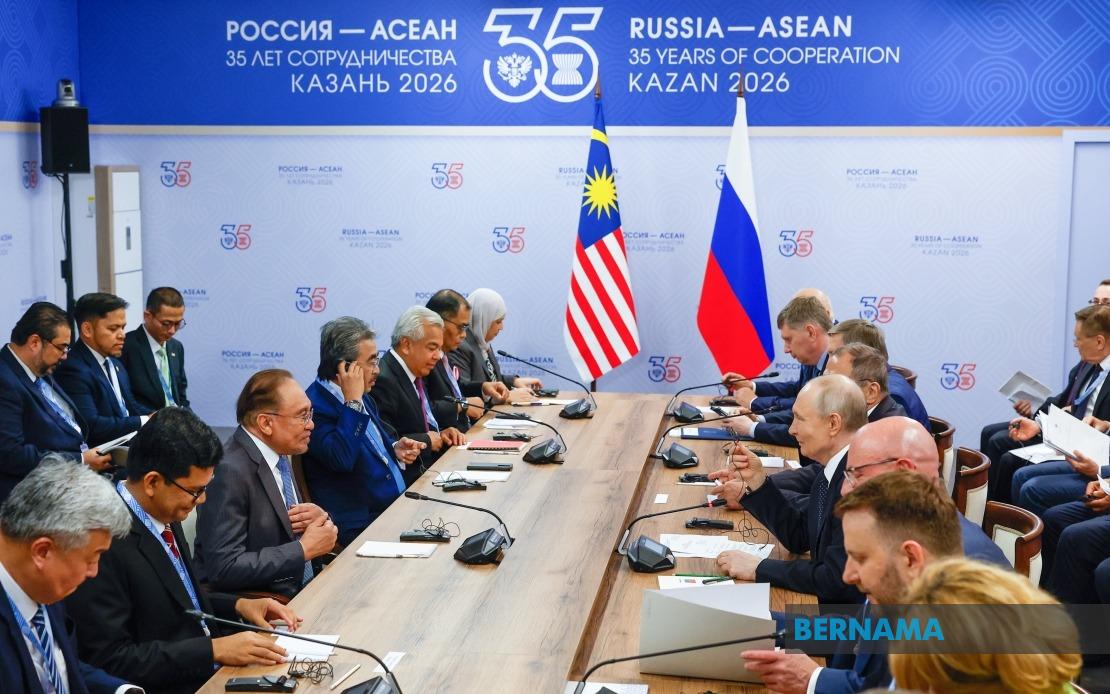
Russian President Vladimir Putin has signalled strong potential for expanded cooperation with Malaysia, emphasising the robust foundation both nations have built over nearly six decades of diplomatic engagement. Speaking with Malaysian Prime Minister Datuk Seri Anwar Ibrahim during the ASEAN-Russia Commemorative Summit in Kazan on June 18, Putin highlighted the momentum approaching their countries' 60th anniversary of formal relations in 2025, describing the relationship as one characterised by "substantive positive experience" and meaningful collaboration across multiple sectors.
The bilateral relationship between Russia and Malaysia carries particular significance for the broader Southeast Asian region, given Malaysia's strategic position within ASEAN and its historical role as a bridge between different international blocs. Putin's remarks underscored Moscow's commitment to leveraging existing diplomatic channels and institutional frameworks to advance shared interests, with both leaders acknowledging the extensive network of regular contacts maintained through government ministries, parliamentary exchanges, and specialised agencies focused on fostering cooperation.
A key mechanism driving this partnership is the intergovernmental commission dedicated to economic, scientific, technical, and cultural collaboration, which Putin identified as the primary vehicle for translating bilateral agreements into tangible joint projects. This institutional structure reflects the maturity of the Russia-Malaysia relationship, moving beyond rhetoric to embed cooperation within formal governance structures that survive individual administrations and respond to evolving bilateral priorities.
Trade dynamics between the two countries demonstrate measurable momentum, with Putin citing a 12.9 per cent increase in bilateral commerce during 2025 as evidence of growing economic interdependence. For Malaysian policymakers and business communities, this trade expansion suggests expanding opportunities in sectors ranging from energy and commodities to technology and manufacturing. The figure also carries geopolitical weight, representing continued economic engagement between Moscow and Kuala Lumpur despite international sanctions pressure on Russia and broader global economic volatility affecting regional trade patterns.
Beyond commercial metrics, Putin emphasised Russia's commitment to educational and scientific partnerships with Malaysia, alongside cooperation in tourism and cultural exchange. These dimensions of bilateral engagement are often overlooked in discussions focused on trade and investment, yet they constitute essential soft power mechanisms through which nations build public understanding and generational ties. For Malaysia, access to Russian expertise in scientific disciplines and enhanced educational pathways for Malaysian students represent concrete benefits that strengthen people-to-people connections independent of governmental relations.
Putin's explicit acknowledgment of Malaysia's pivotal role within ASEAN and its support for deepening Russia-ASEAN strategic partnership reveals Moscow's broader regional calculations. By praising Malaysia's chairmanship of ASEAN in 2024 and referencing the historic first summit-level Russia-ASEAN meeting held in Malaysia in 2005, Putin positioned Kuala Lumpur as a crucial partner for maintaining and expanding Russia's institutional presence in Southeast Asia. This framing suggests Malaysia's continued importance to Russian strategic objectives in the region, particularly as Russia navigates international isolation and seeks reliable partners among non-aligned nations.
The characterisation of Malaysia as a "long-standing global partner" and the emphasis on relationships built on "mutual respect and consideration of interests" reflect both countries' commitment to pragmatic engagement unburdened by ideological rigidity. For Malaysia, this positioning allows Kuala Lumpur to maintain productive relations with Russia while pursuing independent foreign policy objectives aligned with ASEAN consensus and national interests. The principle of mutual interest rather than strategic alliance obligations provides flexibility crucial for Malaysian diplomacy in a multipolar global environment.
Putin's personal references to previous meetings with Malaysian leaders and his request to convey best wishes to Sultan Ibrahim, King of Malaysia, add a diplomatic courtesy dimension that reinforces the personal and institutional relationships undergirding bilateral ties. These gestures, while appearing ceremonial, serve important functions in signalling respect for Malaysian institutions and leadership, particularly the monarchy's role as constitutional head of state. Such recognition matters significantly in Malaysian political culture and contributes to the foundation of goodwill upon which deeper cooperation is constructed.
The timing of this bilateral engagement during the ASEAN-Russia Commemorative Summit demonstrates both nations' commitment to multilateral engagement alongside bilateral development. Malaysia's ability to simultaneously strengthen its relationship with Russia while maintaining its broader ASEAN responsibilities reflects successful balancing of potentially competing diplomatic priorities. For other Southeast Asian nations observing this interaction, Malaysia's approach offers a model for managing relations with major powers without compromising regional consensus or appearing to favour external actors over collective ASEAN interests.
Looking toward 2025 and the 60th anniversary of diplomatic relations, both countries face opportunities to institutionalise cooperation further through renewed agreements, expanded cultural exchanges, and deepened commercial ties. The anniversary milestone provides a natural opportunity for ceremonial elevation of the relationship, potentially including high-level visits or newly announced joint initiatives that signal forward momentum. For Malaysian observers, the trajectory of Russia-Malaysia relations suggests continued pragmatic engagement driven by mutual economic and strategic benefit rather than ideological alignment or security alliance obligations.
The broader context of this engagement includes Malaysia's non-aligned positioning and its demonstrated willingness to maintain relationships with multiple global powers despite geopolitical tensions elsewhere. Russia's appreciation for Malaysia's support within ASEAN frameworks suggests Moscow values Kuala Lumpur's ability to advocate for inclusive regional approaches that do not marginalise Russia from Southeast Asian affairs. This dynamic grants Malaysia considerable diplomatic leverage, allowing it to advance regional stability narratives while cultivating relationships with diverse international partners.
For businesses and investors in both countries, the declared momentum in bilateral relations and emphasis on expanding economic cooperation suggest emerging opportunities in sectors identified by Putin including education, technology, and tourism. Malaysian companies may find improved access to Russian markets and resources, while Russian enterprises could benefit from Malaysia's position as a regional hub for Southeast Asian operations. Government-backed initiatives and the intergovernmental commission provide frameworks through which such commercial opportunities can be formally developed and supported.
As both nations approach their diplomatic milestone, the substance of the Russia-Malaysia relationship—grounded in institutional cooperation, growing trade, and demonstrable mutual benefit—appears robust enough to weather international pressures and shifting global alignments. Putin's remarks at the Kazan summit underscore Russian commitment to this partnership precisely because Malaysia represents the kind of stable, pragmatic relationship Moscow seeks to maintain as it navigates geopolitical challenges. For Malaysia, continued engagement with Russia aligns with its non-aligned tradition while advancing concrete national interests across multiple domains.