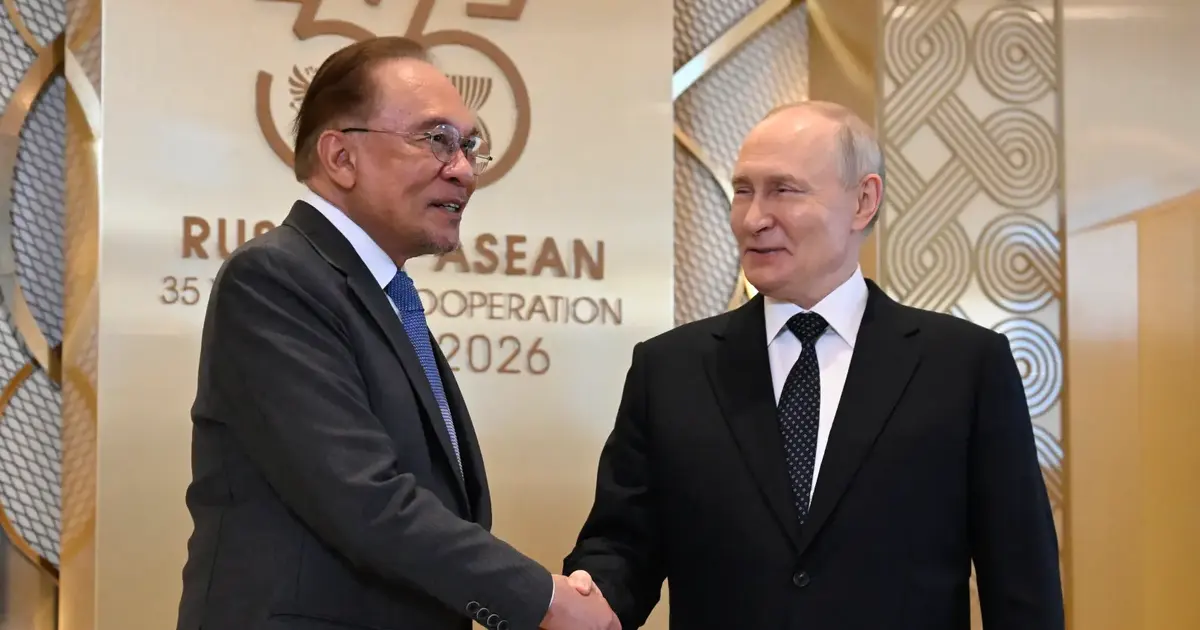
Prime Minister Anwar Ibrahim has secured a significant energy partnership with Russia, obtaining guarantees of reliable oil and gas supplies extending across the next two decades. The assurance represents a major development for Malaysia's long-term energy security at a time when global supply chains face continued uncertainty and geopolitical tensions threaten conventional trading relationships.
The agreement reflects Malaysia's strategic approach to diversifying its energy sources and supplier base beyond traditional Middle Eastern partners. By locking in commitments from Russia, a leading global energy producer, Malaysia reduces its vulnerability to supply disruptions and price volatility that often plague nations reliant on a narrow range of suppliers. This arrangement also provides economic stability for Malaysia's energy-dependent manufacturing and petrochemical sectors, which require predictable fuel costs for operational planning and competitiveness.
Anwar's diplomatic engagement extends beyond energy cooperation. His concurrent visit to Turkmenistan signals Malaysia's intent to strengthen ties across Central Asia, a region rich in hydrocarbon reserves and increasingly important to global energy markets. Turkmenistan itself is a significant gas producer, and cultivating relationships with its leadership opens pathways for Malaysia to explore additional energy partnerships and infrastructure investments in the region.
The broader context of these negotiations underscores Malaysia's pragmatic foreign policy approach. Despite geopolitical divisions between Western nations and Russia, Malaysia has maintained a balanced stance, prioritising national economic interests and energy security over ideological alignment. This non-aligned posture has historically allowed Malaysia to benefit from relationships across different blocs while preserving strategic autonomy.
Equally important to the energy discussions are Anwar's efforts to facilitate Malaysian export growth to major Asian economies. China, Japan, and South Korea represent three of Asia's largest markets with substantial purchasing power and demand for manufactured goods, agricultural products, and resource-based commodities. Malaysia's traditional strengths in semiconductors, palm oil derivatives, petrochemicals, and rubber products position the country well to capture growing shares of these markets, provided trade barriers remain manageable and logistics networks function efficiently.
For Malaysian exporters, accessing China's vast market offers perhaps the most significant opportunity for volume growth, given the nation's manufacturing scale and consumption patterns. Japanese and South Korean markets, meanwhile, typically demand higher value-added products and specialised components, offering pathways for Malaysian companies to move up the industrial value chain. Anwar's diplomatic initiatives aim to remove tariff obstacles, streamline customs procedures, and establish preferential trade relationships that would give Malaysian businesses competitive advantages.
The timing of these negotiations carries strategic weight. Global energy markets have experienced historic volatility following geopolitical crises that disrupted conventional supply routes. Malaysia, as a net energy importer increasingly dependent on external supplies, faces genuine risks to economic stability if energy availability becomes constrained or prices spike unpredictably. A formal two-decade commitment from Russia provides the certainty that both government planners and private industry require for long-term capital allocation decisions.
Moreover, Malaysia's engagement with Russia and Turkmenistan reflects the reorientation of Asian trade and investment patterns toward North and Central Asian corridors. Historically, Malaysia's commercial focus centered on Middle Eastern energy suppliers and Southeast Asian neighbours. The expanding relationships with Russia and Central Asian states represent recognition that economic opportunities increasingly emanate from these traditionally overlooked regions, particularly as China's Belt and Road Initiative stimulates infrastructure development and trade integration across Eurasian networks.
For Malaysian consumers and businesses, the downstream implications of securing long-term energy supplies promise moderate energy costs and industrial competitiveness. Manufacturing sectors that depend on stable fuel pricing—including food processing, chemicals, and light manufacturing—stand to benefit from predictable energy inputs. Similarly, Malaysia's energy-intensive palm oil processing industry, a significant export sector, gains operational stability through guaranteed supply arrangements.
Anwar's diplomatic mission also addresses the imperative of maintaining Malaysian relevance within Southeast Asia's broader geopolitical context. As Indonesia, Thailand, and Vietnam deepen energy partnerships with various global players, Malaysia cannot afford to fall behind in securing long-term supply agreements and market access. Competition for advantageous trade terms among ASEAN members is intensifying, making bilateral diplomatic initiatives increasingly vital for maintaining comparative advantage.
The energy agreement with Russia also carries implications for Malaysia's renewable energy transition targets. While securing fossil fuel supplies for two decades appears contradictory to climate goals, Malaysia's strategy reflects the practical reality that global energy demand will require substantial hydrocarbon volumes through the 2040s. The long-term supply arrangement provides a bridge during which Malaysia can simultaneously invest in renewables infrastructure, gradually reducing its absolute dependence on imported oil and gas without risking immediate energy shortages or economic disruption.
Looking forward, Anwar's diplomatic achievements in securing Russian energy commitments and pursuing expanded Asian export opportunities represent coherent pillars of Malaysia's national economic strategy. The arrangements prioritise immediate energy security while positioning Malaysian businesses to capture growth opportunities across Asia's largest consumer and industrial markets. These moves underscore Malaysia's determination to navigate complex geopolitical circumstances through pragmatic statecraft focused on tangible economic benefits for the nation.

