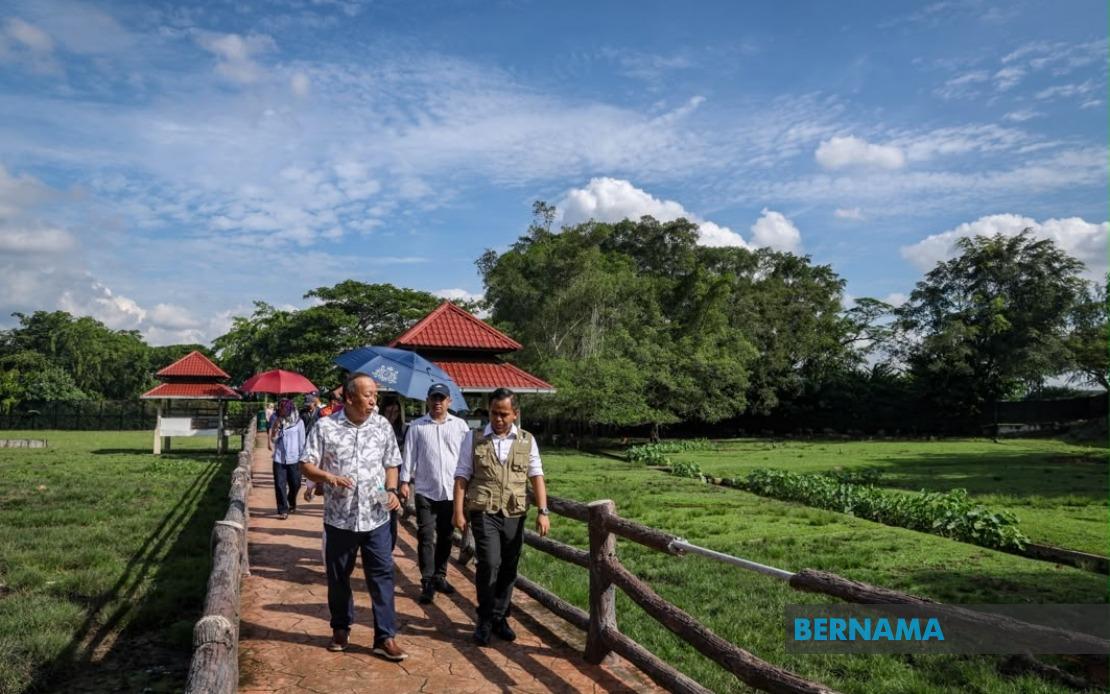
Sabah UMNO has committed to mobilising its party machinery to strengthen Barisan Nasional's bid in the upcoming Johor state election, particularly focusing on constituencies where Sabahan voters form a substantial electoral bloc. The cross-state political alignment reflects the broader coalition strategy of leveraging party structures across Malaysia to consolidate support in key battleground regions, a common tactic employed during closely contested state polls.
Datuk Jafry Ariffin, chairman of Sabah UMNO's liaison committee, announced that his party has been assigned to amplify the BN campaign primarily within the Pasir Gudang parliamentary constituency. The specific focus rests on two state assembly seats—Permas and Johor Jaya—where demographic surveys indicate substantial concentrations of voters who relocated from Sabah. This targeted approach represents a sophisticated electoral strategy centred on mobilising voters who share geographic and cultural linkages to another state, a phenomenon increasingly common in Malaysian electoral contests as internal migration patterns reshape voting blocs.
According to available records presented by Ariffin, approximately 3,000 registered voters originating from Sabah currently reside in the Permas constituency, whilst a further 2,000 are registered in Johor Jaya. These figures underscore the significant migrant population from Sabah integrated into Johor's electoral landscape, likely drawn by employment opportunities in the southern state's industrial and commercial sectors. Understanding such demographic compositions proves crucial for political parties seeking to maximise campaign efficiency by directing resources toward constituencies where their organisational strengths and voter affinities align most favourably.
Sabah UMNO's involvement in these particular constituencies is not unprecedented. Ariffin recalled that his party received similar assignments during the 2022 Johor state election campaign, establishing organisational familiarity with the electoral terrain and voter demographics in both Permas and Johor Jaya. This institutional continuity provides Sabah UMNO with accumulated knowledge about local concerns, community leaders, and effective messaging strategies specific to constituencies with substantial Sabahan populations. Such experience proves invaluable in crafting campaign narratives that resonate with voters who may prioritise issues affecting both their adopted communities and their states of origin.
Jafry, who simultaneously holds the position of Sabah Minister of Tourism, Culture and Environment, disclosed that preliminary mobilisation efforts have commenced at a measured pace as part of early preparation phases. The party leadership recognises that premature or overly aggressive campaign activities before the official campaign period could prove counterproductive, potentially inviting regulatory scrutiny from the Election Commission while alienating voters who view such tactics as intrusive. The strategic timing of campaign intensity thus reflects calculated political judgment regarding optimal windows for voter persuasion.
The transition from preliminary groundwork to comprehensive campaigning will accelerate substantially following nomination day, scheduled by the Election Commission for June 27. Full-scale campaign operations will then unfold across the official campaign period, concluding with polling on July 11. This structured timeline permits Sabah UMNO to coordinate messaging, mobilise volunteers, and execute voter outreach programmes with maximum impact during the constitutionally designated campaign window when voter attention typically peaks and campaign information saturation increases.
The Johor State Legislative Assembly encompasses 56 seats distributed across diverse constituencies reflecting the state's geographic and demographic complexity. Prior to dissolution on June 1, Barisan Nasional commanded commanding control with 40 seats, positioning the coalition as the dominant political force despite fragmentation within Malaysia's broader political landscape. Pakatan Harapan held 12 seats, whilst Perikatan Nasional occupied three seats and independent party MUDA claimed a single seat. This composition suggests that BN, whilst holding a substantial majority, cannot afford complacency given the combined opposition representation and potential voter sentiment shifts occurring between elections.
BN's numerical advantage masks underlying electoral vulnerabilities in certain constituencies where opposition parties have cultivated support or where local grievances create openings for political competitors. Sabah UMNO's targeted deployment in Permas and Johor Jaya reflects party leadership's recognition that consolidating voter bases in constituencies with specific demographic characteristics requires tailored strategies beyond conventional mass campaigning. The concentration of Sabahan voters in these particular seats presents both opportunity and risk—these communities can deliver substantial vote banks if effectively mobilised, but may prove receptive to opposition messaging if BN fails to address their specific concerns.
The involvement of cross-state party machinery in the Johor election illustrates how Malaysian political coalitions operate as decentralised networks capable of rapid resource mobilisation across state boundaries. Sabah UMNO's engagement demonstrates that BN functions not merely as a federal-level phenomenon but as an integrated system where state chapters support one another during critical electoral contests. This collaborative architecture has historically proven effective in delivering electoral victories, though shifting voter preferences and rising anti-establishment sentiment present novel challenges to traditional coalition-based campaigning models.
For Malaysian observers monitoring Johor's electoral dynamics, Sabah UMNO's involvement signals that BN leadership considers this state election consequential enough to warrant external reinforcement. The decision to deploy resources from another state suggests confidence in BN's competitive position whilst simultaneously acknowledging that victory margins in key constituencies may prove narrow. The 2022 Johor election established recent precedent for competitive outcomes, making the upcoming contest another significant indicator of BN's capacity to retain or expand influence within Malaysia's political landscape.