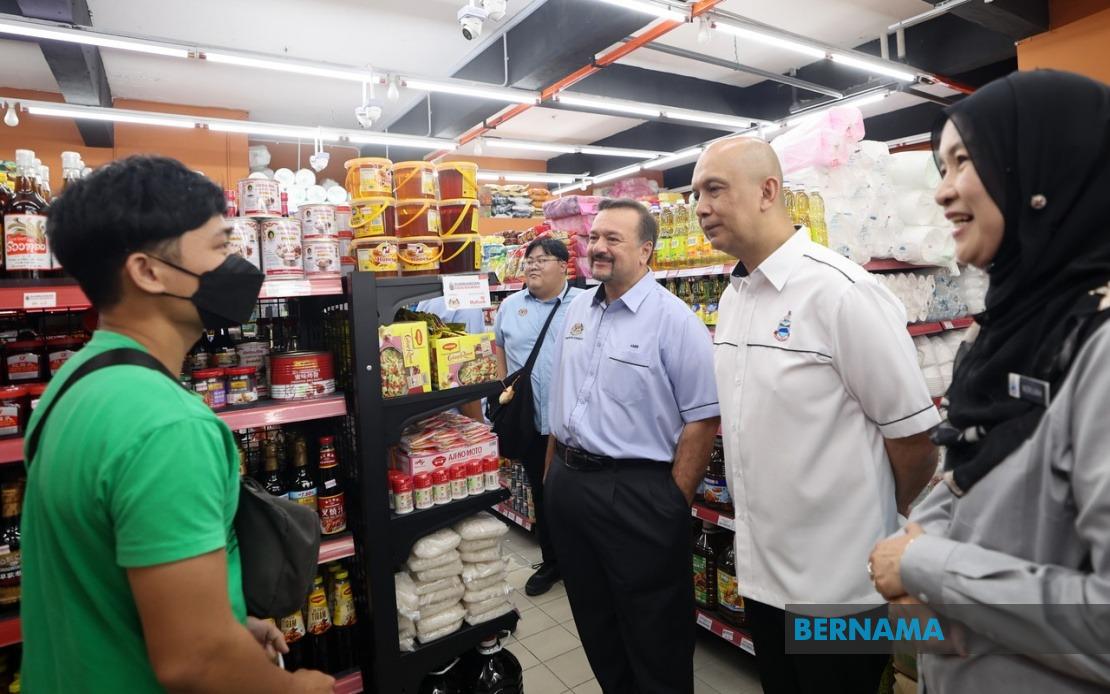
Malaysia's assistance scheme is entering a new growth phase as the government commits to substantially widening the reach of the Sumbangan Asas Rahmah (SARA) programme. During a visit to Kota Kinabalu on June 23, Finance Minister II Datuk Seri Amir Hamzah Azizan outlined an ambitious expansion strategy that addresses a critical gap in social support delivery—ensuring that vulnerable Malaysians in geographically isolated areas can access subsidised essential goods with the same convenience as their urban counterparts.
Currently, more than 13,500 retail outlets across the country participate in SARA, creating a distribution network that extends beyond major shopping centres into the village economies that serve dispersed rural populations. Of these participating businesses, over 6,500 are sundry shops—the small, neighbourhood retailers that have traditionally formed the backbone of commerce in Malaysian towns and villages. However, the government recognises that this figure falls short of what is needed to truly democratise access. The administration has set a concrete target of expanding sundry shop participation to 10,000 outlets nationwide, a significant increase that would position these neighbourhood retailers as primary conduits for delivering state assistance to ordinary Malaysians.
Sabah's experience demonstrates the programme's growing traction in regional Malaysia. With 1,493 shops now enrolled in the state, the SARA initiative has created a visible retail infrastructure that spans from Kota Kinabalu's urban periphery into the interior settlements where conventional retailers often struggle with thin margins and irregular supply chains. This geographic spread is deliberate—officials are explicitly directing expansion efforts away from major commercial zones toward villages and remote communities where residents might otherwise face substantial travel costs to access benefits. The emphasis reflects a understanding that financial assistance loses much of its value if vulnerable households must spend significant portions of their benefits on transport to reach redemption points.
The mechanism underpinning SARA's accessibility is technologically straightforward yet strategically important. Eligible beneficiaries use their MyKad national identity cards to trigger transactions at registered outlets, eliminating intermediaries and reducing the administrative friction that often prevents welfare recipients from efficiently claiming their entitlements. This direct-redemption approach addresses a longstanding challenge in Malaysian social policy: ensuring that support reaches its intended targets without bureaucratic delay or complexity that discourages uptake among those least able to navigate complicated systems.
The programme's expansion carries broader economic significance beyond its welfare function. By channelling purchasing power through participating retailers, SARA effectively stimulates demand for small businesses that operate on constrained margins. Amir Hamzah observed that when products receive SARA inclusion, participating retailers experience measurable sales improvements—a finding that reframes the initiative as a dual-benefit mechanism supporting both recipients and small business operators. This dynamic is particularly valuable in Malaysian communities where local shopkeepers serve as informal anchors for neighbourhood economies, employing family members and sourcing goods from local suppliers.
The current product portfolio encompasses more than 150,000 individual items nationwide, reflecting a deliberate strategy to move beyond bare subsistence basics into a more comprehensive basket of everyday goods. This breadth enables recipients to maintain dignity in their purchasing choices while allowing retailers to stock diverse inventory that appeals to broader customer bases. The government's willingness to continuously evaluate the product range suggests recognition that welfare adequacy requires flexibility—different households face different essential needs, and a rigid product list constrains the programme's effectiveness.
Fresh produce represents a frontier issue for SARA's further expansion, though the government approaches this domain cautiously. While including perishable items would enhance nutritional outcomes for beneficiaries, particularly important in a nation facing rising diet-related health conditions, quality assurance presents genuine challenges. Extending SARA to fresh fruits and vegetables requires establishing cold-chain infrastructure, setting freshness standards, and ensuring participating retailers maintain appropriate storage facilities. The Finance Minister's recognition that these obstacles remain unresolved indicates pragmatic policy-making rather than timidity—rushing to include fresh produce without adequate safeguards could undermine the entire programme's credibility if recipients regularly receive substandard items.
Small retailer recruitment remains a bottleneck constraining more rapid expansion. Onboarding barriers—particularly the capital costs of point-of-sale systems and training requirements—deter marginal operators who lack administrative capacity. The government's openness to reducing these barriers through subsidised or simplified POS infrastructure suggests recognition that expanding SARA's reach requires removing friction at the merchant level. Without this supply-side support, even growing beneficiary numbers cannot translate into improved access if retailers lack the tools to participate.
For Malaysian policymakers, SARA's expansion encapsulates an important lesson about welfare design in middle-income economies. Rather than confining assistance to top-down government distribution channels, leveraging private retail networks creates multiple benefits simultaneously—recipients gain convenient access, small businesses receive demand stimulus, and the government preserves finite administrative resources. The emphasis on rural inclusion reflects awareness that geographic inequality remains a persistent feature of Malaysian development, with interior areas often overlooked by commercial investment and government services.
Regionally, SARA offers Southeast Asian peers a potentially replicable model for scaling welfare delivery in countries where formal financial infrastructure remains incomplete and geographic dispersion complicates traditional social protection systems. By combining biometric identity verification with distributed retail networks, Malaysia has created a framework that might address similar challenges in neighbouring nations facing their own access and equity constraints. As the programme continues maturing, its effectiveness in reaching intended populations while stimulating local enterprise could establish a template that other ASEAN governments examine as they design social protection systems for the next decade.

