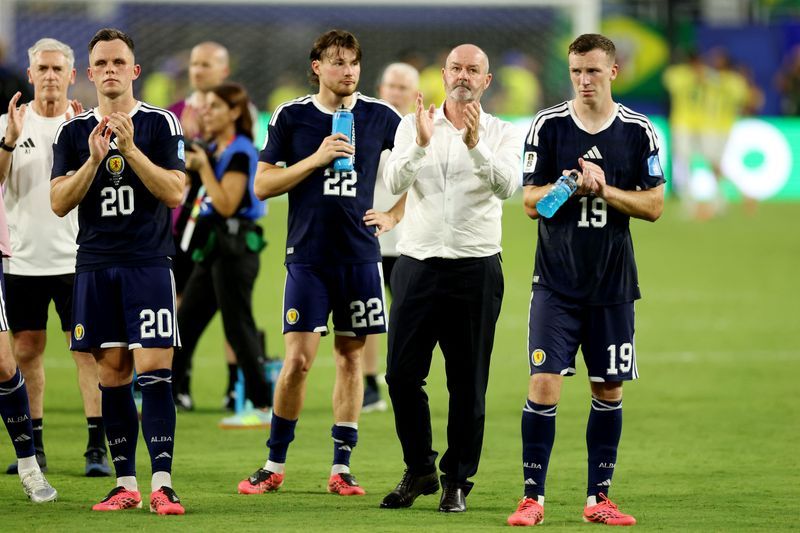
Scotland's return to the World Cup stage after a 28-year absence appears set to end in disappointment, with coach Steve Clarke accepting that his side's 3-0 defeat to Brazil on Wednesday has effectively sealed their exit from the tournament. Despite technically retaining mathematical hopes of progressing as one of the eight best third-placed teams across the 12 groups, Clarke's assessment was brutally honest: Scotland will almost certainly be eliminated before the knockout rounds begin.
With three points from their group matches, Scotland currently occupy sixth place in the race for those third-place qualification spots. However, Clarke's reading of the situation suggests that two or more other teams with matches still to play will surpass them, rendering Scotland's remaining hopes theoretical at best. The coach's candid remarks reflect not bitterness at the scoreline but rather frustration at how his players surrendered during their campaign in Miami, a match that he believes his team largely inflicted upon themselves through preventable errors.
The nature of the defeat underscores Clarke's central complaint: Scotland failed to match Brazil's intensity in crucial moments and, more critically, made defensive decisions that gifted their opponents straightforward opportunities. Clarke identified that his team gave Brazil clear chances for at least two of the three goals, possibly all three, suggesting a pattern of defensive vulnerability rather than being outplayed by a technically superior opponent. This distinction matters because it highlights where Scotland's collapse originated—not from lack of talent or effort, but from basic execution and positional discipline.
That said, Clarke offered modest credit to his players where warranted. Brazil did squander some chances, and goalkeeper Angus Gunn produced several important saves that prevented the scoreline from becoming even more lopsided. Scotland created one or two attacking opportunities themselves, though Clarke was quick to note these did not represent clean, incisive play. The overall picture painted by the manager is of a team that competed in patches but never sustained the level required to trouble a continental powerhouse.
Clarke's frustration was tempered by an acknowledgment that he harbours no anger toward his players, who nonetheless achieved the historic feat of qualifying for the World Cup for the first time since France in 1998. His disappointment was directed at the gap between what this group can achieve and what they demonstrated in the tournament itself. In Clarke's view, the players know they underperformed, and any observer who has tracked Scotland's development over recent years would recognise that they failed to reach their ceiling against Brazil.
Beyond the immediate tournament result, Clarke used the moment to raise uncomfortable questions about Scottish football's structural development. Watching Morocco and Brazil expose deficiencies in physicality, power, and technical ability prompted the manager to call for systemic improvements in how Scotland produces young talent destined for the world stage. This broader critique suggests Clarke sees the World Cup campaign as revealing deeper weaknesses in the Scottish game that require institutional change, not simply tactical adjustment.
Clark's comments reflect a coach attempting to extract maximum learning from a disappointing outcome. Rather than blame external factors or individual mistakes, he identified areas where Scottish football itself must evolve if future generations are to sustain a competitive presence at major tournaments. This perspective carries particular weight in Southeast Asia and the broader global context, where developing football nations frequently grapple with similar challenges around youth development and the pathway to producing elite players.
The Scotland fans, known as the Tartan Army, have been among the tournament's most visible and warmly received supporter groups in the United States. Clarke praised their ambassadorial role and their passionate support while reminding them—and perhaps the broader Scottish football community—that none of this would have been possible without the players' achievements in qualifying. His message cuts through potential disappointment by reframing Scotland's return to the World Cup as a collective accomplishment that should not be diminished simply because the tournament did not produce a deeper run.
Clark's framing also served as a gentle rebuke to a portion of Scottish discourse that tends to slip into complacency once the initial emotional joy of qualification subsides. He emphasised that the players who brought Scotland to America are the same ones who ended decades of absence from World Cups, a feat that required sustained excellence during the qualifying campaign. Without their efforts, Scotland would remain in the familiar position of watching the World Cup from home, a reality that underscores the significance of even reaching the tournament despite not advancing further.
The defeat to Brazil concluded Scotland's group-stage campaign on a deflating note, yet Clarke's measured response suggests he views it as a stepping stone rather than a final verdict on Scottish football's capabilities. The manager's focus on identifying what needs to improve—from defensive discipline to youth development—indicates an intention to learn from this World Cup experience and apply those lessons to future campaigns. For Scottish football and its supporters, the immediate sting of elimination may gradually be replaced by recognition that their team's return to the world stage, however brief, represents progress upon which future ambitions can be built.

