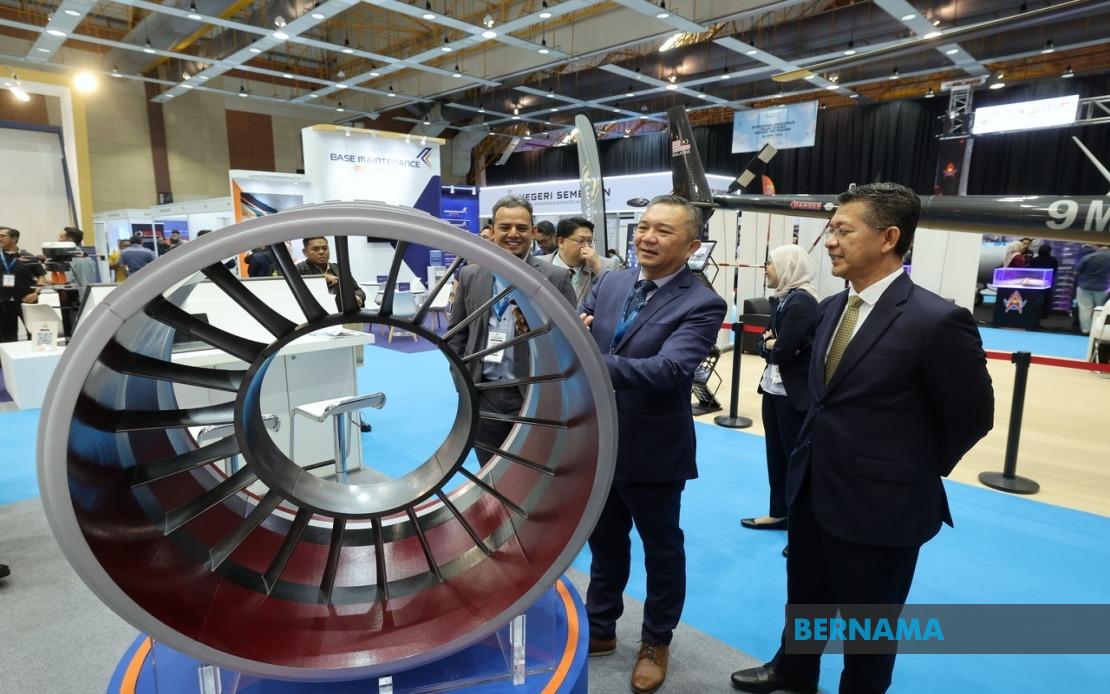
Selangor is embarking on an ambitious strategy to consolidate and expand its dominance within Malaysia's aerospace sector, leveraging its existing concentration of companies and infrastructure to establish itself as a crucial regional player. The state currently hosts nearly 70 per cent of the country's aerospace firms, a commanding position built over decades, and officials are now setting their sights on surpassing that threshold before 2030. This expansion comes as the aerospace industry globally grapples with mounting geopolitical tensions, flight path disruptions and volatile fuel costs, making competitive advantage and operational resilience increasingly valuable.
At the heart of Selangor's strategy lies a recognition that the state's competitive advantage rests on two critical assets: established aviation infrastructure and existing industrial clustering. Sultan Abdul Aziz Shah Airport in Subang and Kuala Lumpur International Airport sit within or near the state's boundaries, providing dual gateways for international connectivity. According to Ng Sze Han, Selangor's executive councillor for Investment, Trade and Mobility, this geographic and logistical foundation is essential for attracting major industry investment and maintaining operational continuity for aerospace manufacturers and service providers.
The state's approach centres on strategic vertical integration within the aerospace value chain. Subang has historically served as the centre of Malaysia's maintenance, repair and overhaul sector, focusing predominantly on airframe servicing—a lower-margin activity. Selangor aims to climb the value chain into engine maintenance and component-level repair, where significantly higher margins and better-quality employment opportunities exist. This shift is exemplified by the new 600-acre Selangor Aero Park adjacent to KLIA, which is taking shape with GE Aerospace committed as its anchor tenant, establishing engine testing and maintenance facilities that represent precisely this kind of higher-value activity.
The economic logic underpinning this move is straightforward: airframe maintenance is labour-intensive but generates modest returns per unit, whereas engine and component work commands premium pricing and attracts more sophisticated technical expertise. By repositioning toward this segment, Selangor aims to generate stronger economic returns while creating better-paid technical roles. This upward mobility within the sector requires deliberate capability building and investment that extends beyond simple facility expansion.
Manpower development emerges as the second pillar of Selangor's plan. The state government is targeting the creation of approximately 22,000 skilled aerospace workers by 2030 through concerted investments in education and training infrastructure. This figure reflects calculated demand forecasting within the industry, anticipating expansion in both traditional and emerging aerospace activities. Developing such a workforce pipeline requires partnership with educational institutions, vocational training centres and industry bodies to ensure curricula remain current with evolving technical requirements, from traditional aircraft maintenance through to emerging fields such as unmanned systems and electric aircraft development.
Regional context amplifies the significance of Selangor's aerospace ambitions. The Southeast Asian aviation market is expanding rapidly as economic growth drives passenger traffic and freight demand. Countries across ASEAN are investing heavily in aviation infrastructure and supply chain capabilities. Malaysia's existing strength in MRO services positions it well to capture regional maintenance work, but only if it can sustain technological leadership and operational efficiency. Selangor, as the concentration point for this capability, bears responsibility for maintaining Malaysia's competitive standing against emerging competitors in neighbouring countries.
The forum discussions reveal particular focus on emerging opportunities such as the Low Altitude Economy, an emerging sector encompassing urban air mobility, drone operations and regional air services operating below traditional commercial altitudes. Officials are examining China's experience in developing this space, recognizing that early-mover advantages and regulatory clarity will shape the industry's geography. For Malaysia, establishing capability and regulatory frameworks now could position the country and Selangor specifically as a testing ground and service hub for Low Altitude Economy operators across ASEAN.
Invest Selangor's chief executive, Datuk Hasan Azhari Idris, articulated a wider strategic concern: the aviation industry's vulnerability to external shocks. Recent years have demonstrated how geopolitical crises, conflict zones affecting established flight corridors and sudden energy price movements can disrupt global supply chains and operational schedules. This context makes industrial resilience and supply chain diversification critical objectives for policymakers. Selangor's approach of building multiple service capabilities—traditional MRO, advanced engine work, and emerging Low Altitude Economy infrastructure—distributes risk across different market segments.
The state government's commitment to infrastructure strengthening and investor support addresses a fundamental requirement for attracting multinational aerospace corporations. These firms evaluate potential locations based on labour availability, transport connections, regulatory stability, utility costs and government cooperation. Selangor's dual airport proximity, existing cluster of suppliers and service providers, and stated government commitment to continued investment create an attractive proposition. However, maintaining this appeal requires continuous upgrading of physical infrastructure, workforce capabilities and regulatory frameworks.
Looking at the wider ASEAN context, Selangor's aerospace expansion strategy reflects broader regional trends toward manufacturing deepening and specialization. Vietnam, Thailand and Indonesia are also developing aerospace capabilities, creating both competitive pressure and potential collaboration opportunities. Malaysia's advantage rests on its current installed base and international connectivity. Selangor's strategy to move beyond basic maintenance into higher-value work acknowledges that regional competitors will eventually match low-margin activities; differentiation requires moving toward specialized, technical services.
The MyAero Summit 2026 and associated Selangor Aerospace Forum serve as venues for addressing these complex, multifaceted challenges through dialogue among policymakers, investors and industry leaders. The stated theme—"Advancing Aerospace Value Chains Across the Region"—reflects recognition that no single jurisdiction can develop comprehensive aerospace ecosystems independently; regional cooperation, cross-border supply chain coordination and shared regulatory approaches enhance competitive advantage for all participants.
For Malaysian businesses and investors, Selangor's aerospace expansion trajectory presents opportunities across multiple dimensions. Suppliers of aircraft components and services can access growing local demand. Educational and training institutions can develop specialized programmes capturing growing enrolment. Real estate and logistics providers will benefit from the infrastructure buildout at Selangor Aero Park and surrounding facilities. The state's push to strengthen its aerospace ecosystem creates spillover benefits throughout the broader economy.
Selangor's ambition to exceed 70 per cent of Malaysia's aerospace companies by 2030, combined with its workforce expansion targets and value-chain upgrading strategy, represents a comprehensive vision for maintaining regional relevance in a rapidly evolving global industry. Success will depend on sustained government commitment, private sector investment, educational institution alignment, and regulatory frameworks that balance innovation with safety and quality standards. The achievement of these targets would confirm Selangor not merely as Malaysia's aerospace centre but as a significant player within the broader Asia-Pacific aerospace ecosystem.

