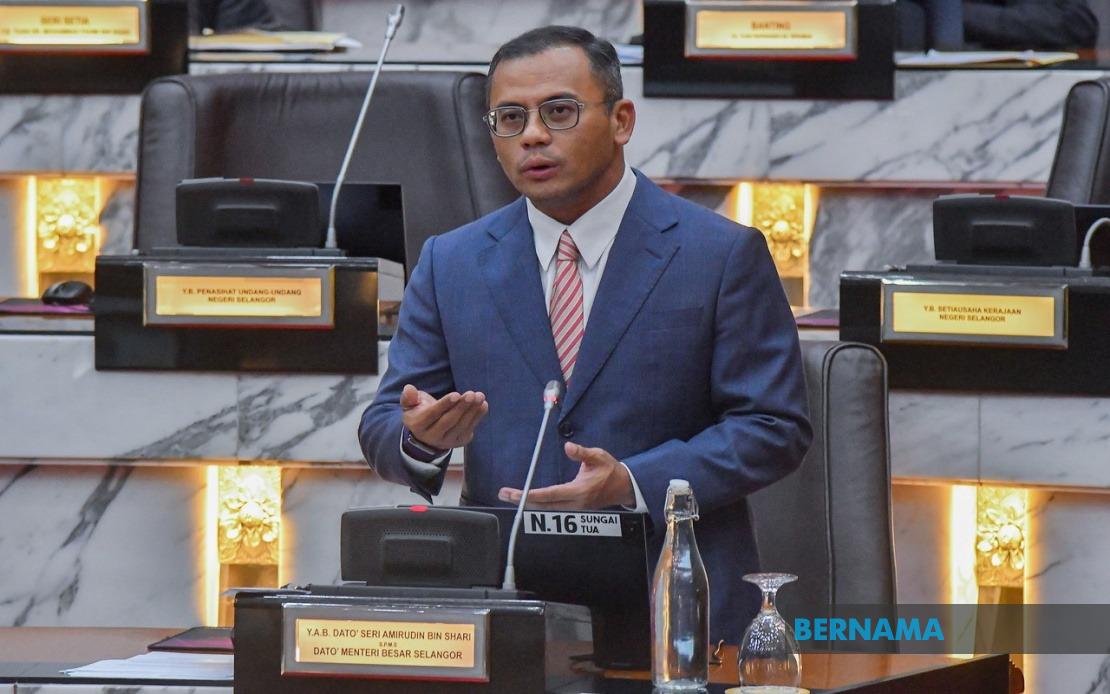
Selangor's Menteri Besar Datuk Seri Amirudin Shari has directed all local authorities throughout the state to undertake a thorough assessment of connectivity infrastructure serving public transportation networks. The directive responds to mounting frustration among commuters who have aired complaints on social media platforms regarding accessibility challenges, particularly around the Light Rail Transit Line 3 (LRT3) and connections to surrounding residential and commercial areas.
The Menteri Besar's instruction comes at a critical juncture for Selangor's broader mobility agenda. The state government has committed substantial resources to shift commuter behaviour away from private vehicle dependency and toward public transport adoption. However, connectivity gaps—the so-called "first-mile" and "last-mile" problem where passengers struggle to reach transit stations or travel onward after alighting—have emerged as a significant barrier to realising this vision. These infrastructure deficiencies undermine the convenience advantage that public transport should theoretically offer over private motoring.
During debate on the Selangor Resilience Strengthening Package at the State Legislative Assembly, assemblyman Danial Al-Rashid Haron Aminar Rashid raised the connectivity issue, which had previously gained traction through social media discussions. Rather than waiting for problems to escalate through viral posts on platforms like X (formerly Twitter) and Threads, Amirudin emphasised that local authorities must adopt a more proactive stance by directly engaging with council members and stakeholders. This approach underscores a shift toward preventive governance rather than reactive crisis management.
The state government has signalled willingness to commit additional financial resources to upgrade connectivity facilities. Amirudin stressed that improvements should prioritise practicality and efficiency rather than elaborate or costly solutions. Enhanced pedestrian infrastructure, including safer and more comfortable walkways linking residential areas to transit hubs, forms a core component of the proposed upgrades. The emphasis on pedestrian safety and comfort reflects acknowledgment that the journey to and from public transport stations significantly influences commuters' choice to use or avoid the system.
Amirudin tasked Ng Sze Han, chairman of the State Investment, Trade and Mobility Committee and representative for Kinrara, with coordinating engagement across all public transport operators. Ng will spearhead a service mapping exercise designed to identify and pinpoint geographic and temporal gaps in coverage. This data-driven approach aims to establish a common framework where the state government, operators, and local authorities can collaboratively address deficiencies. Service mapping typically reveals patterns in unmet demand that might otherwise remain invisible to individual stakeholders operating in silos.
The Menteri Besar's comments reveal a nuanced understanding of how subsidies function within the transit ecosystem. While the state can reduce operator costs through financial support, doing so alone proves insufficient if operators fail to align their service hours, frequency, and route patterns with commuter demand. A subsidised service operating with inconvenient hours or sparse frequency will fail to attract riders, leaving both commuters and operators worse off. This insight suggests the state intends to link future subsidy arrangements to improvements in service quality and coverage.
The connectivity challenge carries particular significance for Selangor given the state's role as Malaysia's economic engine. The capital region's rapid expansion has frequently outpaced corresponding development of transport infrastructure. Many new residential and mixed-use developments have emerged without adequate pedestrian or cycling infrastructure connecting to nearby transit stations. As a result, would-be public transport users default to private vehicles, exacerbating congestion and air quality challenges across the Klang Valley and surrounding areas.
For Malaysia's broader sustainable urban mobility agenda, Selangor's response carries resonance. The country has invested substantially in rapid transit networks, including LRT extensions and the Mass Rapid Transit system. However, the effectiveness of these capital-intensive projects remains constrained by last-mile connectivity failures. Selangor's initiative to comprehensively address these gaps could serve as a model for other states and federal territories wrestling with similar challenges. Kuala Lumpur, Putrajaya, and Penang, each operating their own rapid transit systems, face comparable issues.
The emphasis on listening to council members and residents before problems gain momentum on social media reflects awareness that the legitimacy of government action depends partly on perceived responsiveness. When commuters resort to social media to amplify complaints, they often signal that conventional channels for feedback have failed or proved too slow. By institutionalising early engagement with stakeholders, Selangor aims to address concerns before they crystallise into public discontent that damages confidence in the transit system and the state government.
The upcoming service mapping and operator consultations will likely reveal where interventions offer the highest return on investment. Some gaps may require pedestrian infrastructure improvements, others might need shuttle bus services or extended operating hours, whilst still others could benefit from cycle-share schemes or improved street lighting. A tailored approach ensures public resources flow toward solutions aligned with actual commuter needs rather than generic infrastructure.
Success ultimately hinges on sustained coordination and follow-through. Local authorities must genuinely prioritise connectivity in land-use planning and development approvals, whilst operators must commit to service modifications supported by state subsidies. Without genuine alignment of incentives across these parties, even well-intentioned reviews risk producing recommendations that gather dust. The Menteri Besar's direct involvement signals that the state leadership regards this challenge as sufficiently consequential to merit high-level attention and accountability.
Looking forward, the outcomes of this review will shape Selangor's ability to meet its medium-term mobility objectives. As Malaysia urbanises and climate considerations intensify pressure to reduce transport emissions, the gap between transit infrastructure investment and commuter accessibility directly influences whether billions in rail and bus system spending achieve their intended modal shift. Selangor's current initiative suggests policymakers increasingly recognise that connectivity, more than capital projects alone, determines whether public transport succeeds or fails in drawing users away from private vehicles.

