The Selangor State Government and Malaysia's Transport Ministry are racing to settle competing land claims that have delayed the Port Klang Third Terminal project on Carey Island, with Transport Minister Anthony Loke indicating that clearing this bureaucratic hurdle remains the immediate priority before construction can commence. The terminal development represents a cornerstone initiative for Malaysia's maritime and logistics ambitions, and the government has expressed determination to accelerate progress despite the complex land tenure issues that have complicated planning efforts.
Land ownership at the proposed terminal site is fragmented across multiple entities, creating a puzzle that authorities must solve before breaking ground. The Selangor State Development Corporation (PKNS) manages approximately 1,011.71 hectares of seabed under the Carey Island area, while Yayasan Selangor—the state's charitable foundation—holds title to roughly 687.96 hectares of coastal land adjacent to the proposed port zone. Together, these parcels comprise the 1,699.68-hectare footprint that state officials identified for the third terminal, yet coordinating between these organisations to create a unified development package has proven more complex than initial timelines anticipated.
The government's strategic intent behind the third terminal is unmistakable. Prime Minister Datuk Seri Anwar Ibrahim previously directed all relevant agencies to accelerate the project's realisation, signalling that this infrastructure ranks among the administration's priority economic initiatives. The port expansion is designed to bolster Malaysia's competitive standing in Southeast Asia's bustling maritime sector, where regional rivals including Singapore, Thailand, and Indonesia operate increasingly sophisticated facilities. As global container traffic patterns shift and supply chain structures reorganise following pandemic disruptions, Malaysia risks losing market share to competitors unless Port Klang can expand its throughput capacity and modern handling capabilities.
The Transport Ministry is advancing the project through a Build-Operate-Transfer concession framework, a structure increasingly common in Asia's infrastructure development. Under this model, a private concessionaire would finance, construct, and operate the terminal over a defined period before transferring ownership to the government or a state entity. Loke indicated that ministry officials and Selangor counterparts are evaluating proposals from the private sector, though securing land certainty remains the prerequisite for finalising commercial terms. The minister expressed hope that construction could commence within the current calendar year, though that timeline now appears optimistic given the unresolved land complications.
Selangor Menteri Besar Datuk Seri Amirudin Shari's earlier identification of the 1,699.68-hectare development zone provided detailed specifications for planners and prospective operators, yet the involvement of Yayasan Selangor introduced an additional stakeholder whose interests and priorities may diverge from those of PKNS or the state government itself. Charitable foundations typically operate under different governance structures and accountability frameworks than state development corporations, potentially complicating negotiations over land use, revenue sharing, and operational oversight. Reconciling these institutional interests requires diplomatic negotiation alongside legal expertise, explaining why the resolution process has extended beyond initial expectations.
For Malaysian businesses and the regional logistics community, delays in the third terminal's commencement carry real costs. Port Klang currently operates two major container terminals with combined annual capacity approaching 10 million twenty-foot equivalent units, yet demand projections suggest the port requires additional capacity within the coming decade to maintain competitive pricing and service reliability. Container shipping lines and freight forwarders increasingly demand choice among port operators and terminal facilities, and a third facility would strengthen Port Klang's negotiating position against rivals while potentially moderating handling charges that shippers ultimately bear.
The broader context of Malaysia's port infrastructure strategy involves competition between Port Klang and other domestic harbours. Port Tanjung Pelepas in Johor has aggressively expanded capacity and secured major shipping line partnerships, while ports in Thailand and Vietnam continue upgrading facilities. Port Klang's third terminal is conceived partly as a competitive response, ensuring that Malaysia's primary container gateway remains attractive to international operators and preserves the nation's role as a regional logistics hub. A prolonged delay risks allowing competitors to capture market share that would be difficult to reclaim once shipping lines establish established service patterns elsewhere.
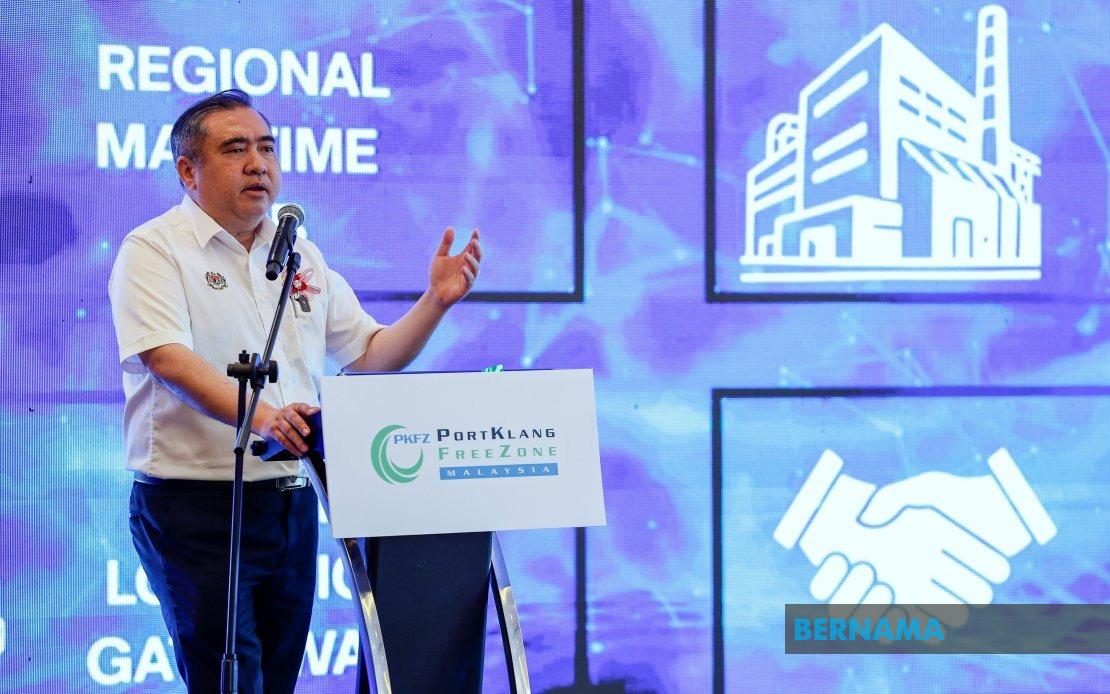
Beyond the third terminal itself, the broader Port Klang Free Zone experienced notable economic activity that underscores the strategic importance of the port ecosystem. The ceremonial opening of new manufacturing facilities and labour quarters, combined with the launch of an industrial intelligence initiative at PKFZ, represented cumulative new investment exceeding RM566 million. These parallel developments demonstrate that the free zone remains attractive to manufacturers and logistics operators, yet further expansion of the port's container-handling capacity would compound these opportunities. Businesses investing in the zone require confidence that they can source and despatch goods efficiently, and constrained port capacity creates operational bottlenecks that discourage industrial expansion.
The Transport Ministry has pursued complementary initiatives alongside the third terminal project, recognising that port infrastructure alone cannot solve Malaysia's logistics challenges. A memorandum of understanding recently signed between Port Klang Free Zone and the Armed Forces Ex-Servicemen's Affairs Corporation (Perhebat) addresses critical labour shortages, particularly among heavy vehicle drivers essential to moving cargo between ports and inland destinations. This partnership reflects broader recognition that Malaysia's logistics sector faces acute skill gaps that constrain growth and efficiency. By tapping military retirees and veterans—individuals typically possessing discipline, reliability, and mechanical aptitude—the government aims to build a steadier supply of qualified drivers while providing meaningful employment to veterans transitioning to civilian careers.
The heavy vehicle driver shortage that prompted the Perhebat agreement connects directly to port expansion plans. A third terminal would require expanded trucking networks to distribute containers inland, and the current driver shortage would become an acute constraint unless simultaneously addressed. The government's March announcement of a special programme enabling military retirees to obtain class E heavy vehicle licenses signals integrated thinking about infrastructure capacity, labour supply, and logistics competitiveness. Malaysia cannot efficiently expand port throughput without corresponding expansion of ground transportation capacity, and that requires resolving labour market gaps that have persisted despite years of industry warnings.
Looking forward, the critical path to launching Port Klang Third Terminal depends on concluding land acquisition and tenure arrangements within coming weeks. The involvement of Yayasan Selangor introduces variables that purely state-level negotiations might avoid, yet the foundation's participation reflects legitimate interests and may ultimately produce more durable arrangements than alternative approaches. Once land questions are resolved, the concession bidding process should proceed relatively expeditiously, as private operators understand the commercial case for modern container terminal facilities serving Malaysia's import-export economy.
The third terminal ultimately represents more than a single infrastructure project; it reflects Malaysia's broader ambitions to maintain competitive advantage in regional trade and logistics. Port efficiency and capacity directly influence manufacturing competitiveness, supply chain reliability, and foreign investment decisions. A project this strategically consequential cannot proceed without resolving foundational questions about land control and governance, even when those questions introduce procedural delays. The Selangor government and Transport Ministry appear committed to resolving these complications, and the project's ultimate success will depend on sustaining momentum and political will through the complex negotiations ahead.

