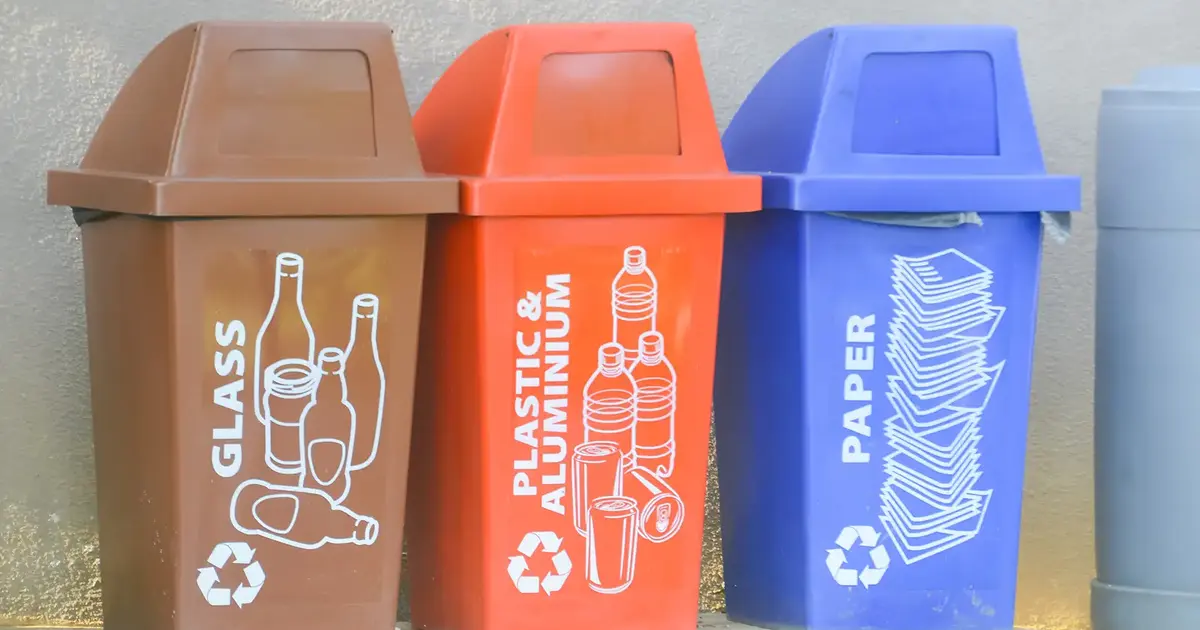
The Selangor state government and its relevant agencies have committed to reviewing the state's waste management guidelines, responding to growing concerns that ambiguities in the current framework are generating inconsistent implementation across municipalities and private operators. Local government committee chairman Ng Suee Lim has publicly acknowledged that existing provisions contain language susceptible to multiple interpretations, a structural weakness that has undermined clarity and compliance efforts across the sector.
The decision to conduct a comprehensive review reflects mounting pressure from waste management operators, local authorities, and environmental advocates who have highlighted the practical challenges arising from unclear regulatory language. When guidelines can be read in fundamentally different ways by different parties, the result is a patchwork of enforcement practices that creates unfair competitive conditions and makes it difficult for compliant operators to maintain consistent standards. This inconsistency has reportedly led to disputes between state agencies and licensed waste contractors over what constitutes proper adherence to existing rules.
Selangor's waste management sector has expanded significantly in recent years as the state's rapid urbanisation and industrial growth generate increasingly complex disposal challenges. The current guidelines, which have not undergone substantive revision in several years, were designed for a less sophisticated operational environment and lack the precision necessary to address contemporary waste streams including hazardous materials, electronic waste, and construction debris. The mushrooming number of private waste collectors, recycling facilities, and landfill operators has placed greater pressure on regulators to enforce standards consistently, making the existing ambiguities particularly problematic.
Ng Suee Lim's acknowledgement represents a significant step toward transparency and represents a departure from the initial resistance that regulatory agencies sometimes display when weaknesses in their frameworks are identified. Rather than defending the status quo, state officials have signalled willingness to engage in genuine reform. This posture is particularly important in Selangor, where the state government has positioned itself as a leader in environmental sustainability and urban planning innovation across the region.
The review process will likely examine several key areas where current language has generated confusion. These include definitions of waste categories, specifications for segregation and storage requirements, standards for transportation vehicles and documentation, protocols for facility inspections and enforcement actions, and the division of regulatory responsibilities between state agencies and municipal authorities. Each of these areas carries implications for operational costs, environmental protection, and fair competition within the industry.
For Malaysian waste management companies and environmental consultants, the forthcoming review represents both an opportunity and a period of regulatory uncertainty. Operators who have invested in compliance systems based on one interpretation of the guidelines may face adjustments if the revised framework adopts different standards. Conversely, clearer guidelines will reduce legal risks and compliance costs for conscientious operators while making it easier for authorities to take enforcement action against genuinely non-compliant facilities.
The broader Southeast Asian context makes Selangor's review particularly noteworthy. Across the region, waste management has emerged as a critical infrastructure challenge as rapid economic development outpaces governments' capacity to establish coherent regulatory frameworks. Malaysia, and Selangor in particular, has positioned itself as a regional leader in environmental governance. A successful modernisation of the state's waste management guidelines could serve as a template for other jurisdictions grappling with similar interpretation problems.
Environmental groups have welcomed the announcement but have stressed that the review must incorporate stronger provisions for waste reduction and recycling promotion, not merely clarify existing rules. They argue that Selangor should use this opportunity to embed circular economy principles into its waste management framework, shifting the regulatory focus from disposal toward resource recovery. The state government's openness to such suggestions will likely influence how comprehensively the review addresses systemic issues versus simply resolving interpretive ambiguities.
The timeline for completing the review remains unspecified, though Ng Suee Lim indicated that state agencies and local government bodies would begin consultation processes promptly. Stakeholder engagement will be critical to the review's success, as waste management operators possess frontline knowledge of how current guidelines function in practice. Public consultation periods should allow environmental groups, industry representatives, and affected communities to contribute perspectives on what an improved framework should contain.
Once revised guidelines are finalised, the state government will need to invest in training programmes for municipal enforcement staff, state inspectors, and private operators to ensure uniform interpretation and application. Without such capacity-building efforts, new guidelines risk becoming equally vulnerable to misinterpretation. Selangor's investment in regulatory clarity and implementation support will determine whether this review ultimately improves environmental outcomes or merely shuffles existing confusion into new forms.
The review also presents an opportunity for Selangor to align its waste management framework with federal environmental standards and emerging international best practices. As Malaysia works toward its commitments under various environmental agreements and sustainability pledges, harmonising state-level frameworks with national and global expectations becomes increasingly important. A modernised Selangor framework could facilitate cross-state coordination and position Malaysia more competitively within regional environmental governance discussions.
Ultimately, clarifying waste management guidelines serves interests that extend far beyond administrative convenience. Effective waste management directly impacts public health, environmental quality, and the viability of long-term development in one of Malaysia's most economically dynamic regions. By acknowledging current deficiencies and committing to substantive reform, Selangor's government has signalled that environmental regulation deserves the same strategic attention as economic development—a message that resonates across Southeast Asia's rapidly urbanising landscape.

