The Selangor state government has issued an urgent warning to residents about fraudulent SMS messages and suspicious links circulating online purporting to be connected to the KitaSelangor Voucher incentive scheme. In a statement released by the Selangor State Secretary's Office, authorities stressed the importance of public vigilance and urged citizens to avoid clicking on any unverified messages or links originating from unauthorised sources. The alert reflects growing concerns about opportunistic scammers exploiting public interest in state assistance programmes to harvest personal information or financial details from unsuspecting victims.
Crucially, the state government clarified that formal applications for the KitaSelangor Voucher Programme have not yet commenced. This distinction is important for residents to understand, as scammers routinely prey on confusion about programme timelines to lend credibility to their fraudulent messages. The Selangor State Secretary's Office emphasised that all legitimate information about the initiative should be obtained exclusively through official government channels, and residents are urged to exercise caution when encountering unsolicited communications claiming to relate to the voucher scheme.
According to the official announcement, the state government will begin notifying eligible recipients via SMS in stages beginning June 23. Those selected individuals will then be able to verify their personal details and submit formal applications through the dedicated KitaSelangor Voucher Portal, accompanied by relevant supporting documentation. To avoid confusion and prevent residents from falling victim to scammers, authorities have advised the public to await an official government announcement scheduled for June 22 before taking any action regarding the programme. This staggered notification approach, while intended to manage administrative workload, also creates opportunities for fraudsters to create convincing-looking messages that mimic the official sequence.
The KitaSelangor Voucher initiative represents a targeted poverty alleviation effort focused on specific vulnerable populations. The programme will distribute assistance to households registered in the eKasih database as poor, workers who have been retrenched, vulnerable individuals enrolled with the Social Welfare Department, and single mothers who satisfy the established eligibility criteria. By focusing resources on these groups, the state government aims to direct limited funds toward those facing the greatest financial hardship, though such targeted programmes can also lead to the creation of detailed beneficiary lists that fraudsters attempt to exploit.
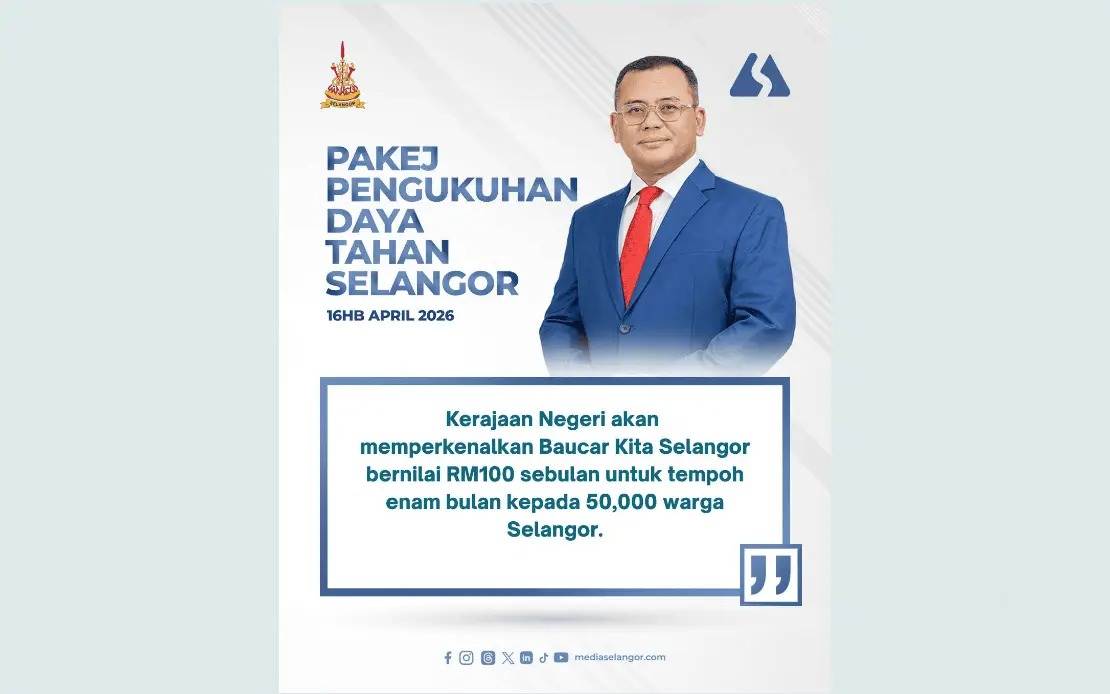
Selangor Menteri Besar Datuk Seri Amirudin Shari announced that the programme will benefit approximately 50,000 low-income families across the state, each receiving RM100 monthly for a six-month period. The initiative commenced on June 30 as part of the larger RM140 million Selangor Resilience Strengthening Package Phase 1, which was unveiled in mid-April. This broader assistance framework was designed to help residents navigate global economic headwinds, including elevated living costs and disruptions to international supply chains, challenges that have affected household budgets throughout Malaysia and Southeast Asia.
The timing of this fraud alert underscores a persistent vulnerability in government assistance distribution systems. As digital communication has become the primary means through which authorities notify citizens of benefit eligibility, scammers have similarly adapted their tactics to mimic official SMS notifications. For many low-income households—precisely the demographic targeted by KitaSelangor—distinguishing between legitimate government messages and fraudulent alternatives can prove difficult, particularly if recipients are less digitally literate or possess limited experience with official government platforms.
Residents who receive unsolicited SMS messages claiming to relate to the KitaSelangor Voucher should report these immediately to relevant authorities rather than engaging with any embedded links. The Selangor State Secretary's Office has effectively outlined a clear protocol: official communications will arrive after June 23, applications will be processed through an official portal, and eligible recipients will have been pre-identified through government agency databases. Any message deviating from this sequence should be treated with suspicion.
The rollout of this programme also highlights broader cybersecurity challenges facing Malaysia's digital government initiatives. As state and federal governments increasingly deliver assistance and services through digital platforms, investment in public awareness campaigns about legitimate communication channels becomes essential. The KitaSelangor Voucher alert represents a proactive effort to educate residents, but such warnings typically reach only a fraction of intended recipients, leaving many vulnerable to exploitation.
For Malaysian readers, particularly those in Selangor who may be eligible for assistance, the key takeaway remains straightforward: verify all programme-related information through official state government websites and social media accounts rather than responding to unsolicited messages. Those uncertain about their eligibility or the status of their application should contact the Selangor State Government directly through publicly listed contact numbers rather than using contact information provided in suspicious messages. In an era where financial pressures drive both innovation in assistance programmes and criminal ingenuity in fraud schemes, informed scepticism provides the most effective protection.