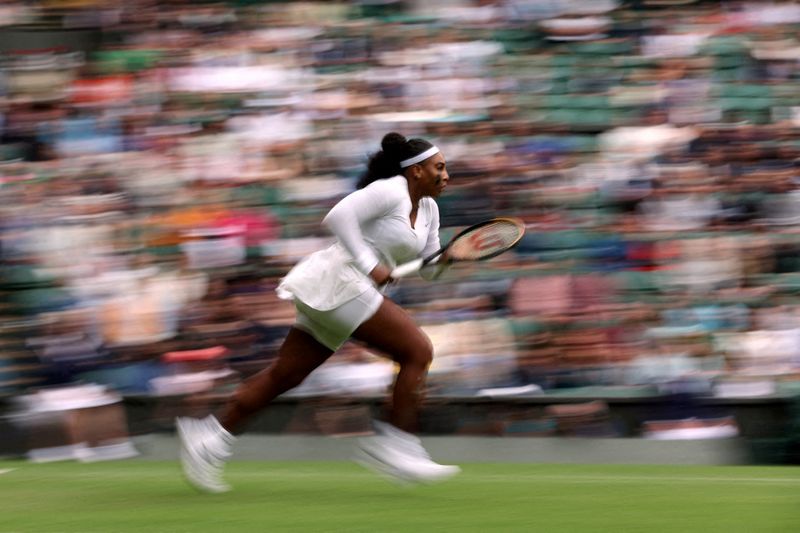
The final women's singles wildcard at Wimbledon has gone to Serena Williams, a decision that was never really in question despite initial speculation about the recipient's identity. Now 44 years old, the American champion made clear her intention to return to Centre Court, and the All England Club committee wasted no time in granting her entry to the tournament where she has dominated with seven singles titles and six doubles crowns alongside her sister Venus. Her arrival transforms the 2024 championship from a relatively open competition into something altogether different—a narrative centred entirely on one of sport's greatest athletes and whether she can author yet another improbable chapter in her career.
The timing of Williams's return carries weight beyond mere sporting curiosity. Four years have passed since she suffered a first-round loss to Harmony Tan and subsequently announced her transition away from competitive tennis at the U.S. Open that same year. In the intervening period, the women's game has evolved considerably, with new champions and contenders establishing themselves as the sport's primary draws. Aryna Sabalenka, the world number one chasing a maiden Wimbledon title, and defending champion Iga Swiatek will inevitably fade into the background once Williams enters the picture. Even Emma Raducanu, the focus of sustained British media attention, becomes a secondary storyline. Such is the gravitational pull that Williams exerts on professional tennis—a phenomenon that transcends the sport itself and speaks to her broader cultural significance.
Williams has framed her return partly around personal motivations that extend beyond competitive glory. She expressed a desire for her daughters, Olympia and Adira, to witness her playing at the highest level. She has also correctly noted that she has nothing left to prove—a champion with 23 Grand Slam singles titles and a legacy that fundamentally reshaped women's sport requires no vindication. Yet observers should harbour no illusions about her competitive intentions. Williams has trained extensively on the singles court and approached this Wimbledon campaign with seriousness that suggests genuine aspirations to compete effectively against contemporary rivals. Her recent doubles appearance at Queen's Club alongside Victoria Mboko provided a tangible hint at her current form and readiness.
Physical preparation has been central to Williams's comeback strategy. She has undertaken a substantial fitness regimen that has produced visible results, shedding 34 pounds through use of a GLP-1 weight-loss drug that she credits with making her feel better than she has in years. This pharmaceutical approach has sparked debate within tennis circles about performance enhancement and potential regulation, though former world number one Andy Roddick has defended the decision as eminently sensible strategy—effectively injury prevention that allows proper training at lighter bodyweight. The physical transformation is evident to observers, with Williams appearing considerably leaner than during her last serious competitive phase in 2022.
Roddick has emerged as an unexpected enthusiast for Williams's prospects, though he tempers his assessment with important caveats about what remains unknown. Her serving ability and raw power strike him as undiminished—Williams consistently clocked 120-mph serves during her Queen's Club doubles matches, remarkable velocity for any player, let alone one at her age. What remains uncertain is her lateral movement and capacity to cover the court effectively in extended singles matches. This mobility question represents the true test of her comeback viability. Roddick suggests that if her movement patterns prove adequate, there is legitimate reason to believe she can win singles matches at Wimbledon, though he expresses honest curiosity about this remaining variable rather than absolute confidence.
Beyond technical considerations, Williams carries an intangible psychological advantage that Roddick describes as the "Tiger effect," drawing a parallel to golf legend Tiger Woods's capacity to intimidate opponents merely through his presence. Inexperienced players particularly may find themselves psychologically compromised by facing someone of Williams's stature and proven record. The weight of history and expectation can be as decisive as any technical advantage, especially for younger competitors encountering one of sport's most dominant figures. This psychological dimension may prove especially valuable in early-round matches against less-seasoned opponents who lack the composure that experience provides.
The broader context for Williams's return extends to tennis's current competitive landscape. The sport has entered something of a post-golden-era phase, with Roger Federer, Rafael Nadal, and Andy Murray all retired, and with Carlos Alcaraz sidelined by injury. This year's Wimbledon faced the prospect of declining cultural prominence, potentially overshadowed by the football World Cup in terms of media attention and public interest. Williams's comeback provides exactly what the sport's administrators, broadcasters, and fan base desperately required—a compelling narrative feature and a genuine star capable of commanding attention. Her participation effectively elevates the entire tournament's profile and commercial appeal.
The historical dimension of a potential Williams achievement cannot be overlooked. Should she capture a singles title at Wimbledon, she would equal Margaret Court's record of 24 Grand Slam singles titles. Accomplishing this nine years after her previous Grand Slam victory would constitute one of sport's most remarkable comebacks, rivalling perhaps only the most improbable returns in athletic history. This possibility provides not merely sporting interest but genuine historical significance—a concrete, measurable target that transforms her participation from sentimental gesture into genuine quest for further championship glory.
Former world number four Mary Joe Fernandez, who will provide ESPN commentary coverage, characterises Williams's return as bold while celebrating the confidence it demonstrates. Her perspective reflects genuine enthusiasm about observing how Williams's game has evolved and what her movement patterns reveal about her current condition. The serving prowess, overall mobility, and competitive engagement remain the primary variables that will determine whether this comeback transcends narrative appeal and produces actual competitive results. Whatever the specific outcome, Fernandez contends the tournament will be unmissable—a sentiment likely shared by millions worldwide who recognise that Williams's mere presence at Wimbledon transforms it into something extraordinary.
Williams's return also carries significance for Malaysian and Southeast Asian audiences who have followed her career across decades. Her comeback narrative resonates universally with themes of perseverance, physical reinvention, and the refusal to accept diminishment based on age alone. In a regional context where respect for age and experience remains culturally significant, Williams embodies the possibility of meaningful re-engagement with one's life purpose. Her journey demonstrates that life chapters need not conclude decisively, that substantial breaks can be followed by meaningful returns, and that achievement remains possible at stages when convention suggests otherwise. These lessons extend well beyond tennis, offering broader inspiration for audiences considering their own potential trajectories and the possibilities inherent in disciplined physical and mental preparation.

