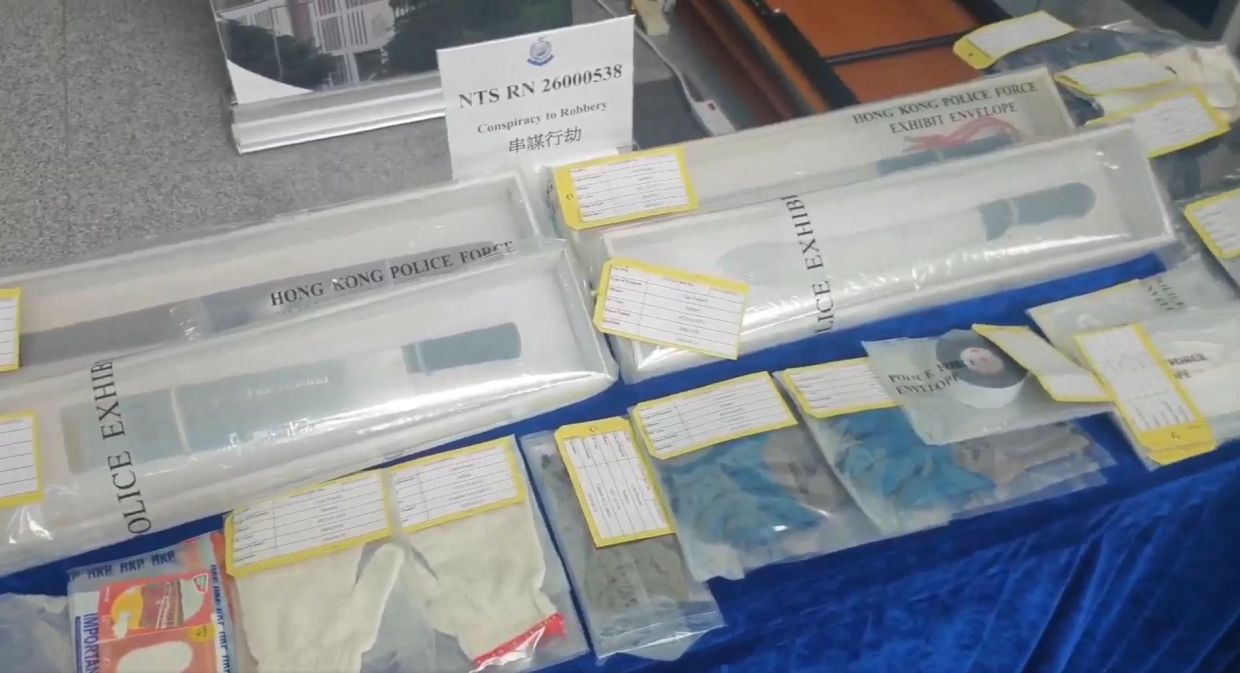
Seven individuals have been taken into custody following a violent robbery that claimed HK$7 million in gold bars from a traveller at Hong Kong International Airport's car park on Thursday, June 18. The swift arrests came within 12 hours of the incident being reported, with police nabbing four men and three women ranging in age from 20 to 39 years old. The suspects face charges of conspiracy to commit robbery and abetting offences, reflecting what investigators describe as a carefully orchestrated operation rather than opportunistic street crime.
The victim, a courier transporting goods for a mainland businessman, arrived early Thursday morning on a flight from Bali, Indonesia. He was carrying six gold bars secured in his backpack as he made his way through the airport's vehicle parking facilities. As he approached car park 3 to retrieve his vehicle, three masked assailants emerged and launched a coordinated attack. Armed with knives, the perpetrators inflicted stab wounds to the victim's left hand and foot before fleeing the scene with the backpack containing the precious cargo. The attackers used a seven-seater vehicle as their getaway transport, enabling them to evade immediate pursuit.
Police investigations have revealed connections between several of the arrested individuals and organised crime networks, suggesting the robbery involved members with triad affiliations. This criminal pedigree underscores the sophisticated nature of the operation and raises questions about the depth of coordination within Hong Kong's underworld. However, the investigation has taken a complex international dimension, as authorities believe additional suspects responsible for the heist have already crossed into mainland China and are beyond immediate reach. To address this, Hong Kong police have escalated the case through official channels, engaging mainland law enforcement agencies to track the fugitives and potentially secure their extradition or cooperation.
A particularly troubling aspect of the crime is evidence pointing to insider involvement in the conspiracy. The assailants demonstrated precise knowledge of the victim's flight arrival time and, critically, knew exactly which car park section he would use to access his vehicle. This level of intelligence could only have come from someone with access to flight manifests, arrival information, or the victim's itinerary. The coordinated nature of the ambush, combined with this advance knowledge, suggests a breach within airport operations or the transport logistics chain. Investigators are pursuing leads to identify any staff members or associates who may have provided the perpetrators with operational details essential to executing the robbery.
Following the assault, the victim was transported to Princess Margaret Hospital for emergency treatment. Medical staff stabilised his condition despite the severity of his injuries, and he remains hospitalised in stable condition. The physical evidence recovered from the crime scene has bolstered the investigation considerably. Police located the seven-seater vehicle used in the getaway in the Tsuen Wan district, along with the knives employed during the assault. These recovered items have provided forensic opportunities and may yield fingerprints, DNA evidence, or other investigative leads that could strengthen the prosecution's case against the arrested suspects.
The audacity of this crime at one of Asia's busiest international hubs raises broader concerns about security vulnerabilities at the airport. While Hong Kong International Airport maintains sophisticated surveillance systems and security protocols, this incident demonstrates that determined criminal elements can still identify and exploit gaps in protection, particularly when advance intelligence is available. The involvement of individuals with organised crime backgrounds suggests this was not a spontaneous act but rather a deliberately planned operation targeting a specific high-value shipment. This modus operandi is consistent with organised robbery patterns seen across the region, where criminal syndicates conduct reconnaissance and develop detailed operational plans before striking.
For regional business operators and logistics companies, the incident serves as a stark reminder of the risks associated with transporting high-value goods through busy transportation hubs. The fact that the courier was targeted specifically because of what he was carrying highlights the need for enhanced security protocols, including disguising valuable shipments, varying routes and times, employing armed security personnel, and maintaining strict confidentiality about transport arrangements. The involvement of an insider also underscores the importance of thorough vetting of employees and associates in sensitive roles within airports and freight operations.
The rapid police response and arrests within 12 hours demonstrate effective investigative work, but the departure of suspected accomplices to mainland China complicates prosecution efforts. Cross-border crime in the Greater China region remains a persistent challenge for law enforcement, requiring enhanced cooperation frameworks and information-sharing protocols. The case illustrates how Hong Kong's position as a major international finance and logistics centre makes it vulnerable to organised crime operations targeting high-value commodities moving through its territory. As investigators continue pursuing the fugitives with mainland authorities' assistance, the question of insider complicity remains paramount in understanding how this sophisticated heist was orchestrated.

