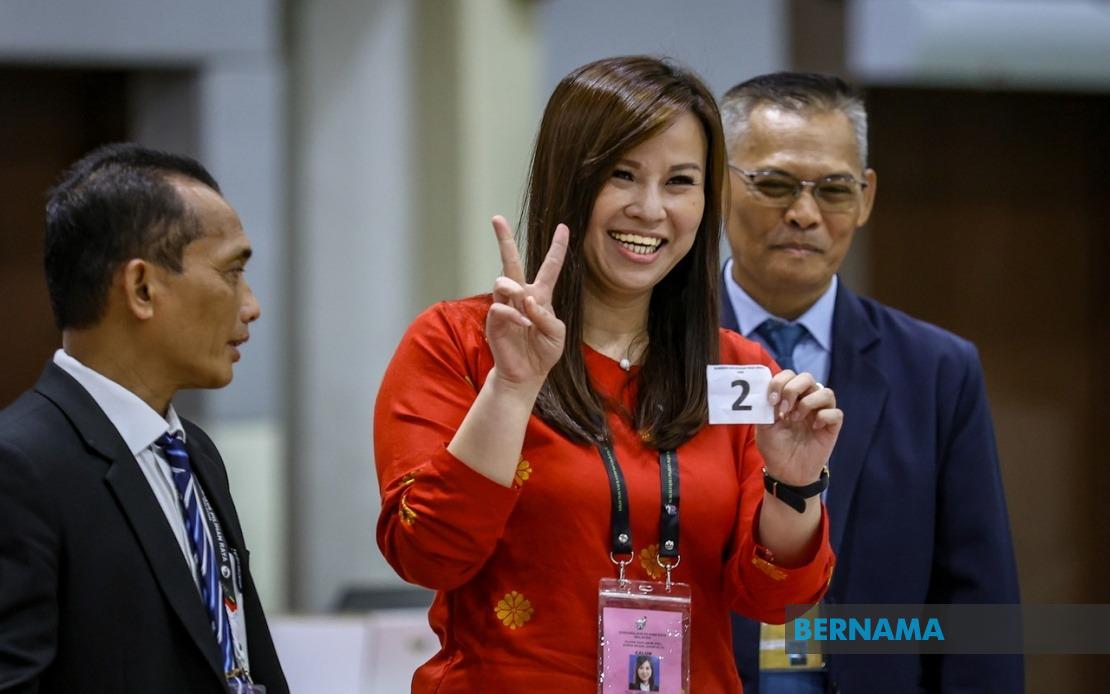
Sharon Teo, the Pakatan Harapan candidate contesting the Permas state seat in Johor's 16th assembly election, has positioned infrastructure development and social welfare as the twin pillars of her campaign. Speaking after the nomination process at Dewan Muafakat in Taman Mawar here, the Johor Amanah Women's Youth chief emphasised that these priorities emerge directly from conversations with residents across the constituency, reflecting genuine community concerns rather than top-down political messaging.
The condition of roads within the constituency has emerged as a particular flashpoint during Teo's campaign engagement. Rather than treating this as a routine infrastructure issue, she has framed road quality as fundamentally tied to public safety—a reframing that elevates the issue beyond simple maintenance and suggests deeper attention to how transport infrastructure connects communities and affects daily life. This approach resonates particularly in constituencies where residents have experienced years of deferred maintenance and potholed thoroughfares that compromise vehicle safety and mobility.
Teo brings political experience from her previous role as an aide within the Pulai parliamentary constituency, where she worked under the late Amanah deputy president Salahuddin Ayub. That background provides her with exposure to parliamentary-level operations and party structures, though Permas state-level politics will present a different scale of engagement. Her role heading Warda, the women's youth wing of Amanah, suggests she has developed organisational credentials within the party machinery, positioning her as more than a newcomer despite not holding elected office previously.
A detailed manifesto outlining Teo's comprehensive vision for the Permas electorate remains under development and will be unveiled before polling day. This deliberate timeline—releasing the manifesto closer to the election rather than immediately after nomination—suggests a strategic approach to controlling the campaign narrative and allowing time to incorporate emerging priorities identified during ground engagement.
The incumbent Barisan Nasional representative, Baharudin Mohamed Taib, successfully defended the Permas seat in the 2022 Johor state election and is now preparing to face what he publicly acknowledges will be a challenging contest. His candid assessment that each opponent possesses distinct strengths and that complacency poses a real threat suggests either genuine concern about electoral dynamics or a calculated attempt to motivate his campaign machinery by avoiding overconfidence. His commitment to working hard to secure a BN victory indicates recognition that retention cannot be assumed in an increasingly competitive political environment.
Notably, Baharudin has indicated he will not be publishing a personal manifesto, choosing instead to operate within the framework of the broader BN platform. This approach differs from Teo's strategy and suggests either confidence in the established BN brand or a preference for party-level coordination over individual candidate differentiation. The distinction in campaign styles between the two frontrunners may itself become a point of differentiation for voters evaluating their choices.
Permas is witnessing a four-cornered contest that extends beyond the traditional two-party framework that once dominated Malaysian elections. Beyond Teo and Baharudin, voters will choose between T. Vela representing Perikatan Nasional and Dr Zamil Najwah standing for Parti Bersama Malaysia. This fragmentation reflects broader shifts in Malaysian electoral politics, where growing numbers of voters are willing to consider alternatives to the historically dominant coalitions. The presence of PN and Bersama candidates suggests constituencies are becoming genuine battlegrounds where multiple credible alternatives exist.
The Permas state constituency, situated within the Pasir Gudang parliamentary constituency, encompasses 113,963 eligible voters. That substantial electorate means the seat carries real demographic weight within the broader Johor political landscape and influences which party controls the state assembly. The geographical location within Pasir Gudang creates potential for parliamentary and state-level candidates to coordinate campaigning efforts and messaging, though the specific dynamics of such coordination remain unclear.
The 16th Johor state election will proceed on July 11, with early voting opportunities available on July 7. That compressed timeline between nomination and polling day—roughly two weeks—concentrates the campaign period and requires candidates to move swiftly from nomination protocols into intensive grassroots engagement. For a challenger like Teo, this abbreviated window demands rapid mobilisation of party machinery and volunteer networks to establish visibility and communicate core messages. For the incumbent Baharudin, the timeline offers both risk and opportunity: insufficient time to definitively rebuild support if sentiment has shifted, but also a short period during which voter attention must be captured and converted into votes.
The contest in Permas reflects broader dynamics reshaping Johor politics in the post-2022 election period. The state has experienced significant political realignment, and individual constituencies now feature competitive dynamics that would have seemed unlikely in earlier electoral cycles. For Malaysian observers and political analysts, the Permas result will provide important signals about voter sentiment in a state that remains crucial to national political calculations. The campaign choices made by candidates—whether to emphasise local issues like road infrastructure or broader party platforms—will reveal what messaging strategies resonate most effectively with contemporary Johor voters navigating an increasingly complex political marketplace.

