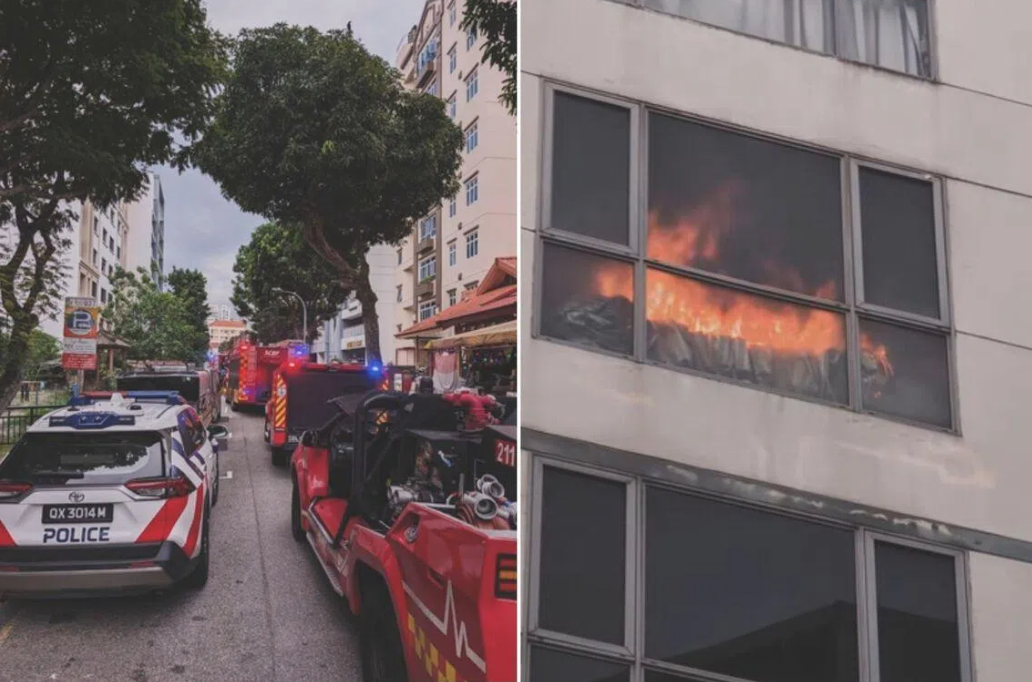
A residential condominium in the Geylang district of Singapore faced a serious fire hazard on Sunday when an unattended power-assisted bicycle battery caught fire, prompting emergency responders to evacuate neighbouring residents as a safety precaution. The Singapore Civil Defence Force received the alarm at 5.35pm regarding the blaze at 9 Lorong 26 Geylang, identified as the Casa Aerata condominium complex. Swift action by both police and SCDF personnel ensured that five occupants from adjacent units were safely evacuated, though no injuries were sustained during the incident.
The fire originated in a seventh-floor residential unit where the power-assisted bicycle battery was being charged in the living room without supervision. This seemingly routine activity turned dangerous when the battery malfunctioned and ignited, creating a situation that demanded rapid emergency response. The intensity of the fire was sufficient to cause structural damage, with the extreme heat eventually shattering a window in the unit—a phenomenon that prompted local Member of Parliament Cai Yinzhou to clear the area directly below the burning unit to protect pedestrians from falling debris and glass shards. His swift thinking demonstrated the importance of community vigilance during such emergencies.
The SCDF contained and extinguished the fire using standard firefighting equipment including a hosereel and a compressed air foam backpack. Preliminary investigations confirmed that the fire originated from an electrical fault within the power-assisted bicycle battery itself. This finding underscores the inherent risks associated with improper charging practices and the use of substandard battery components—issues that have become increasingly prevalent as these devices proliferate across the island state and throughout Southeast Asia.
The incident serves as a timely reminder of broader safety concerns surrounding active mobility devices in residential settings. The SCDF has issued a formal public advisory urging consumers to avoid purchasing or using non-original, third-party batteries for their power-assisted bicycles, personal mobility devices, and related active mobility aids. These counterfeit or low-quality batteries often lack proper safety certifications and internal protective mechanisms that prevent overheating and electrical failure. Consumers motivated by cost savings may inadvertently expose themselves and their neighbours to serious fire hazards.
Beyond the sourcing of batteries, the manner in which devices are charged plays an equally critical role in preventing such incidents. The SCDF specifically warned against charging power-assisted bicycles and personal mobility devices for extended periods or overnight, when users cannot monitor them for signs of overheating or malfunction. Leaving batteries unattended while plugged in eliminates the possibility of human intervention should warning signs emerge. This practice, though seemingly convenient, represents a significant safety risk in high-density residential environments where a single fire can threaten multiple households.
The statistics surrounding active mobility device fires in Singapore reveal a troubling pattern that carries implications for the broader region. The SCDF recorded 49 fires involving active mobility devices across residential premises in 2025, representing a decrease from 67 cases in the previous year. However, this overall decline masks a concerning upward trend within a specific category: personal mobility device fires increased from 25 cases in 2024 to 31 cases in 2025. Of the 304 electrical fires reported in residential settings during the early months of 2025, 34 involved some form of active mobility device, indicating that these appliances now constitute a notable proportion of residential fire incidents.
For Malaysian readers and policymakers, the Singapore experience offers valuable lessons as electric mobility adoption accelerates across the region. Malaysia has seen growing popularity of e-bikes, electric scooters, and similar devices in urban centres like Kuala Lumpur, Petaling Jaya, and George Town. The safety protocols and consumer warnings emerging from Singapore's experience should inform local fire prevention campaigns and regulatory frameworks. Property developers, building management companies, and residential associations throughout Malaysia would benefit from understanding these risks and implementing appropriate guidelines for residents using such devices.
The implications extend beyond individual safety to broader urban planning and community resilience. Condominiums and apartment complexes across Southeast Asia typically feature shared common areas and closely-spaced residential units, creating scenarios where a single battery failure can affect dozens of households simultaneously. Building management committees should consider establishing designated charging stations with proper ventilation, fire suppression systems, and supervision protocols. Such infrastructure investments could substantially reduce risks while accommodating the growing demand for convenient charging solutions.
The role of manufacturers and retailers in this safety ecosystem cannot be overlooked. The proliferation of non-original and counterfeit batteries often stems from supply chain challenges and insufficient regulation in some jurisdictions. Consumers may struggle to distinguish genuine products from counterfeits, particularly when purchasing through online platforms that operate across borders. Strengthening authentication mechanisms, implementing stricter import controls, and conducting public education campaigns about identifying legitimate batteries would address the root cause of many incidents. Retailers should be incentivised to stock only certified products through regulatory compliance measures and liability provisions.
As power-assisted bicycles and personal mobility devices become increasingly integral to urban transportation networks across Malaysia and the wider region, fire safety awareness must grow proportionally. The Sunday incident in Geylang demonstrates that even brief lapses in proper charging practices can have immediate and serious consequences. Residents, building managers, manufacturers, and government authorities all bear responsibility for promoting safer usage patterns. Through coordinated efforts focusing on consumer education, product regulation, infrastructure improvements, and emergency preparedness, communities can continue embracing the benefits of active mobility technology while substantially reducing associated risks.

