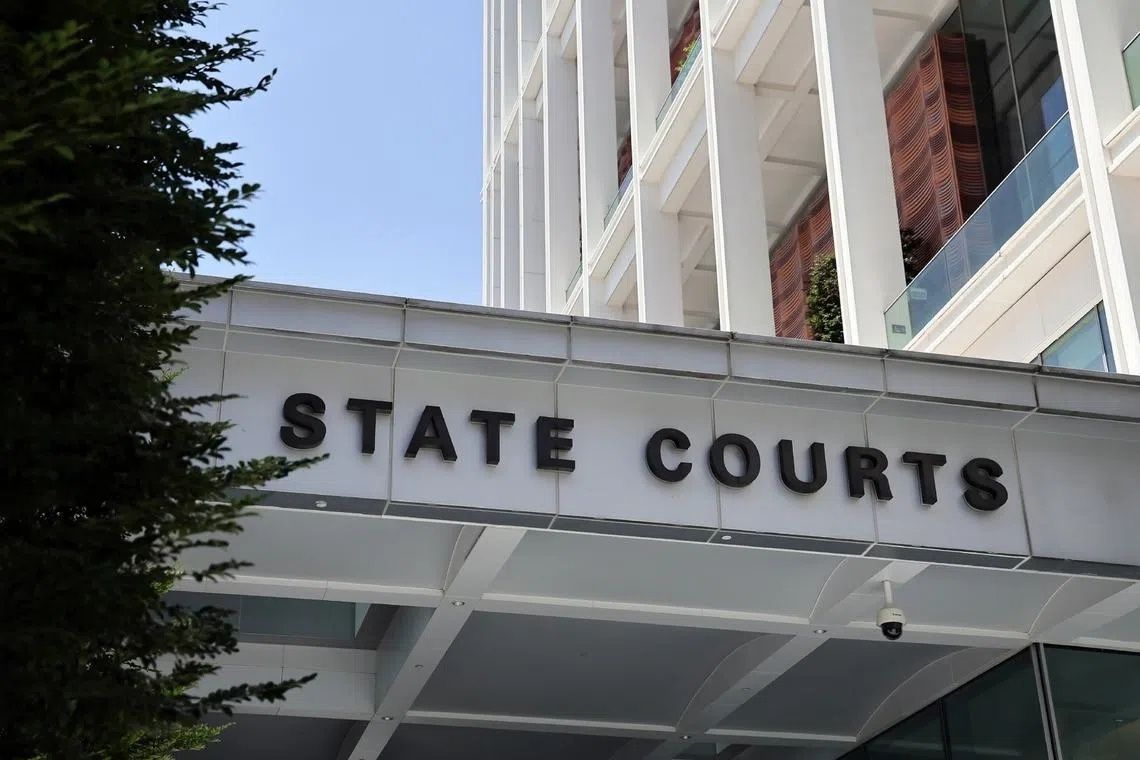
A dramatic escalation in drink driving enforcement saw Singapore courts process 41 intoxicated drivers in just 24 hours, exposing a troubling pattern of dangerous behaviour on the city-state's roads. Three of those charged faced the particularly alarming allegation of falling asleep while under the influence, a scenario that transforms impaired driving into near-certain catastrophe for themselves and innocent motorists.
The three somnolent drivers—Tho Yu Wei Ronald, 34; Zhong Pengzhi, 38; and Dharuman Killivalavan, 29—appeared before a district court on June 25, each facing charges of drink driving coupled with the secondary offence of leaving vehicles in positions that obstructed public spaces. Their cases underscore how alcohol not only impairs judgment and motor control but fundamentally compromises the neurological functions required to maintain consciousness while operating heavy machinery. Falling asleep behind the wheel represents perhaps the ultimate indictment of drink driving: a driver rendered entirely incapable of responding to hazards or correcting course.
Tho's incident occurred late on April 30 when his vehicle was discovered abandoned at the entrance to a multi-storey carpark at Block 176 Hougang Street 13 shortly after 11 p.m. Laboratory analysis revealed his breath contained 51 micrograms of alcohol per 100 millilitres, significantly exceeding Singapore's 35 microgram threshold. The margin of violation—46 per cent above the legal limit—suggests substantial consumption rather than borderline intoxication, raising questions about how such a driver managed to operate a vehicle at all before succumbing to unconsciousness.
Zhong's vehicle was discovered blocking the second lane of a two-lane thoroughfare along Clementi Avenue 5 at approximately 1.40 a.m. on May 9, creating a traffic obstruction during early morning hours when alternative routes may be limited. His breath sample registered 48 micrograms per 100 millilitres of alcohol. The timing and location of his vehicle's abandonment suggests he lost consciousness while navigating a multi-lane road, a scenario potentially more hazardous than single-lane driving had he remained conscious and continued moving.
Dharuman Killivalavan's case proved most alarming in terms of the vehicle type involved. The Indian national was driving a commercial lorry along Loyang Avenue at 7.45 p.m. on June 15 when he abandoned it along the extreme right lane. His alcohol concentration reached 87 micrograms per 100 millilitres—nearly two and a half times the legal limit. A lorry driven by an impaired operator, particularly one prone to falling asleep, represents an exponentially greater hazard than a private sedan. Dharuman pleaded guilty and received a $7,100 fine alongside a 36-month driving disqualification, penalties that, while substantial, cannot adequately compensate for the catastrophic potential his actions created.
The scale of enforcement revealed on this single day—41 separate charges across a 24-hour period—indicates either a concentrated police operation or an endemic problem requiring systematic response. The age range of offenders, spanning from 25 to 68 years, demonstrates that drink driving transcends demographic boundaries, affecting young professionals through to retirees. This diversity suggests cultural attitudes toward alcohol and driving remain insufficiently cautious across multiple generational cohorts in Singapore's population.
More troubling still was the identification of repeat offenders within this cohort. Cheng Woon Siong, 44, represented a particular concern: having been convicted of drink driving in December 2019, he was nonetheless stopped and charged again after registering 52 micrograms per 100 millilitres of alcohol. Rather than learning from previous legal consequences, Cheng reoffended, leading to a one-month jail sentence, a $5,500 fine, and a five-year driving prohibition. His recidivism suggests that existing penalties may insufficiently deter or rehabilitate certain offenders.
Similarly, Koh Choon Lye, 48, represented continuity of dangerous behaviour. Convicted previously in 2018 for the same offence, he was apprehended on April 16 along Tyrwhitt Road with a breath alcohol level of 51 micrograms per 100 millilitres. That multiple offenders appeared within a single day's batch of prosecutions implies that Singapore's drink driving problem includes a core of persistent violators despite available legal deterrents.
Broader statistical context underscores the severity of the underlying issue. Singapore's Traffic Police reported 1,716 arrests for drink driving throughout 2025, though the news report does not specify whether this refers to calendar year or fiscal year. More critically, 12 fatal accidents attributed to drink driving occurred that same year, a grim reminder that each statistic represents shattered families and preventable tragedy. These fatalities establish drink driving not as a victimless violation but as a genuine threat to public safety meriting enhanced enforcement and public education.
The enforcement operation reflects Singapore authorities' recognition that voluntary compliance proves insufficient. Police statements explicitly characterised drink driving as "extremely dangerous and irresponsible," language that moves beyond bureaucratic neutrality to moral condemnation. The accompanying public exhortation to use taxis or private-hire vehicles instead acknowledges that modern urban environments provide readily available alternatives to driving while impaired—a luxury unavailable in less developed settings but a responsibility in affluent city-states.
For Malaysia and other Southeast Asian nations observing Singapore's enforcement patterns, the single-day charging blitz offers instructive lessons about the prevalence of drink driving despite stricture laws. If 41 drivers can be processed in one day in a relatively small, wealthy city-state with sophisticated transport alternatives and stringent enforcement, the true scale of drink driving in the broader region likely reaches alarming proportions. Malaysian authorities might consider whether comparable enforcement intensity on Malaysian roads would uncover similarly high numbers of impaired drivers, suggesting that road safety improvements require not merely legislative sophistication but consistent, visible enforcement that raises the perceived certainty of apprehension. The sleeping drivers case particularly resonates as a cautionary tale: impaired judgment escalates progressively, ultimately compromising consciousness itself.

