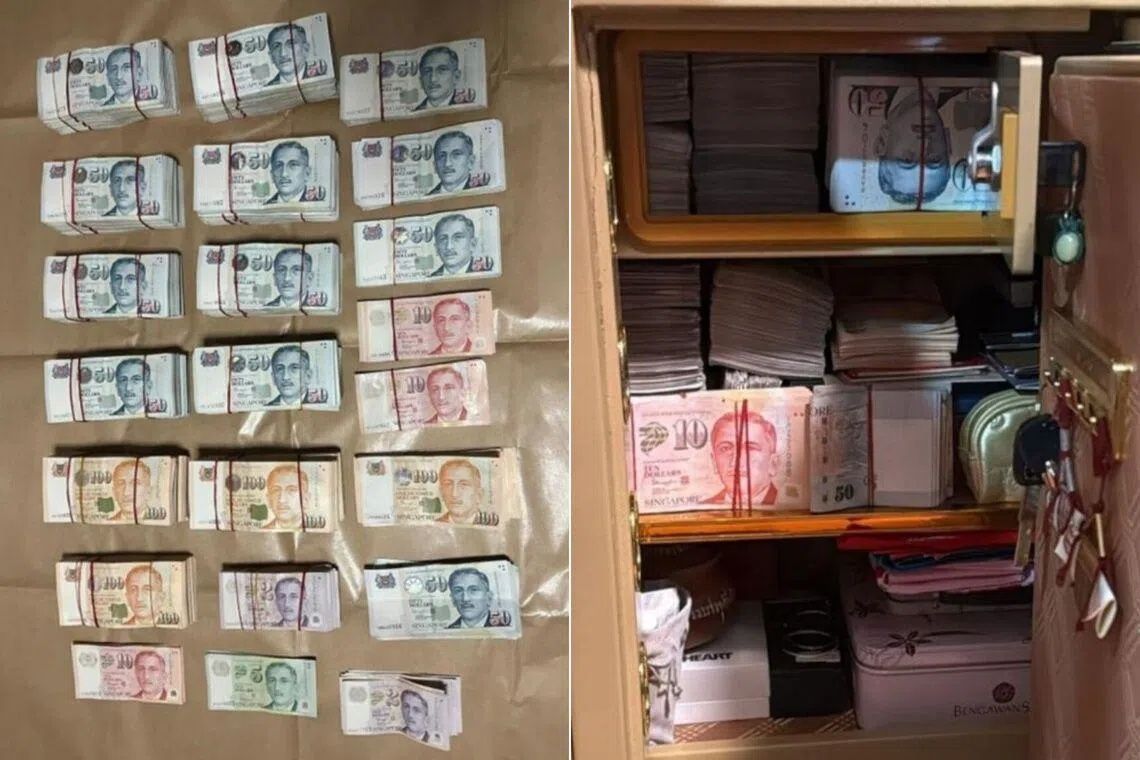
Singapore's law enforcement has dismantled a significant illegal gambling operation, arresting 17 individuals and confiscating over S$720,000 in cash during an islandwide enforcement sweep on July 6. The simultaneous raids, coordinated across 13 residential areas and neighbourhoods, represent a major escalation in the authorities' efforts to suppress unlicensed betting networks that have proliferated during major international sporting events.
The operation, announced by police on July 7, involved three specialist units: the Criminal Investigation Department, the Police Intelligence Department, and the Special Operations Command. The coordination across these agencies underscores how seriously Singapore views the underground gambling problem. Officers descended on locations spanning the island from north to south—including Yishun, Ang Mo Kio, Toa Payoh, Potong Pasir, Changi, Pasir Ris, Bedok, Joo Chiat, Tampines, Kaki Bukit, West Coast, Bukit Batok and Choa Chu Kang—suggesting a highly distributed operation rather than a single criminal enterprise.
The arrested individuals comprise 14 men and three women ranging in age from 45 to 76 years old. Beyond the substantial cash haul, authorities seized electronic devices including mobile phones and computers, along with gambling-related equipment. The age profile of those detained is notable, pointing to participation across generations and potentially indicating that older residents may be equally vulnerable to involvement in underground betting as younger, tech-savvy populations.
Among the 17 detainees, five individuals—four men aged 47 to 76 and one 47-year-old woman—are facing immediate court proceedings scheduled for July 8 on charges under the Gambling Control Act. These expedited prosecutions signal the seriousness with which authorities are treating the matter. Conviction carries substantial penalties: fines reaching S$500,000 and imprisonment for up to seven years, representing some of the harsher sentences available under Singapore's gambling legislation. The remaining 12 suspects remain under investigation, suggesting authorities are building broader cases that may implicate additional networks or operators.
Singapore's strict regulatory environment designates Singapore Pools as the sole licensed entity permitted to operate lotteries, sports betting, and remote gambling services. Any other form of gambling, whether conducted online or offline, remains strictly illegal. This monopoly framework reflects the government's determination to maintain comprehensive oversight of gambling activities and to capture tax revenue from such operations. The presence of extensive illegal networks indicates that demand for gambling substantially exceeds what the licensed operator provides, or that underground operators offer products and accessibility that licensed channels cannot match.
The timing of this enforcement action carries particular significance. Major international sporting tournaments, especially the FIFA World Cup, typically trigger surges in gambling activity across Southeast Asia and globally. The upcoming FIFA World Cup 2026, scheduled to run from June 11 to July 19, prompted Singapore's Ministry of Home Affairs and Ministry of Social and Family Development to announce enhanced enforcement measures on June 9. This proactive stance reflects lessons learned from previous tournaments where illegal gambling operations flourished amid heightened public interest in international matches. Malaysian law enforcement officials watching this operation may draw useful lessons regarding coordination and resource allocation during high-betting periods.
The government's dual-track approach combines punitive enforcement with educational initiatives addressing problem gambling. Police statements emphasised that members of the public should avoid unlicensed gambling activities entirely, framing this not merely as a legal matter but as a public welfare issue. The Ministry of Social and Family Development's involvement indicates that authorities view problem gambling as a social problem requiring intervention beyond police action, suggesting support services and counselling may be available for affected individuals and families.
For Malaysia and other Southeast Asian nations, Singapore's coordinated response offers instructive precedent. The region faces similar challenges with underground gambling networks exploiting digital technologies and international sporting events to expand their customer bases. The cross-agency coordination demonstrated here—combining criminal investigation specialists with intelligence operatives and special operations personnel—represents a model that other governments might adapt. Additionally, Singapore's emphasis on targeting the operators and infrastructure rather than focusing primarily on individual bettors suggests a strategic approach that may prove more cost-effective than mass-scale consumer prosecution.
The substantial cash seizures indicate that illegal gambling remains highly profitable despite legal sanctions. The S$720,000 recovered represents only what was physically present during raids; authorities likely recognise that digital transfers and overseas-based payment processors may facilitate much larger volumes of illicit wagers. This reality underscores why Singapore's authorities have escalated their efforts and why neighbouring countries face similar persistent challenges even when enforcement is reasonably robust.
The police's public statement warning citizens to avoid illegal gambling and pledging continued firm action sets expectations for ongoing enforcement activity. This messaging is particularly important during periods preceding major tournaments when gambling enthusiasm peaks. By establishing a visible enforcement presence before the World Cup period intensifies, authorities aim to deter potential customers and operators from establishing new networks or expanding existing ones.
For residents across Singapore and observers throughout the region, this operation demonstrates that law enforcement remains actively engaged in combating underground gambling networks. However, the continued discovery of these operations also illustrates that despite sophisticated enforcement tools and legal penalties, demand for illicit gambling persists. The challenge for policymakers involves determining whether enhanced enforcement, modified licensing frameworks, improved social support, or some combination thereof will prove most effective in addressing what appears to be an enduring structural problem in the region's gaming landscape.

