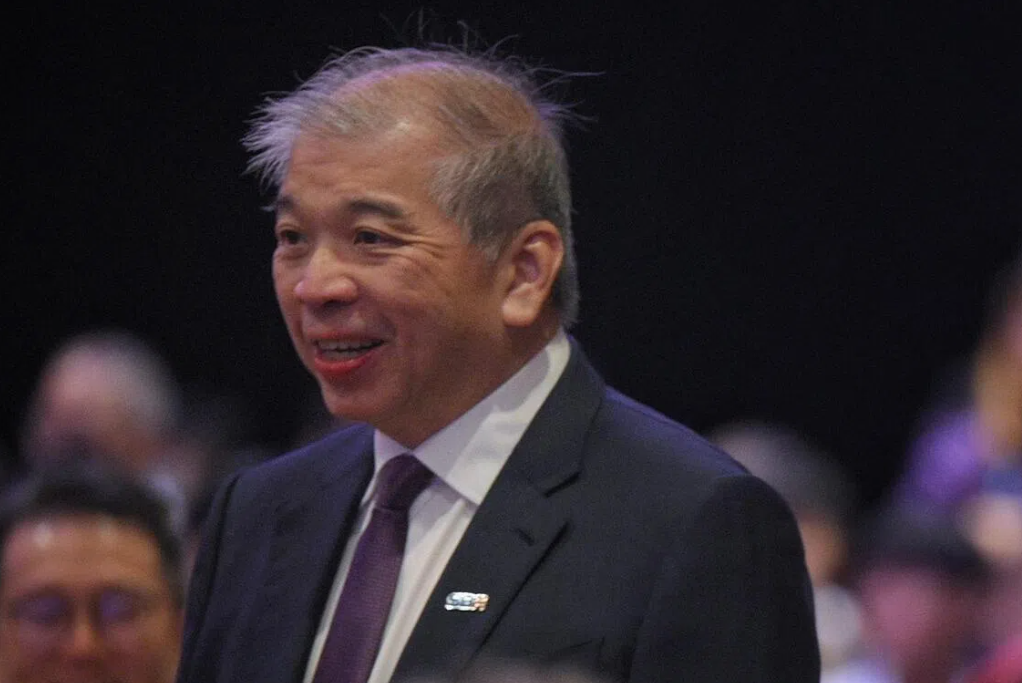
A high-profile Singapore shipping magnate has been swept into a widening legal storm in the United States stemming from an alleged global conspiracy to manipulate container prices. Teo Siong Seng, the chief executive of Singamas Container Holdings, is among several industry executives named in two separate civil class-action lawsuits filed in California's Northern District Court in early June. The cases represent a significant escalation beyond the criminal prosecution launched by the US Department of Justice, introducing a fresh avenue of liability through American private business claims that could prove far more costly.
The twin lawsuits, initiated by manufacturing firm C.A. Spalding Company and transportation company Daybreak Express, seek to recover substantial financial damages these American enterprises say they incurred as a result of the alleged cartel's operations. Both filings reference the criminal indictment unsealed in May, which identified five major container manufacturers and producers who together controlled approximately 95 per cent of worldwide standard dry container manufacturing. The named firms include China International Marine Containers (CIMC), Shanghai Universal Logistics Equipment, CXIC Group Containers, and Singamas, alongside two unnamed manufacturers.
According to the court documents underpinning the civil actions, the conspiracy operated through remarkably systematic mechanisms designed to maintain artificial price floors. Executives allegedly coordinated restrictions on production capacity by capping the number of shifts and operational hours available at each manufacturing facility's production lines. The conspirators then installed an extensive surveillance network consisting of 87 video cameras positioned across 49 container production lines at their factories throughout their operations, creating a monitoring system ostensibly designed to ensure adherence to the agreed production quotas.
The financial impact of these restrictions proved staggering for the global shipping industry. Investigation findings disclosed that the price of a standard twenty-foot shipping container more than doubled during a two-year window, climbing from approximately US$1,600 in 2019 to US$3,500 by 2021. This sharp escalation in a commodity that forms the backbone of international trade affected countless businesses reliant on container shipping, from small exporters to major logistics operations dependent on predictable transportation costs.
The alleged conspirators reaped enormous profits from the artificially elevated prices. CIMC's container division saw its profitability transform dramatically, with earnings rising from roughly 137 million yuan in 2019 to 1.99 billion yuan the following year and then soaring to 11.3 billion yuan by 2021. Singamas experienced an even more dramatic turnaround, moving from a net loss of approximately US$110 million in 2019 to reporting profits of around US$186.8 million by 2021. These figures underscore the magnitude of wealth extracted through the alleged scheme.
The civil cases carry particularly severe financial consequences because they are being pursued under treble damages provisions. Should the defendants be found liable, courts may order them to pay three times the actual financial losses demonstrated by the affected American businesses. This multiplier mechanism exists under US antitrust law specifically to deter large-scale price-fixing conspiracies and to compensate victims more comprehensively than simple restitution would allow. For companies and executives facing such claims, the exposure extends far beyond recovering actual losses.
Court records indicate that summonses were issued on June 8 and 11, requiring the named defendants and firms to file formal responses within twenty-one days of service. Failure to respond within this window could result in default judgments being entered against them without further proceedings. Among the individuals named alongside Teo are Mai Boliang, who served as CIMC's president and chief executive before becoming chairman in August 2020; Huang Tianhua, CIMC's vice-president; Wan Yongbo, general manager of CIMC's Operation Management Centre; Li Qianmin, general manager of Shanghai Universal Logistics Equipment; and Zhang Yuqiang, chief executive of CXIC Group Containers. Additionally, Singamas marketing director Vick Ma has been named; Ma is currently facing extradition proceedings to the United States following his arrest in France in April.
Teo, a seventy-one-year-old Singaporean businessman, has maintained silence regarding the civil lawsuits but has taken decisive action to distance himself from numerous high-profile positions. Since the criminal indictment was announced, he has stepped back from his role as executive chairman of Pacific International Lines, a major shipping company, and has taken leave from his position as chairman of the Singapore Business Federation. He has also temporarily stepped away from his board membership with Enterprise Singapore and his role as pro-chancellor at the National University of Singapore. These moves reflect the reputational damage and time demands arising from the allegations.
Teo's withdrawal from the Singapore Business Federation proved particularly notable given his recent election to that position. He assumed the chairmanship on May 20 after Lim Ming Yan, the previous chairman, stepped down early to take up the role of chairman at Changi Airport Group. Teo declared on May 28 that he would not seek re-election when his term expires on June 24. He had previously served as SBF chairman from 2014 to 2020, completing three consecutive two-year terms, which would have made him a familiar figure to Singapore's business establishment.
In his singular public statement since the allegations surfaced, released on May 28, Teo explained his decision to take leaves of absence by emphasizing the need to devote sufficient time to addressing the matter and to serve the interests of the organizations from which he had stepped back. He refrained from commenting directly on the merits of the accusations or the specific allegations contained within the lawsuits and indictment. This measured approach contrasts sharply with his extensive track record in Singapore's business community and suggests he is operating under legal advice to avoid making statements that could be used in the various proceedings.
For Malaysian and Southeast Asian business readers, this case carries significant implications. The region's manufacturing and logistics sectors depend heavily on container shipping, meaning the alleged price manipulation would have affected companies throughout the region. The case also demonstrates the reach of US antitrust enforcement into international business conduct, a reality that companies operating across borders must now factor into compliance and risk assessments. The treble damages mechanism makes US litigation particularly costly, creating incentives for companies to ensure strict adherence to competition laws in all jurisdictions where they operate.
The divergence between the criminal prosecution and civil actions is equally instructive. While criminal charges proceed separately through DOJ channels, the civil lawsuits driven by affected private companies can proceed independently and often move faster through the courts. This means defendants face simultaneous exposure on multiple fronts, with different potential remedies and different standards of proof. For businesses in Southeast Asia engaged in manufacturing or trade with American counterparts, understanding these parallel legal processes has become essential to managing international compliance obligations.