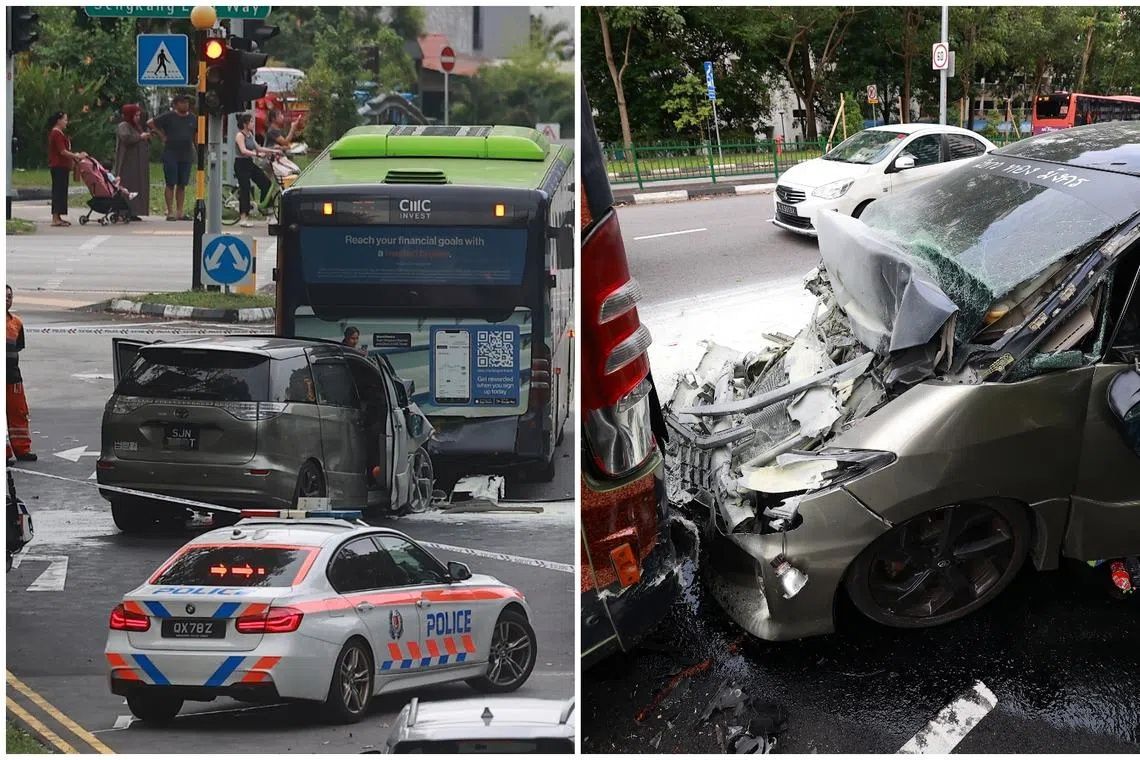
Singapore is confronting an alarming spike in road traffic accidents caused by drug-impaired driving, prompting urgent warnings from medical professionals about the public safety implications. Between 2023 and 2025, police documented 38 traffic accidents directly linked to drug use and etomidate consumption, of which 19 proved fatal. The trajectory deteriorated significantly in 2025, when 29 of these 38 incidents occurred, underlining the accelerating nature of the problem and raising serious concerns among transport authorities and healthcare providers across the region.
The emergence of etomidate-laced vaping devices, commonly known as Kpods, has created a particularly insidious threat that enforcement agencies are still grappling with. Etomidate, an anaesthetic compound, was not traditionally associated with substance abuse but has become a novel psychoactive substance delivered through electronic vaporisers. Jonathan Tang, a clinical toxicologist at the National University Hospital's Emergency Medicine Department, has directly treated patients suffering traumatic injuries from accidents involving etomidate intoxication. His professional observations align with broader medical understanding that etomidate impairs cognitive and motor functions in ways comparable to alcohol intoxication, fundamentally compromising the ability to safely operate motor vehicles.
A May 2025 collision in Punggol illustrates the deadly consequences of this trend. During that incident, a vehicle operated by a driver found to have etomidate in his bloodstream crashed into a bus, killing a 28-year-old female passenger. Police recovered 42 vapes and over 1,200 pods from the vehicle, with some containing etomidate. The woman's autopsy also revealed etomidate presence, suggesting both occupants had been using the substance. This fatal outcome represents one of nine etomidate-related deaths among the 38 documented accidents and exemplifies how readily available vaping technology can facilitate dangerous drug use immediately before or during driving.
Beyond the immediate impairment effects, medical specialists caution that etomidate consumption produces psychiatric side effects that compound road safety risks. Tang explained that users frequently experience depressed mood, heightened aggression, and increased impulsivity following etomidate use. These psychological effects can trigger suicidal ideation, substantially degrading judgment and decision-making capacity behind the wheel. The combination of acute intoxication symptoms—delayed reaction times, diminished hazard perception, and loss of vehicle control—merged with mood disturbances creates a multiplied danger to the driver and everyone sharing the road.
Singapore's overall road safety situation has deteriorated significantly, with traffic fatalities reaching a decade-high in 2025. A total of 149 people died in road accidents last year, surpassing the 142 deaths recorded in 2024 and substantially exceeding the 141 deaths in 2016. Simultaneously, injury counts climbed from 9,342 in 2024 to 9,955 in 2025, indicating both more severe collisions and rising accident frequency. These statistics demonstrate that drug-impaired driving represents a critical component of Singapore's broader traffic safety crisis rather than an isolated concern.
Parliamentary attention to the issue emerged when Member Valerie Lee, representing Pasir Ris-Changi GRC, questioned whether traffic police systematically screened accident-involved motorists for drug and etomidate impairment in February. Coordinating Minister for National Security K. Shanmugam responded that Traffic Police assess motorists for impairment following accidents and mandates blood testing when drug or etomidate use is suspected. Drivers found to be operating vehicles while drug-impaired face serious legal consequences, including jail sentences of up to two years and fines reaching S$20,000 for repeat offenders. First-time convictions carry potential one-year imprisonment and S$10,000 fines.
Recent prosecutions underscore enforcement responses to the problem. Mohamed Firdouz Mohamed Akram, charged on June 19, faced multiple counts including dangerous driving causing injury after a collision with a taxi in Kallang. The 36-year-old had consumed methamphetamine, commonly called Ice, and fled the accident scene before police apprehended him and discovered drugs, vaporisers, and weapons in his vehicle. On the same date, Puah Zhe Cong, aged 34, confronted seven charges under the Road Traffic Act, including dangerous driving causing death, after allegedly consuming etomidate and striking at least one fatality and two injuries. Sivakandesh, 32, was charged after his Mercedes-Benz collided with concrete bollards, a parked vehicle, and a rubbish chute in Yishun Street while he was under methamphetamine's influence.
The legal framework addressing drug-impaired driving remains stringent but faces challenges from evolving substance delivery methods. Traditional enforcement mechanisms focusing on alcohol detection must now contend with novel psychoactive substances administered through vaping technology that may evade initial detection. Kpods, designed to be inconspicuous and portable, enable users to consume etomidate discreetly and rapidly before driving, complicating preventative enforcement efforts. The chemical's anaesthetic properties and psychiatric side effects distinguish it from conventional recreational drugs, potentially affecting medical and legal responses differently than established substance-impairment protocols.
For Malaysian and wider Southeast Asian contexts, Singapore's experience carries significant implications. As vaping products proliferate across the region and novel psychoactive substances circulate through international supply chains, neighboring jurisdictions face similar emerging threats. Etomidate-laced vapes may reach Malaysian markets, where road safety infrastructure and toxicology expertise vary considerably compared to Singapore's more developed frameworks. The rapid escalation from isolated cases in 2023 to dominant accident causes in 2025 suggests the problem can metastasise quickly once distribution networks establish themselves, necessitating proactive awareness and regulatory responses before similar crises develop in other countries.
Emergency medicine specialists like Tang advocate for comprehensive public education campaigns distinguishing novel psychoactive substances from traditional drugs, emphasizing that etomidate use produces impairment equivalent to alcohol intoxication. Tang specifically noted that the combination of delayed reactions, poor hazard perception, vehicle control loss, psychiatric symptoms, and suicidal ideation creates a particularly dangerous driving profile. Healthcare providers, law enforcement, and transport authorities across Southeast Asia would benefit from coordinated information-sharing about substance trends, detection protocols, and medical management of patients injured in related accidents. The Straits Times' ongoing road safety series reflects Singapore's recognition that systematic public messaging remains essential alongside enforcement and medical intervention.

