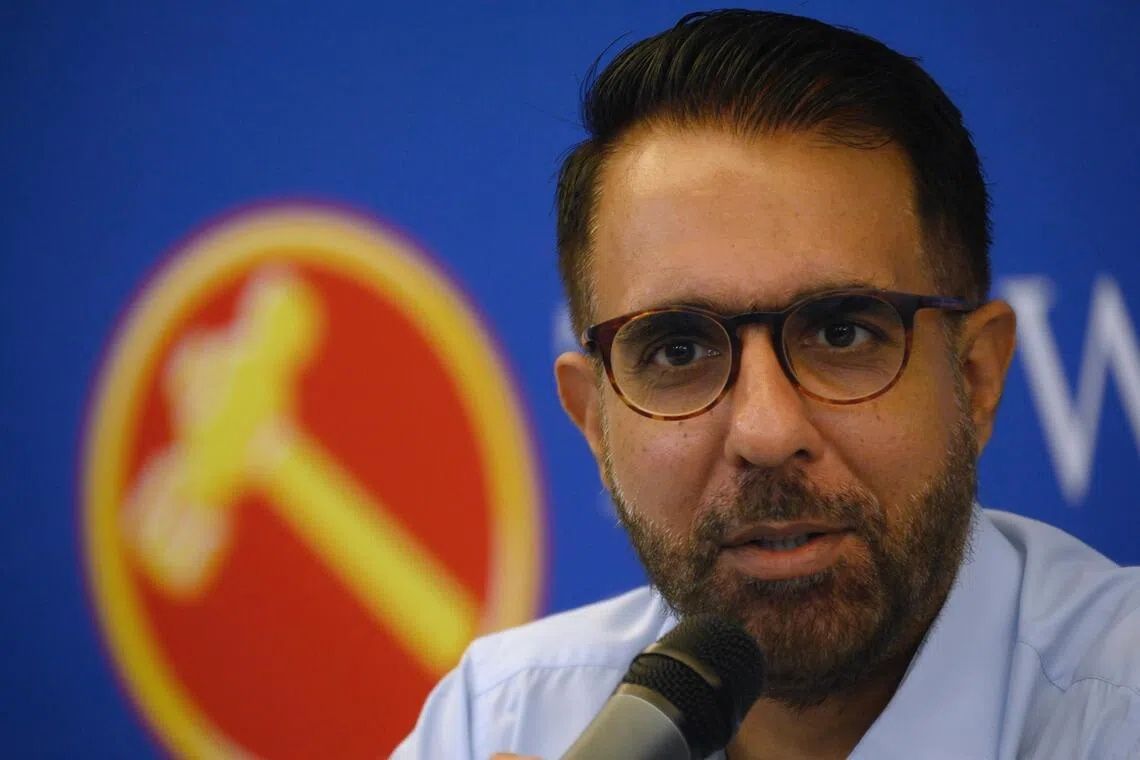
Singapore's Workers' Party stands on the cusp of a dramatic leadership contest that could reshape the opposition landscape in the island republic. A coalition of dissident cadres, numbering around 25 formally and potentially expanding to over 30, has mobilised to challenge secretary-general Pritam Singh at internal elections scheduled for June 28. The uprising reflects deeper frustrations accumulated over his management of party crises, judicial setbacks, and parliamentary losses that critics argue have damaged the party's credibility and electoral prospects.
The immediate spark for this challenge stems from a High Court judgment in December 2025 that upheld Pritam's conviction for misleading a parliamentary committee investigating false statements made by former Sengkang GRC MP Raeesah Khan. Khan had fabricated an anecdote during parliamentary proceedings in August 2021, only confessing months later in November. Pritam's alleged guidance in maintaining this deception, subsequently proven in court, struck at the heart of the Workers' Party's central claim to voters: that it represents a trustworthy alternative to the ruling establishment. Party insiders acknowledge that this moral vulnerability poses an existential threat to their electoral brand, particularly among middle-class voters who have traditionally supported the opposition on grounds of integrity rather than ideology.
The formal letter of reprimand issued to Pritam in the weeks before the June contests further galvanised dissent. This disciplinary measure, following findings by a three-person panel including MPs He Ting Ru, Jamus Lim, and Dennis Tan, crystallised arguments that his continued leadership undermines party credibility. The 25 cadres who formally requested the special conference—a gathering that will precede the regular biennial leadership election—represent a coalition of former central executive committee members and election candidates who view his departure as essential to party rehabilitation. They have explicitly called for him to step down voluntarily; if he refuses, they will demand a secret ballot to determine his fate by simple majority.
Identifying a challenger has proven more difficult than mobilising discontent. Party insiders report that several senior MPs have been approached as potential candidates, including Aljunied GRC's Gerald Giam, Hougang's Dennis Tan, and the Sengkang MPs already mentioned. However, none has publicly committed to running, a hesitation rooted partly in disciplinary concerns. The party's willingness to act against members who criticise leadership publicly has created a chilling effect, forcing dissident cadres to operate through private conversations and careful coordination rather than open debate. This constraint on speech, ironically mirroring the control mechanisms of the ruling party that Workers' Party members often critique, has become a point of quiet resentment among some cadres.
The wild card in this contest is former secretary-general Low Thia Khiang, who led the party from 2001 to 2018 and orchestrated the historic 2011 breakthrough when Workers' Party won Aljunied GRC, a bastion of ruling party strength. Low, still serving on the central executive committee, carries substantial influence among cadres and party veterans. Rumours circulating within party circles suggest he voted against Pritam during the disciplinary panel's deliberations, signalling a potential shift in allegiance. While observers do not expect Low to challenge Pritam directly—a contest between two former or current secretaries-general would be divisive—his endorsement of an alternative candidate could be decisive. With approximately 30 unhappy cadres potentially augmented by Low's supporters, mathematical analyses suggest sufficient votes exist to unseat Pritam should a credible challenger emerge.
Historical precedent offers instructive parallels. Low himself faced a challenge in 2016 from former Aljunied GRC MP Chen Show Mao, an unsuccessful bid that drew support from many of the same veteran cadres now agitating for change. That earlier contest, though ultimately unsuccessful, demonstrated both the capacity for internal democratic contestation within the party and the enduring influence of its founding generation. The current situation echoes that earlier moment while intensifying it, as the grounds for challenge are less about generational succession and more about fundamental questions of party reputation and electoral viability.
Beyond the conviction issue, Pritam faces criticism on multiple fronts that have compounded cadre unhappiness. The party's performance at the 2025 general election fell short of internal expectations, with several cadres noting that a strong candidate slate should have yielded at least one additional constituency gain. Instead, the party made no electoral headway. Additionally, Pritam's decision to withdraw from Marine Parade-Braddell Heights GRC on nomination day raised questions about strategic judgment, with some members viewing the move as unnecessarily demoralising. These operational disappointments, layered atop the conviction scandal, have created a narrative of failed leadership that extends beyond individual ethical lapses to encompass broader competence concerns.
A particularly sensitive wound stems from the party's loss of parliamentary prominence following Prime Minister Lawrence Wong's removal of Pritam as Leader of the Opposition in January 2026. The Workers' Party faced a choice: nominate another elected MP to claim this ceremonial but symbolically important role, or close ranks behind Pritam by declining. The party chose solidarity, a decision that cost it public visibility and parliamentary voice. Some cadres have privately questioned this choice, viewing it as subordinating party interests to personal loyalty—a criticism that would have seemed unthinkable when the party commanded only four or five seats. The expansion of Workers' Party representation has created space for internal disagreement about priorities that simply did not exist when the party fought for survival.
The June 28 proceedings will unfold in two distinct phases, each with different implications for Pritam's future. The special conference will first demand that he account for his actions leading to the conviction, with cadres formally calling for his resignation. If he refuses, the secret ballot will determine whether he retains the secretary-general position by majority vote. Should he lose this first test, he remains eligible to stand again at the subsequent ordinary cadres' conference that will conduct biennial leadership elections across all positions. Conversely, if he prevails with a narrow margin or withdraws before the vote, the door remains open for a challenger to emerge at the second meeting. Multiple cadres have indicated that the dynamic and momentum of the first meeting will substantially influence whether alternative candidates materialise for the subsequent contest.
The ideological dimension of this challenge merits consideration for regional observers. The Workers' Party has positioned itself as Singapore's serious opposition force, distinguishing itself from fringe critics through emphasis on institutional competence and ethical governance. This brand differentiation has attracted educated, middle-class support and credentialed candidates. Pritam's conviction—for conduct that ordinary party members and voters might view as fundamentally at odds with these values—creates what strategists term a branding crisis. The party cannot simultaneously claim moral superiority while retaining a leader judicially found to have counselled parliamentary deception. This logical tension drives the urgency among dissident cadres, who fear prolonged association with Pritam will erode the party's distinctive market positioning and make recruitment of quality candidates increasingly difficult.
For Malaysia and other Southeast Asian democracies, the Workers' Party's internal contest offers a live case study in opposition party management and succession dynamics. Many regional opposition movements struggle with similar tensions between personal loyalty, institutional integrity, and electoral performance. The willingness of Workers' Party cadres to mount internal challenges, despite risk of disciplinary action, demonstrates both the existence of democratic culture within the party and its limits. That dissent must operate largely through private channels rather than open forum reflects constraints that affect opposition movements across the region. Whether Pritam survives the June elections or yields to successor leadership will signal how opposition parties in semi-competitive systems navigate crises of credibility and whether they can sustain internal accountability standards that match their public critiques of government.
The outcome remains genuinely uncertain, with party insiders acknowledging that circumstances could shift substantially between now and the June votes. No challenger has publicly declared; Low Thia Khiang's precise intentions remain opaque; and the cadre base, numbering just over 100, includes multiple crosscurrents of opinion that could resolve differently under the privacy of a secret ballot than in reported private conversations. What seems clear is that Pritam Singh's eight-year tenure as unopposed leader faces the most serious challenge of his tenure, and that the Workers' Party must reckon with fundamental questions about leadership accountability, brand integrity, and the relationship between personal loyalty and institutional health. The resolution will reverberate across Singapore's political landscape and offer instructive lessons for opposition movements throughout Southeast Asia grappling with similar challenges.

