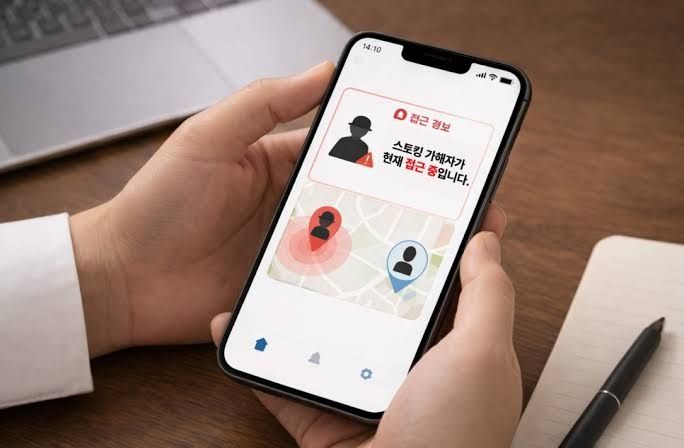
South Korea rolled out a groundbreaking mobile application on June 24 designed to give stalking victims immediate visibility into the movements of their alleged pursuers through electronic monitoring technology. The app, administered by the Ministry of Justice, marks a significant escalation in how the country approaches victim protection in cases where courts have authorised electronic surveillance of suspects. By displaying real-time location data and directional movement information, the system aims to empower victims with knowledge that could prove lifesaving in dangerous encounters.
The decision to develop this technological solution emerged from mounting frustration with the adequacy of South Korea's existing anti-stalking infrastructure. While the government had long provided smartwatch-style emergency alert devices to vulnerable victims, these passive warning systems proved insufficient to prevent tragedy. Between 2021 and August 2025, according to Representative Lee Gwang-hee of the ruling Democratic Party of Korea, at least 23 victims were either killed or became targets of attempted murder despite carrying these emergency devices. This sobering track record underscored a critical gap: victims could call for help, but they lacked the preventative intelligence needed to avoid dangerous situations altogether.
The integration of electronic monitoring into South Korea's anti-stalking framework has accelerated in recent years. Only from 2024 onwards did the country begin deploying ankle monitors in high-risk stalking cases following court approval, supplementing the older smartwatch alert system that had been the primary tool for years. This relatively recent adoption reflects a broader policy shift recognising that passive notification must be paired with proactive surveillance of suspects. The app represents the next logical step in that evolution, converting monitoring data into actionable intelligence for victims.
Implementing a system that tracks and publicly displays an individual's location raises immediate and legitimate privacy objections, even when that individual stands accused of stalking. South Korea's government recognised this tension and moved to address it systematically. In December 2025, the Justice Ministry revised its electronic monitoring regulations to establish clearer boundaries around how and with whom location data could be shared. These updates were designed to balance the victim's security need for access with procedural safeguards preventing misuse or overreach by authorities. The regulatory revisions signal an understanding that technology alone cannot solve the ethics of surveillance; frameworks governing its use must evolve in tandem.
The introduction of the app reflects broader concerns within South Korean society about the persistence and danger of stalking incidents. Unlike many Western countries where stalking remains relatively underreported, South Korea has experienced a significant rise in reported cases over the past decade, driven partly by increased use of digital communication and social media as vectors for harassment. The cultural context matters: South Korea's highly connected society, with nearly ubiquitous smartphone penetration, means both stalkers and victims operate in densely networked environments. The new app leverages this same infrastructure to tip the balance toward victim safety.
For Malaysian and Southeast Asian observers, South Korea's approach offers an instructive case study in how technology and regulation can be aligned to address escalating stalking problems. Many countries in the region have similarly experienced rising stalking incidents alongside rapid digital transformation, yet legal frameworks have often lagged behind. South Korea's willingness to pilot electronic monitoring and victim-access apps suggests a model worth examining, even as regional jurisdictions adapt such solutions to their own legal and cultural contexts.
Looking forward, South Korea plans to introduce additional protections that shift procedural power directly to victims. Beginning in April 2027, stalking victims will gain the ability to petition courts directly for restraining orders without first depending on law enforcement agencies to file such requests on their behalf. This change recognises a practical reality: victims often understand their own circumstances and threat levels better than overworked police departments. By removing intermediaries and granting direct court access, the government aims to accelerate the protective process and reduce delays that could prove fatal.
This multi-layered approach—combining electronic monitoring, real-time victim access to location data, privacy safeguards, and direct court petitioning—suggests that South Korea is moving toward a more comprehensive victim-centred framework. Rather than treating stalking as primarily a law enforcement problem, the government increasingly frames it as a systemic public safety challenge requiring coordination among technology providers, courts, and protective authorities. Each measure addresses a specific vulnerability identified through tragic real-world failures.
The policy trajectory also hints at deeper questions South Korean officials must navigate. As electronic monitoring expands and victim access to surveillance data increases, questions will inevitably arise about false positives, data accuracy, and the potential for victims to weaponise location information against suspects. How these edge cases are handled will determine whether the system achieves its protective intent or generates new unintended consequences. The December 2025 regulatory revisions represent a first attempt at guardrails, but implementation experience will likely demand refinement.
For victims already suffering from persistent stalking, the introduction of the app offers tangible relief. The ability to know a stalker's location in real time converts uncertainty and fear into actionable awareness. Rather than jumping at shadows, victims can make informed decisions about their movements and safety protocols. This psychological and practical benefit alone may justify the system's existence, even before considering how location intelligence might deter future incidents by increasing perceived risk for would-be stalkers.
As South Korea continues refining its anti-stalking arsenal, other democracies facing similar challenges will watch closely. The model of marrying technology with legal reform, victim empowerment with privacy protection, and preventative measures with prosecutorial tools represents a sophisticated response to a persistent social problem. Whether this integrated approach ultimately reduces stalking-related deaths and injuries will become clear within the next few years, offering lessons for policymakers across Asia and beyond seeking to protect their most vulnerable citizens.

