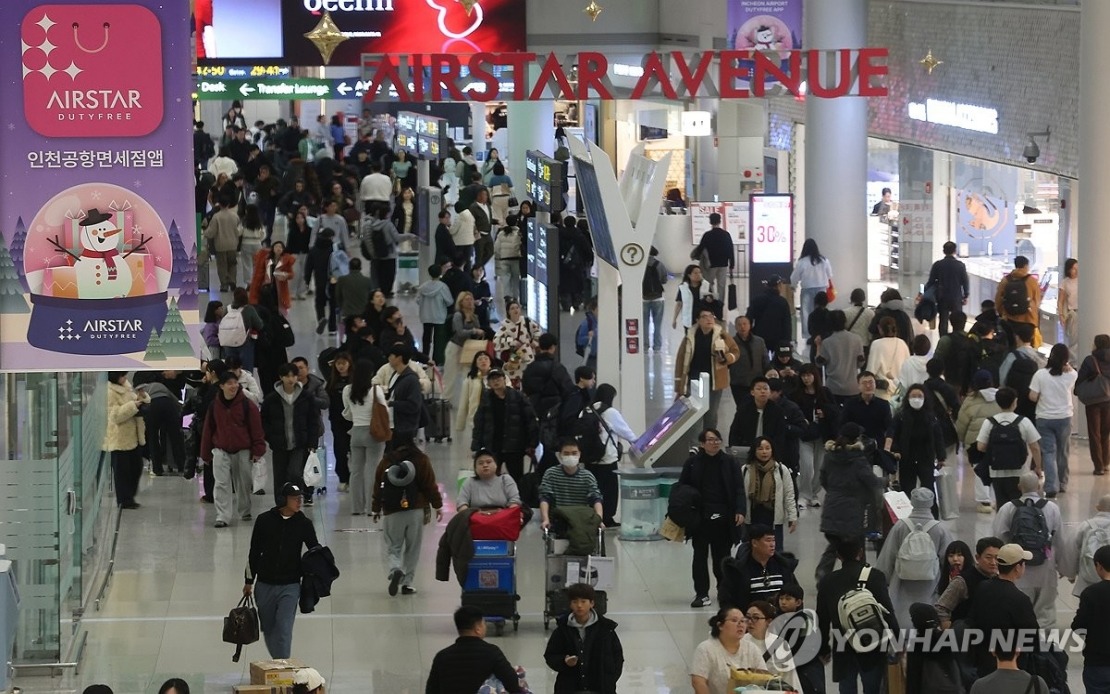
South Korea's tourism sector is experiencing robust momentum as the country welcomed its ten-millionth foreign visitor during the third week of June, according to the Ministry of Culture, Sports and Tourism. This milestone represents a significant acceleration in visitor arrivals compared to the previous year, when the same figure was not reached until mid-July. The early achievement underscores the strength of current travel demand and suggests the country is well-positioned to establish a new annual record for international tourist arrivals.
The timing of this milestone carries particular significance for South Korea's tourism industry. Reaching ten million visitors within the first half of the year marks a historic first, demonstrating that the rebound in inbound travel has gained considerable traction. Industry observers attribute this acceleration to multiple factors, including enhanced promotional efforts and the growing appeal of South Korean cultural products on the global stage. The trajectory indicates that annual figures could substantially exceed previous records if the current momentum persists through the remainder of 2024.
May proved to be an especially strong month for visitor arrivals, with 1.95 million foreigners entering the country. This represented a 19.4 per cent increase compared to the same month in the previous year, reflecting sustained interest in South Korean destinations. The consistency of monthly growth provides confidence that the surge is not merely a seasonal spike but reflects genuine structural improvements in the tourism market. These figures come despite external challenges, including elevated fuel surcharges that have resulted from geopolitical tensions in the Middle East.
The composition of visitor arrivals reveals important patterns about South Korea's appeal across different markets. Chinese tourists dominated in May with 560,000 arrivals, underlining the continued importance of Northeast Asian markets for Korean tourism. Japanese visitors contributed 360,000 arrivals during the same period, while Americans accounted for 210,000 entries. This diversification across major Asian markets and Western visitors suggests that South Korea has successfully broadened its appeal beyond traditional source markets, reducing dependency on any single nationality.
A notable development has been the growing distribution of foreign visitors across regions beyond Seoul. Arrivals through regional airports demonstrated consistent upward momentum, rising from 230,000 in January to 360,000 by May. This geographic diversification reflects deliberate efforts by tourism authorities and private operators to direct international travelers toward secondary cities and provincial attractions. Such distribution has important implications for regional economies, enabling smaller cities and rural areas to capture a portion of tourism revenue that previously concentrated in the capital.
Foreign visitor spending reached record levels during May, with card expenditures totalling 2.12 trillion won, equivalent to approximately US$1.38 billion. This marked the first occasion in which monthly spending surpassed the two trillion won threshold since South Korea began systematically tracking such data in 2018. The figure encompasses both in-country card transactions and online purchases made by international visitors, providing a comprehensive view of tourism-related spending. These elevated spending patterns reflect not only increased visitor numbers but also higher per-capita consumption, suggesting visitors are engaging more actively with Korean retail, hospitality, and entertainment sectors.
Kang Jung-won, the head of the Ministry of Culture, Sports and Tourism's tourism policy office, highlighted the resilience demonstrated by the sector despite challenging external circumstances. He noted that inbound arrivals grew 21 per cent year-on-year through May, accelerating to surpass the ten million mark by mid-June, outcomes achieved despite elevated fuel surcharges stemming from Middle East tensions. This resilience indicates that international demand for South Korean experiences remains robust enough to withstand cost pressures that might otherwise dampen travel intentions.
Government authorities have articulated plans to sustain and amplify tourism growth through expanded cooperation with private sector entities. The Ministry intends to leverage cultural exports, particularly through K-pop artists and affiliated entertainment properties, as tourism promotion vehicles. Additionally, partnerships with export-oriented companies aim to combine business travel with leisure tourism opportunities, potentially expanding the categories of visitors attracted to South Korea. Such integrated approaches acknowledge that modern tourism encompasses diverse motivations and benefit from multi-sector coordination.
For Malaysia and the broader Southeast Asian region, South Korea's tourism success carries both competitive and collaborative implications. As a peer economy in Asia that has successfully monetized cultural soft power and digital innovation, South Korea's strategy offers instructive lessons for other nations seeking to boost visitor arrivals. The emphasis on regional airport development, for instance, parallels Malaysia's own efforts to decentralize tourism away from Kuala Lumpur toward Penang, Sabah, and Sarawak. Furthermore, the strong performance of South Korean tourism may influence regional competitive dynamics, potentially increasing efforts by Southeast Asian destinations to differentiate their offerings and capture a share of the growing pool of Asian travelers.
The sustainability of South Korea's tourism growth will depend on several factors, including global economic conditions, geopolitical stability, and the country's capacity to manage visitor flows without degrading the quality of experiences that initially attracted tourists. Authorities will need to balance aggressive promotion with sustainable tourism management to ensure that infrastructure and local communities can absorb increasing numbers of visitors. The record spending figures suggest that visitors possess spending capacity, but converting this into sustainable revenue requires thoughtful management of tourism's social and environmental impacts.
Looking forward, South Korea's trajectory suggests that annual tourist arrivals could exceed previous records significantly if current growth rates persist through the second half of 2024. The combination of improved global travel conditions, cultural soft power advantages, and strategic tourism promotion positions the country well for continued expansion. For Southeast Asian tourism authorities and private stakeholders, the South Korean example demonstrates that strategic investment in cultural promotion, regional distribution of visitors, and private-public partnerships can yield substantial returns in visitor volume and spending.

