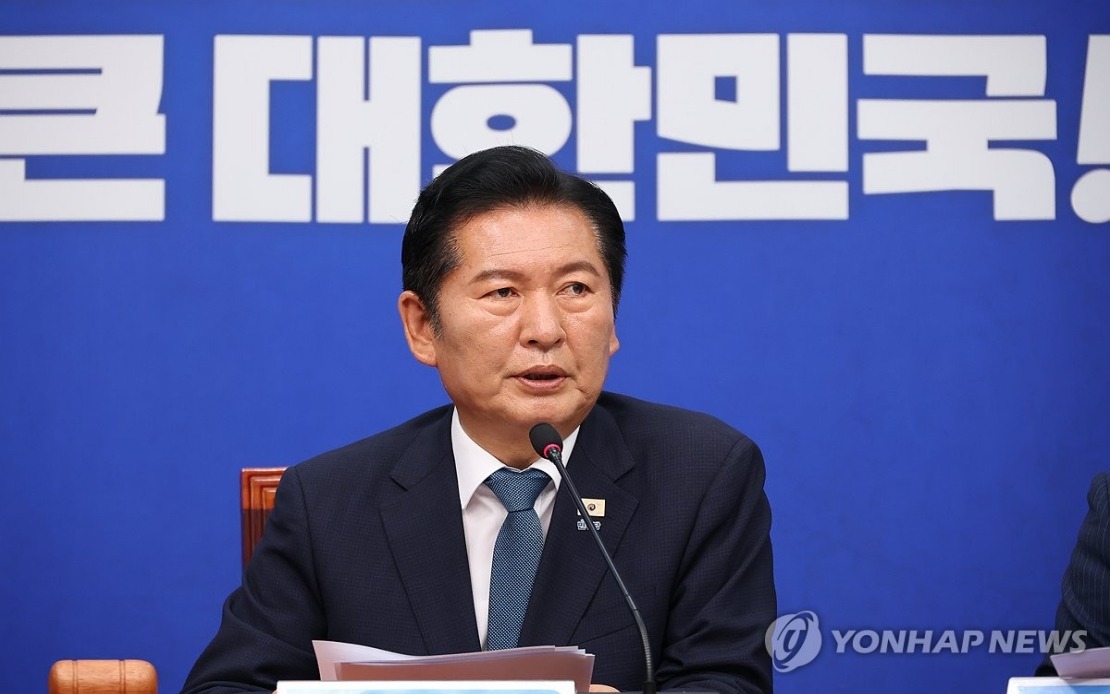
South Korean ruling Democratic Party chairman Jung Chung-rae resigned from his position on Wednesday, a maneuver widely interpreted as clearing the path for him to contest the party's national convention scheduled for August 17. The lawmaker made the announcement during a meeting of the party's supreme council at the National Assembly, signalling the opening of what promises to be a competitive three-way contest for control of the nation's governing party.
In remarks to party officials, Jung reflected on the personal toll of his tenure, describing the period as one marked by constant internal and external pressures. He emphasised his commitment to supporting President Lee Jae Myung's administration throughout his time as party chief, framing his leadership as an attempt to forge unity between the ruling party, the government apparatus, and the presidential office. These comments appear designed to establish his credentials as a reliable steward of the administration's interests, even as factional divisions within the Democratic Party have intensified.
The resignation comes amid mounting criticism from pro-Lee factions within the party who contend that Jung has governed in a manner that prioritises his own power base at the expense of alignment with the president on substantive policy matters. This internal friction highlights a broader struggle within South Korean ruling parties, where personal loyalty networks frequently clash with institutional governance structures. Jung's departure removes a potential lightning rod for such grievances, at least temporarily, while potentially strengthening his position as a fresh candidate unburdened by the accumulated friction of his chairmanship.
The forthcoming convention race has already attracted formidable competitors. Prime Minister Kim Min-seok, who maintains close ties to President Lee and has benefited from the executive's patronage, is widely expected to announce his candidacy. Song Young-gil, a former Democratic Party leader with his own base of support, has reportedly signalled his intention to enter the race as well. According to statements made by DP lawmaker Park Jie-won during an interview with radio broadcaster CBS, Song has even suggested the possibility of unifying his candidacy with Kim, a development that could reshape the dynamics of the competition.
Understanding this succession contest requires attention to how South Korean political parties operate as vessels for personal followings rather than purely ideological or institutional entities. The three principal contenders each command distinct networks of supporters, and the outcome of the August 17 convention will likely determine which faction controls party resources, candidate selection, and messaging for the crucial period leading toward the next presidential election. For Malaysian observers, this internal party competition offers instructive parallels to factional dynamics within some Southeast Asian ruling coalitions, where personal patronage networks frequently determine political outcomes despite formal democratic structures.
Jung's tactical positioning deserves scrutiny. By stepping down while still commanding significant party loyalty, he avoids the cumulative damage of remaining in a controversial chairmanship while preserving his ability to campaign as a fresh alternative untainted by recent administrative decisions. His resignation statement emphasised his loyalty to President Lee, a crucial signal to party members who might otherwise question whether a potential chairman would serve the president's interests or pursue an independent agenda. This calculated move mirrors patterns common in competitive authoritarian systems, where institutional positions are strategically surrendered to maintain or enhance personal influence.
The August 17 convention represents more than a routine leadership transition. It will determine the Democratic Party's internal power structure at a moment when South Korea faces significant policy challenges and when the ruling coalition's cohesion directly affects the government's capacity to implement its agenda. A victory by Kim would consolidate presidential influence over the party apparatus, whereas Jung's triumph could signal a reassertion of party autonomy. Song's involvement introduces further unpredictability, particularly if he pursues the suggested merger with Kim's campaign.
Meanwhile, DP floor leader Han Byung-do will serve as acting party chief until the convention takes place, a transitional arrangement that prevents a leadership vacuum while keeping the position warm for the eventual winner. Han's role as interim leader carries symbolic weight as well, suggesting that the party establishment views him as a neutral custodian rather than a contender with independent ambitions.
For regional observers monitoring South Korea's political trajectory, this succession contest illuminates the competitive dynamics within the ruling coalition. The Democratic Party's internal divisions, while substantial, remain manageable so long as all major factions maintain nominal allegiance to President Lee's administration. The August convention will test whether this unity can be sustained under the pressure of genuine competitive elections for party leadership. The outcome will reverberate throughout South Korea's political system, influencing everything from legislative priorities to candidate recruitment for regional and national elections in the coming years.

