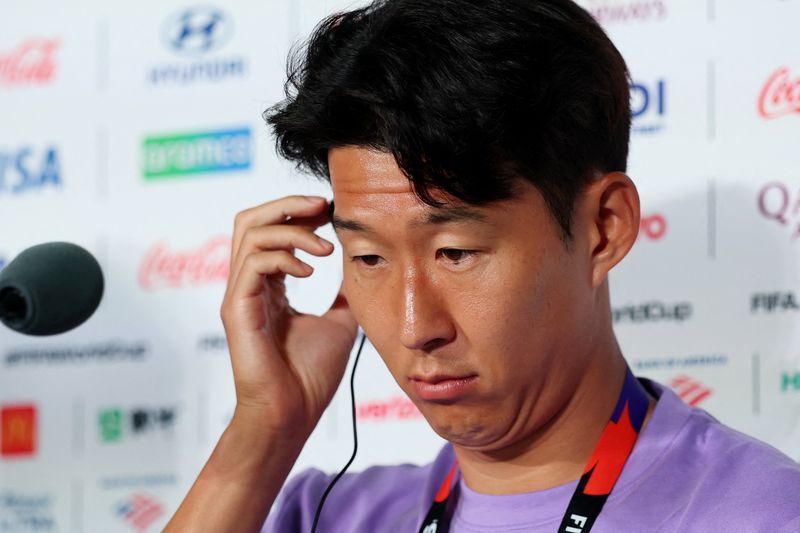
The South Korea national football team has taken the unusual step of refusing to participate in regular media duties during the World Cup, citing disrespectful comments allegedly directed at captain Son Heung-min regarding his military service obligations. The controversy erupted when journalists were caught on a hot microphone making derisive remarks about the 33-year-old Tottenham Hotspur forward while he trained separately from his teammates at the squad's Guadalajara base camp, a situation that has now become a significant diplomatic and sporting issue for the national team.
Military service remains one of South Korea's most sensitive national subjects, shaped by decades of security concerns on the peninsula. All able-bodied South Korean men are legally required to complete approximately 21 months of military service, a foundational element of the country's defence posture against North Korea. The obligation applies universally across society, cutting through class lines and professional status, which makes it a matter of profound national importance rather than simply a bureaucratic requirement. For many South Koreans, fulfilling this duty represents a fundamental act of patriotic responsibility that transcends individual career ambitions.
Yet the system does recognise exceptional achievement in athletics. Athletes who capture gold medals at the Olympic Games or triumph at the Asian Games receive military service exemptions, acknowledging the honour they bring to their nation on the world stage. Son and his teammates earned this exemption when South Korea won the gold medal at the 2018 Asian Games, a victory that granted them relief from the demanding service requirement. This pathway has long been accepted within South Korean society as a legitimate recognition of sporting excellence, though it occasionally generates public debate about fairness and opportunity.
Son himself completed a three-week basic military training course in South Korea in 2020, timing his service during the COVID-19 pandemic when Premier League fixtures were suspended. The training proved no ceremonial exercise; participants endured exposure to tear gas, live-fire drills, and punishing 30-kilometre hikes designed to test physical and mental resilience. Even with his exemption secured through the Asian Games gold, Son chose to undertake this condensed training, demonstrating a commitment to honouring the military tradition and showing respect to those who serve longer rotations.
The Korea Football Association responded swiftly with a formal statement expressing deep regret at the alleged conduct. The organisation acknowledged that the leaked audio containing inappropriate conversations between media personnel shocked and disappointed the squad, undermining the sense of national unity that should surround World Cup preparation. The KFA characterised the incident as a breach of professional responsibility, particularly troubling given the sacred nature of representing the nation on football's grandest stage. In their statement, the federation emphasised that the players, known as the Taegeuk Warriors, are striving to repay the faith and expectations of the South Korean people by competing at the highest level.
The association's response extended beyond mere criticism to a call for systemic change in media relations. The KFA requested all media outlets to demonstrate greater consideration and accountability in their coverage of the national team, signalling a determination to establish healthier boundaries between journalists and athletes. The federation pledged to prioritise the protection of squad members and work towards fostering a more professional media environment. This stance reflects growing tensions between sports organisations worldwide and press contingents, as athletes increasingly demand respect and protection from potentially harmful coverage.
Despite their boycott position, the South Korea team faces practical constraints that limit how long they can maintain this stance. FIFA regulations mandate that players and officials participate in certain media obligations as part of their participation in the tournament. These mandatory duties cannot be avoided without risking disciplinary action or fines, meaning the squad will eventually need to resume some level of engagement with the press. The tension between the team's legitimate grievance and their contractual obligations to football's governing body creates an uncomfortable situation requiring careful navigation.
The incident illuminates broader challenges facing international football in managing the relationship between athletes and media. South Korea's experience demonstrates how careless remarks, particularly on sensitive cultural and national issues, can rapidly escalate into institutional conflicts. The military service system represents far more than just a personnel requirement in South Korean consciousness; it embodies national security, generational sacrifice, and collective identity. Comments perceived as dismissive of this obligation strike at something fundamental to the national psyche, making the players' defensive reaction understandable to their home audience.
For Malaysian and Southeast Asian observers, this episode offers instructive lessons about media professionalism during major sporting tournaments. The incident underscores how journalists covering international competition must remain culturally sensitive to the contexts their subjects inhabit. Military service carries different meanings across the region; in countries like South Korea with active security concerns, the institution commands profound respect that outsiders might not fully appreciate. The boycott represents athletes exercising agency against what they perceive as disrespectful treatment, a growing phenomenon in professional sports globally.
The controversy also reflects how social media and recording technology have transformed press-athlete dynamics. The hot microphone capture that exposed the journalists' comments would have remained private in earlier eras, but contemporary communication ensures that indiscreet remarks surface rapidly and amplify across the global audience. This reality imposes higher standards on those covering sports, requiring constant awareness that remarks made in what feels like a private moment may reach millions instantaneously. The South Korea squad's response signals that athletes will increasingly hold media accountable for language and attitudes that cross professional boundaries.