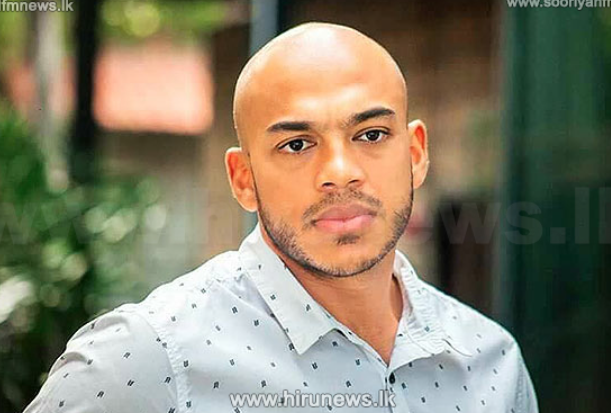
Sri Lanka's anti-corruption authorities have arrested Yoshitha Rajapaksa, the 38-year-old son of former president Mahinda Rajapaksa, following an investigation into allegations that he improperly accessed state funds to support his overseas naval training. The Bribery Commission confirmed the detention on Wednesday, June 17, characterizing it as part of an expanding legal reckoning for members of the Rajapaksa clan, whose influence over Sri Lankan politics has been systematically dismantled over the past two years.
The specific charges centre on Yoshitha's advancement through the naval officer ranks without meeting the minimum educational qualifications required for such positions, coupled with his subsequent attendance at a prestigious training course funded by the government. His enrollment at Dartmouth, the United Kingdom's premier naval college, has become a focal point of the investigation, with critics arguing that his selection displaced a more deserving cadet whose merit-based candidacy should have secured the coveted placement. The allegation underscores a broader pattern of nepotism that characterized the Rajapaksa family's decade-long dominance of Sri Lankan institutions.
Yoshitha's legal troubles extend well beyond this fresh charge. He was already facing two separate money-laundering investigations and had been subject to a strict foreign travel ban, conditions that did not prevent his continued release on bail until this week's arrest. The Bribery Commission's statement emphasized that his detention relates specifically to the dual violations of recruitment impropriety and the subsequent unauthorized use of public resources for international military education, both serious infractions under Sri Lankan law.
The younger Rajapaksa's financial conduct during his father's presidency has also attracted sustained scrutiny from investigators. He stands accused of being unable to satisfactorily account for the sources of income he deployed to purchase residential property between 2005 and 2015, when Mahinda Rajapaksa held the presidency. When questioned by authorities, Yoshitha claimed to have raised the necessary capital through the sale of gemstones that his grandaunt had gifted him, an explanation that proved unconvincing given that the elderly relative herself could not trace the origin of the precious stones. This implausible chain of title exemplifies the opacity that characterized many financial transactions conducted by members of the politically connected family during those years. Beyond this property acquisition, Yoshitha faces yet another prosecution related to his purchase of a television network, suggesting a pattern of wealth accumulation that authorities consider inconsistent with his official salary.
The intensification of legal actions against the Rajapaksa family reflects a fundamental shift in Sri Lanka's political landscape following the 2024 presidential election. Anura Kumara Dissanayake's victory was secured substantially on the strength of public anger over endemic corruption and economic mismanagement, with voters explicitly mandating a comprehensive anti-graft agenda. The new administration has acted decisively to fulfill that electoral promise, treating the prosecution of the Rajapaksa family and their associates as a litmus test of its commitment to genuine institutional reform.
The family's judicial ordeal has been comprehensive and multifaceted. Beyond Yoshitha, numerous relatives and close political allies have faced charges spanning corruption, money laundering, and even murder allegations, all of which remain in various stages of legal proceedings. This breadth of prosecution represents an unprecedented challenge to a family that, for more than two decades, operated with near-total impunity and controlled virtually every significant lever of state power.
The situation has grown particularly acute for Mahinda Rajapaksa's younger brother, Gotabaya, who served as president from 2019 until his forced resignation in 2022. That departure came amid a catastrophic economic crisis that triggered mass civil unrest and widespread public suffering, compelling his exit from office. The former military officer currently faces the prospect of arrest related to the 2019 Easter Sunday bombings, a series of coordinated attacks that killed 279 people in churches and luxury hotels. Gotabaya has recently sought court intervention to preempt potential detention on these charges. In mid-June, he was also subjected to a foreign travel ban, further constraining his options and signaling that the legal net continues to tighten around senior members of the family.
For Malaysia and the wider Southeast Asian region, Sri Lanka's experience carries instructive implications about the mechanics of accountability and institutional capture. The Rajapaksa family's grip on power, enabled by control of security forces and judicial appointment processes, resembles patterns of governance observed elsewhere across the region, where ruling families have leveraged state resources for personal enrichment while maintaining the appearance of democratic processes. Sri Lanka's current trajectory demonstrates that sustained public pressure, combined with electoral determination to break entrenched patronage networks, can catalyze reversals even in deeply compromised systems.
The prosecutions also highlight the enduring damage inflicted by prolonged authoritarian governance on public institutions and national development. Sri Lanka's descent into economic catastrophe was substantially attributable to the systematic looting and mismanagement perpetrated by those in power, a cautionary tale for other nations where concentrated authority and weak institutional checks persist. The legal actions now underway, though symbolically important, cannot restore the resources squandered or the growth opportunities lost during years when governance was subordinated to personal accumulation.
Yoshitha Rajapaksa's arrest represents merely another chapter in an unfolding legal saga that will likely extend across several years as courts dispose of the accumulated charges. However, the symbolism of detaining the son of the family's patriarch carries psychological weight beyond the immediate case, signifying to Sri Lankan society that even historically untouchable elites now face genuine consequences. Whether these prosecutions ultimately translate into convictions, or whether legal proceedings become protracted exercises in delay and procedural obstruction, remains an open question that will substantially influence public confidence in Sri Lanka's institutions and Dissanayake's reform agenda.