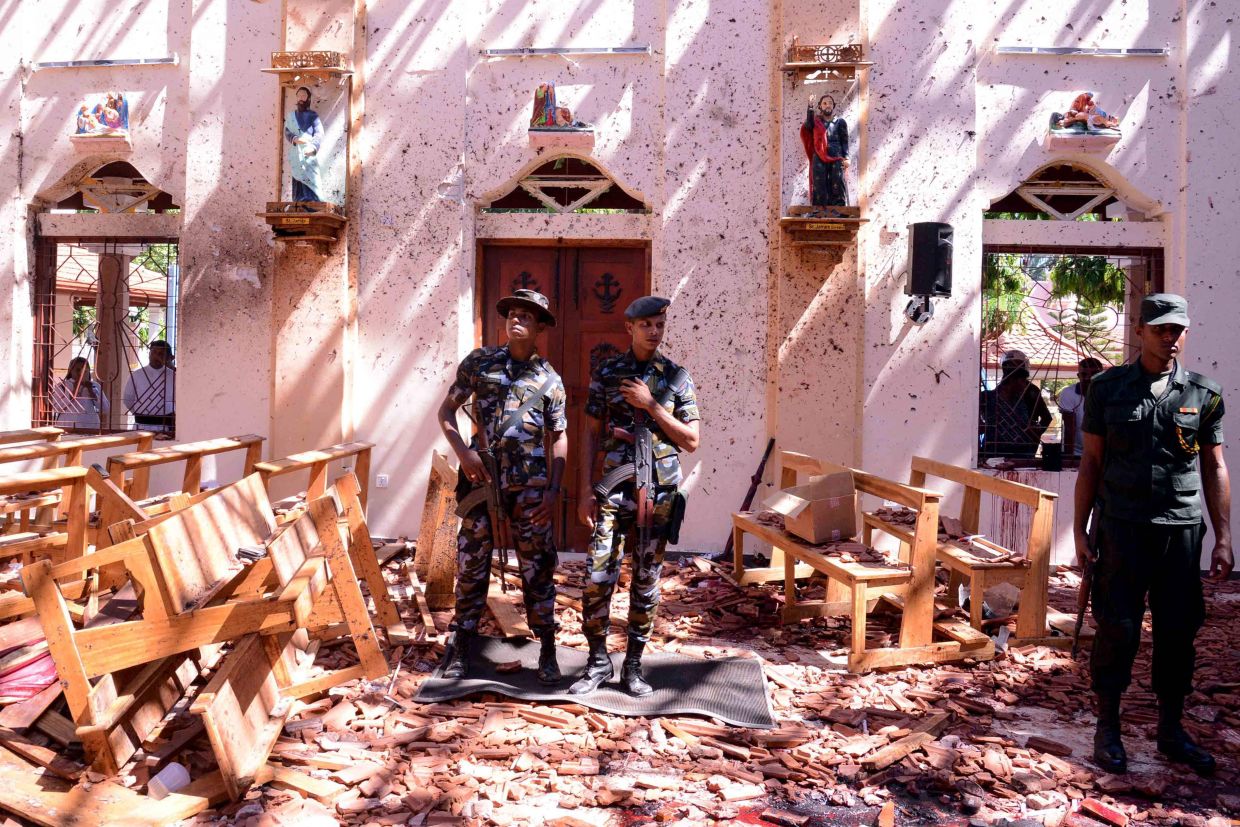
Retired Major General Suresh Sallay, the former head of Sri Lanka's State Intelligence Service and a recognised expert on counterterrorism who has lectured international bodies from Washington to the United Nations, was arrested in February under the country's anti-terrorism legislation. The government has since levelled an extraordinary accusation against him: that he strategically orchestrated the deadliest civilian attack in Sri Lankan history. His case represents one of the most startling reversals in the official investigation into the Easter bombings of April 21, 2019, which claimed 279 lives and left over 500 injured across the island.
The initial narrative constructed by authorities appeared straightforward. Three luxury hotels and three churches were targeted in near-simultaneous suicide attacks blamed on Sunni Muslim extremists purportedly inspired by the Islamic State group. Among those killed were 45 foreigners—tourists and visitors from Australia, Britain, China, Denmark, the Netherlands, Japan and the United States—making the tragedy an international incident that drew global condemnation. Official investigators quickly established that seven suicide bombers had coordinated their strikes with military precision, yet serious questions surfaced almost immediately about how such a significant threat had evaded multiple layers of detection.
The cracks in the intelligence establishment's credibility widened as details emerged about warnings from Indian intelligence services that had been systematically ignored. As scrutiny intensified, investigators began uncovering troubling connections between the bombers and at least two state intelligence agencies. The official narrative gradually fractured, and a darker alternative explanation began to take shape: rather than an undetected extremist cell exploiting gaps in security, some suggested the attacks themselves may have been orchestrated or permitted to unfold by elements within the intelligence apparatus. These theories pointed to something far more sinister than terrorism—the possibility of a calculated operation designed to serve political objectives.
Public Security Minister Ananda Wijepala became the first government official to directly accuse Sallay of masterminding the attacks when he addressed parliament in June. Wijepala alleged that Sallay had "conspired with and strategically directed Islamic extremists until they carried out the attacks," and further claimed that Sallay had met with Muslim men just three weeks before the bombing to gather intelligence on target locations. The specificity of these allegations transformed Sallay from a respected intelligence figure into the purported architect of mass murder, though the former spy chief has not been formally charged with any offence and maintains his complete innocence. His legal status remains in limbo, with court hearings continuing without resolution.
The conspiracy theory gaining traction among investigators suggests a deliberate political calculation underlying the attacks. According to this account, elements within the state intelligence services cultivated a network of militants specifically to create a manufactured security crisis that could be weaponised politically. The theory holds that this engineered threat was designed to propel Gotabaya Rajapaksa to victory in the 2019 presidential election on a strongman platform promising to crush Islamist extremism—a strategy that echoed his earlier military success against Tamil separatists during the 1983-2009 civil war. British broadcaster Channel 4 reported in 2023 that a whistleblower had alleged the attack was deliberately permitted to proceed to serve these electoral purposes.
Court investigators have suggested that the broader plot aimed to create sufficient chaos and fear that voters would turn to Rajapaksa as the sole leader capable of restoring security and defeating militancy. This narrative gains additional credibility from documented history: Rajapaksa administrations have already acknowledged that the state had funded jihadist groups during the civil war years to serve as intelligence assets against Tamil rebels. The government's defence to this historical fact is that these militants subsequently betrayed their handlers and launched the Easter attacks independently. Critics, however, find this explanation unconvincing, arguing that the intelligence services would hardly have lost control of assets they had so carefully cultivated and directed.
Sallay's personal profile complicates the neat sectarian narrative that authorities have attempted to construct. He embodies the religious and cultural pluralism of modern Sri Lanka: a Muslim officer married to a Buddhist woman, with a Catholic mother who has appealed directly to the Pope for his release. His distinguished career included postings at Sri Lankan diplomatic missions in France and Malaysia, alongside advanced studies at India's prestigious National Defence College and universities in Madras and Bradford. This cosmopolitan background and evident expertise made him appear an unlikely figure to orchestrate mass killing, yet the government has positioned him as the hidden hand behind the bombings.
Sallay's professional credentials in counterterrorism were substantial and internationally recognised. The Defence Ministry's Institute of National Security Studies records that he delivered a 2003 speech at the Pentagon titled "Suicide Terrorism and its Impact," and as recently as 2023 he addressed the United Nations on how social media and digital platforms facilitated radicalisation and extremism. In that UN speech, he spoke with apparent conviction about the scourge of terrorism and its impact on innocent communities. The contrast between his public pronouncements as a terrorism expert and the government's current accusations against him creates a narrative tension that reflects the murky politics surrounding the Easter bombings investigation.
Paradoxically, Sallay's prominence and influence increased substantially under the Rajapaksa presidency that benefited most from the bombing aftermath. When Gotabaya Rajapaksa won the 2019 election—ostensibly on the wave of security concerns following the Easter attacks—he appointed Sallay to head the State Intelligence Service, making him the first military officer to occupy that position. Sallay's tenure in this role included the 2020 arrest of Muslim human rights lawyer Hejaaz Hizbullah, whom Sallay accused of being the attacks' mastermind. After 22 months of detention during which authorities failed to produce substantive evidence, Hizbullah was released, undermining confidence in the state's investigative competence or integrity.
The Sallay case thus occupies an uncomfortable position within Sri Lanka's post-bombing politics. If true, the allegations suggest that a trusted Rajapaksa appointee orchestrated mass murder to facilitate his patron's electoral triumph. If false, they represent prosecutorial overreach against a prominent Muslim public servant, potentially weaponising anti-terrorism laws against political rivals or to deflect accountability from actual decision-makers. For Malaysia and other Southeast Asian nations observing the situation, the case underscores dangers inherent in concentrating counterterrorism authority within intelligence services lacking robust civilian oversight. The Easter bombings and their investigation reveal how security crises can be exploited to accumulate power, while the targeting of religious minority figures raises questions about institutional bias within security apparatus across the region.
The broader religious demography of Sri Lanka—nearly 70 per cent Buddhist, with 12 per cent Hindu, 10 per cent Muslim and 7 per cent Christian populations—creates a political context where anti-Muslim narratives can be mobilised effectively. The Rajapaksa government's rise coincided with increasing anti-Muslim rhetoric and policies, suggesting that Sallay's arrest may reflect not genuine accountability but rather a convenient scapegoating of a Muslim figure to satisfy political constituencies. For a retired officer who spent decades advising international security institutions and lecturing on the dangers of extremism, his current predicament represents either a stunning fall from grace or a cautionary tale about the vulnerability of individuals who challenge powerful networks, regardless of their professional standing or international reputation. His court hearing scheduled for mid-July will indicate whether meaningful evidence exists to support the extraordinary accusations, or whether the investigation represents political theatre masquerading as justice.

