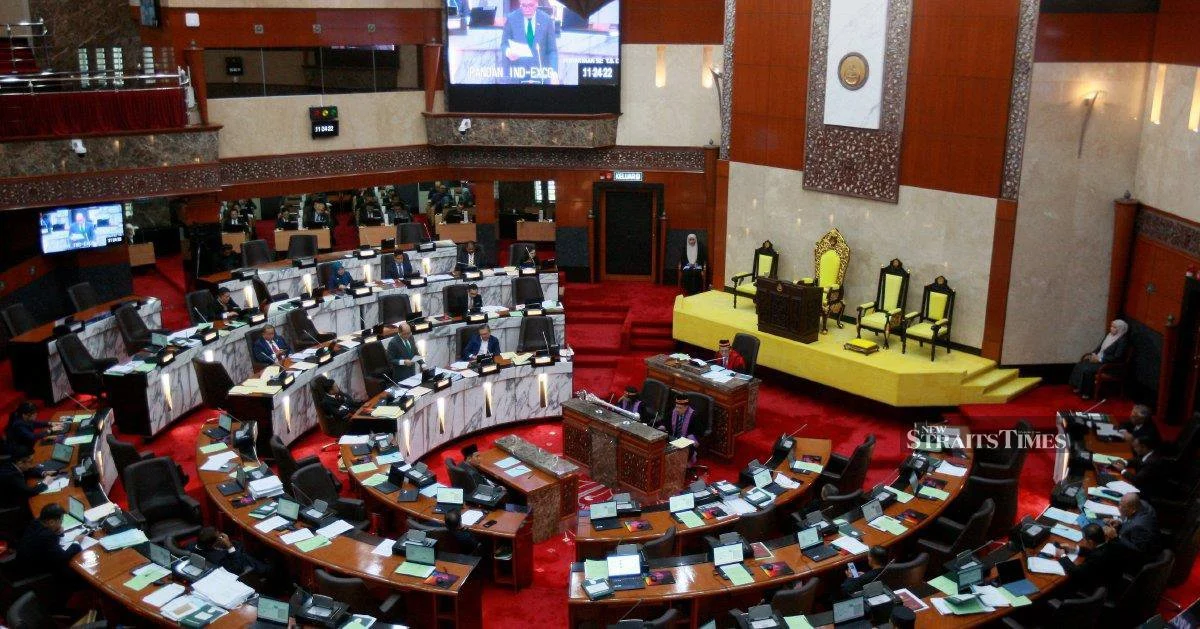
Malaysia's network of state legislative assemblies faces mounting pressure to strengthen their internal governance structures and open their operations to greater public scrutiny. A comprehensive report from the Parliamentary Democracy and Constituency Development Caucus has identified significant deficiencies in how these regional bodies operate, recommending a suite of reforms designed to elevate standards of accountability and restore public confidence in state-level decision-making across the country.
The findings underscore growing concerns about inconsistent governance practices among Malaysia's thirteen state assemblies and the Federal Territories' legislative bodies. While these institutions serve as crucial conduits between constituents and government, many operate with minimal transparency and limited oversight mechanisms. The variance in standards across different states has created a patchwork system where some assemblies maintain robust procedural safeguards whilst others lag considerably in transparency and accountability measures.
The caucus report emphasises that effective governance at the state level directly affects Malaysians' daily lives, influencing decisions on land development, local services, and resource allocation. Yet citizens often lack adequate information about how their elected representatives conduct business or how public funds are deployed. This information gap erodes trust and creates opportunities for misconduct to flourish undetected. The report suggests that comprehensive transparency reforms would enable constituents to engage meaningfully with the democratic process and hold their state governments accountable.
Amongst the key recommendations is the establishment of standardised oversight committees within each state assembly, modelled on successful parliamentary practices at the federal level. These committees would scrutinise executive decisions, review proposed legislation, and investigate public complaints with genuine investigative authority. Currently, many state assemblies lack such formal mechanisms, allowing executives considerable leeway in decision-making with minimal parliamentary constraint. The caucus argues that this imbalance has contributed to governance failures in several jurisdictions.
The report also calls for mandatory disclosure requirements for state assembly proceedings and financial records. Public access to hansard records, committee reports, and budgetary allocations would dramatically improve transparency. Several advanced democracies have demonstrated that comprehensive disclosure protocols need not hinder government efficiency; rather, they establish clear expectations and encourage decision-makers to adopt defensible positions. Malaysia's federal Parliament has pioneered some transparency initiatives that could be adapted and improved at the state level.
Procedural standardisation emerges as another critical concern. State assemblies currently operate under different standing orders and procedures, creating confusion and limiting the transferability of best practices. The caucus recommends developing a model code of assembly procedure that establishes baseline standards whilst allowing states flexibility to accommodate local circumstances. Such harmonisation would enable comparative analysis of assembly performance and facilitate identification of lagging jurisdictions requiring targeted intervention.
For Malaysian readers, these recommendations carry particular significance given the ongoing devolution of responsibilities to state governments. As federal authorities increasingly delegate functions to states, the quality of state assembly oversight becomes proportionally more consequential. A citizen in Selangor, Johor, or Sabah depends on effective state assembly scrutiny to ensure proper governance of state-administered services. The current variance in standards means governance quality depends partly on geographic accident rather than merit.
The caucus specifically highlights the potential for conflict-of-interest abuses when oversight mechanisms remain underdeveloped. State assemblymen and state executive councillors may simultaneously hold business interests affected by state decisions. Without rigorous disclosure and oversight procedures, such dual interests create genuine risks of impropriety or perceptions thereof. The report suggests implementing mandatory conflict-of-interest declarations and establishing independent ethics committees empowered to investigate allegations.
Public participation mechanisms also warrant strengthening. The report recommends establishing formal channels for citizen input into state assembly proceedings, including structured public consultations on major policy decisions and accessible complaints procedures. Several states have experimented with such mechanisms with encouraging results, finding that structured public engagement improves policy quality whilst building legitimacy and trust.
Implementing these recommendations requires political will from state governments, many of which may perceive oversight mechanisms as constraining. The caucus report acknowledges this challenge but argues persuasively that robust accountability ultimately benefits governments by reducing corruption, improving policy outcomes, and rebuilding public confidence. States pioneering these reforms gain reputational advantages and attract investment based on demonstrated governance standards.
The Parliamentary Democracy and Constituency Development Caucus itself represents cross-party concern about these governance gaps. The multi-party composition of the caucus suggests these issues transcend partisan divides and reflect genuine systemic weaknesses. This broad consensus provides a foundation for constructive reform discussions amongst state-level stakeholders.
Moving forward, the report recommends establishing a taskforce comprising state assembly leadership, civil society representatives, and governance experts to develop implementation strategies tailored to each state's circumstances. This collaborative approach recognises that top-down prescriptions often falter without buy-in from those responsible for execution. Phased implementation timelines would allow states to adapt their institutions incrementally whilst demonstrating tangible progress to constituents.