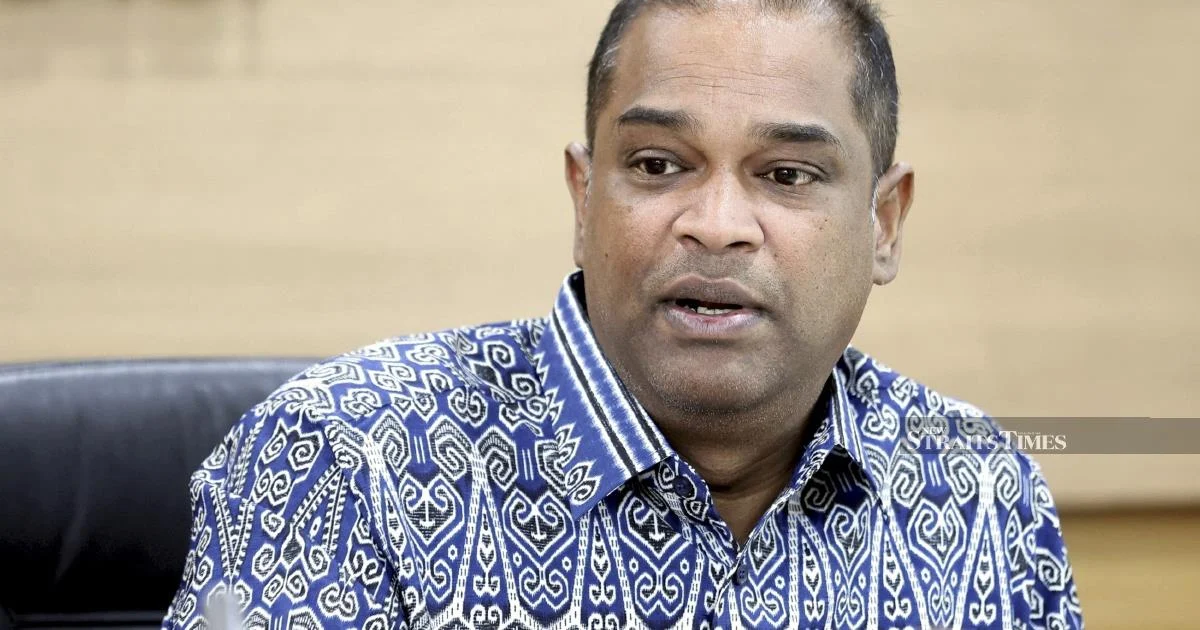
Datuk Seri R. Ramanan, the PKR vice-president, has delivered a sharp rebuke to Johor's political establishment, accusing senior figures of weaponizing the state's revered royal institution for partisan advantage as campaigning intensifies ahead of the 16th Johor election. Speaking from Johor Baru, the PKR leader emphasized that constitutional arrangements demand political actors maintain clear separation between the palace and electoral contests, a boundary he argues has become increasingly blurred in recent months.
The critique strikes at a persistent tension in Malaysian politics, where the constitutional role of state rulers—particularly their ceremonial and institutional functions—occasionally becomes entangled with electoral strategy. Johor, as the nation's second-largest state by population and a historically significant power base for multiple political coalitions, has witnessed particularly intense competition over how the monarchy's authority and symbolism are deployed. Ramanan's intervention suggests that this year's electoral cycle has witnessed what he perceives as an escalation in such practices.
The royal institution occupies a unique constitutional position in Malaysia's Westminster-derived system. The Yang di-Pertuan Agong at federal level and state rulers at state level serve as heads of state with defined ceremonial, advisory, and constitutional functions. However, their symbolic weight and deep cultural resonance mean that political associations with the throne carry disproportionate influence among voters. This reality creates recurring temptations for ambitious politicians to seek proximity to or endorsement from palace networks, particularly during competitive electoral periods when margins between victory and defeat narrow significantly.
In Johor's context, the upcoming state election represents a crucial realignment moment. The state has experienced significant political flux over the past five years, with coalition compositions shifting and party fortunes fluctuating. The ability to claim alignment with—or favorable positioning relative to—the Johor palace can meaningfully influence voter perceptions of legitimacy and incumbency advantage. Ramanan's warning suggests that multiple factions have crossed lines that he considers appropriate, instrumentalizing royal symbols, protocols, or perceived endorsements to manufacture electoral momentum.
The PKR vice-president's statement also reflects broader concerns within opposition coalitions about ensuring that electoral competition remains centered on policy platforms, governance records, and development proposals rather than palace dynamics. Opposition parties, which typically lack incumbency advantages and established relationships with state administrative structures, have particular interest in keeping campaign discourse focused on substantive governance questions where they can differentiate themselves from ruling coalitions.
Malaysia's constitutional framework provides formal mechanisms intended to insulate the monarchy from electoral politics. These include restrictions on how palace resources can be deployed, protocols governing ruler participation in official functions during election periods, and established conventions about maintaining institutional neutrality. Yet enforcement of these boundaries depends substantially on political actors' willingness to self-regulate, since formal constitutional courts rarely intervene in questions of political propriety unless explicit legal violations occur. Ramanan's appeal essentially invokes this sense of mutual obligation to respect unwritten conventions that protect democratic integrity.
The timing of his remarks also carries significance. Election commission announcements typically trigger formal campaign periods during which stricter oversight applies to political conduct. If Ramanan perceives violations occurring before formal campaign commencement, his intervention serves as both a public complaint and a signal to other political leaders that he expects observance of established protocols once official campaigning commences. This pre-campaign messaging functions as a boundary-setting exercise within Malaysia's informal political code.
From a Southeast Asian perspective, Ramanan's intervention reflects challenges that democracies with strong monarchical institutions face when balancing electoral competition with institutional respect and stability. Thailand and Cambodia have experienced far more severe consequences when politics and monarchy became entwined, including military interventions justified as defending the crown. Malaysia has largely managed this balance through evolved conventions and mutual political consensus, though periodic tensions arise precisely because formal rules remain vague while informal expectations run high.
For Malaysian voters and international observers, Ramanan's statement illuminates an often-overlooked dimension of electoral competition. Malaysian elections are frequently analyzed through coalition mathematics, economic grievances, and ethnic-religious divides. Yet palace relationships and palace symbolism represent a separate dimension of political influence that shapes voter perceptions and coalition-building strategies in ways that may not be immediately visible but carry real electoral consequences. His warning invites scrutiny of whether campaign messaging, proximity claims, and symbolic associations reflect substantive governance platforms or merely constitute palace-centered positioning.
The statement also positions PKR and its broader Pakatan Harapan coalition as defenders of institutional propriety, a framing that carries electoral value among voters who value democratic norms and constitutional boundaries. By publicly criticizing what he characterizes as inappropriate palace politicization, Ramanan simultaneously criticizes rivals while positioning his own coalition as respecting Malaysia's constitutional order, a rhetorical strategy that aims to occupy the high ground of institutional legitimacy.
Looking ahead, Ramanan's intervention suggests that Johor's electoral campaign will involve not merely policy debates and performance records, but also disputes about whether political actors are respecting constitutional and customary boundaries surrounding the monarchy. How other leaders respond to his criticism, whether through acknowledgment or counter-accusation, will reveal the current state of Malaysia's evolving conventions about where electoral competition should and should not extend. The monarchy remains central to Malaysian national identity and constitutional stability, making this equilibrium between electoral freedom and institutional protection an enduring challenge for the country's democratic development.

