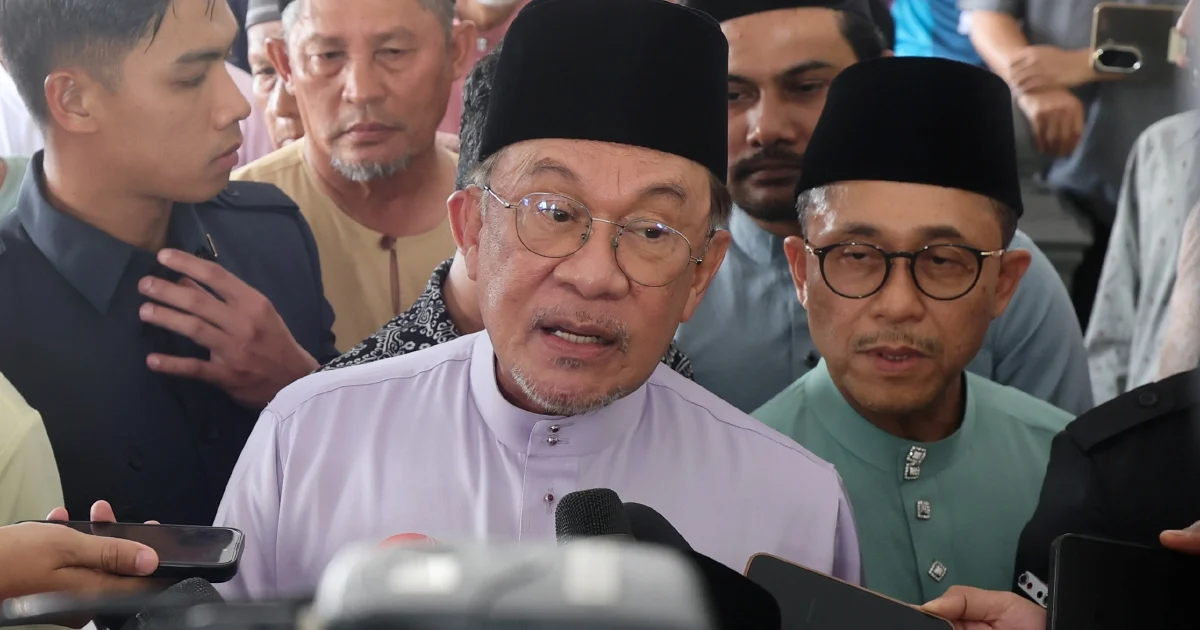
Prime Minister Datuk Seri Anwar Ibrahim has moved to allay concerns about proposed reforms to Malaysia's Syariah court infrastructure, stating unequivocally that such measures will operate within the constitutional framework safeguarding religious liberties across the country's diverse population. Speaking from Putrajaya, the Prime Minister sought to clarify that administrative and structural enhancements to Islamic courts do not necessitate any encroachment on the rights of citizens of other faiths to worship and practise their beliefs freely.
The clarification comes amid ongoing discussions within Malaysian political and legal circles regarding the role and capacity of Syariah courts in the federation's dual legal system. Malaysia's constitutional architecture provides for a complex interplay between civil and religious judicial mechanisms, with Syariah courts holding jurisdiction over Islamic personal law matters for Muslim citizens while civil courts maintain oversight of disputes involving non-Muslims or mixed-religion cases within defined parameters.
Anwar's reassurance represents an important articulation of intent regarding the government's position on sensitive constitutional matters that intersect religion, law, and citizenship rights. The emphasis on compatibility between strengthening Islamic judicial institutions and maintaining secular legal protections reflects awareness of the delicate balance Malaysia must maintain as a multi-faith nation with an Islamic constitutional framework. The federation has long navigated this tension through its tiered approach to jurisdiction, which delineates spheres of authority for religious and civil courts.
The proposed elevation of Syariah court status must be understood within Malaysia's federal constitutional design. Article 121(1A) of the Malaysian Constitution establishes this jurisdictional boundary, preventing civil courts from intervening in matters within the Syariah courts' purview regarding Islamic law. Conversely, Article 3 acknowledges Islam's position while Articles 8 and 10 guarantee fundamental liberties, including religious freedom. These provisions create a framework within which institutional reforms must operate to maintain legitimacy across Malaysia's ethnically and religiously diverse society.
From a practical standpoint, proposals to enhance Syariah courts typically address efficiency, resource allocation, and the quality of judicial decision-making within their existing mandate. Such improvements might include upgraded facilities, improved case management systems, additional judicial officers, or enhanced training programmes for Syariah court personnel. None of these measures intrinsically alter the fundamental rights of non-Muslims, provided they remain confined to their constitutional scope.
The Prime Minister's statement carries particular significance given Malaysia's history of periodic tensions between civil and religious judicial authorities, particularly when cases involve questions of religious status, conversion, or mixed-marriage disputes that potentially affect non-Muslim parties. High-profile cases over the past decade have highlighted instances where Syariah court decisions or processes have been perceived as extending beyond traditionally accepted boundaries, prompting civil court interventions and constitutional questions.
Malaysia's plural legal system reflects its founding compromise as an independent nation. The social contract embedded in the 1957 Merdeka Agreement and subsequent constitutional arrangements acknowledges Islam's special position while guaranteeing the rights of other communities. This equilibrium has enabled the nation to function as a functioning multi-religious state, though tensions occasionally surface when institutional developments in one sphere are perceived as threatening the agreed distribution of legal authority.
For Southeast Asia's diverse democracies, Malaysia's approach to managing religious institutions within secular constitutional frameworks offers both lessons and cautions. Thailand, Indonesia, and other regional democracies face similar challenges of accommodating religious law within broader constitutional systems. Malaysia's experience suggests that successful navigation of such arrangements requires explicit commitment to constitutional boundaries and consistent government messaging that institutional developments serve efficiency rather than jurisdictional expansion.
The business community and international observers also monitor such developments closely. Malaysia's status as an Islamic financial hub and growing regional economic influence depend partly on maintaining investor confidence in the stability and predictability of its legal and regulatory environment. Concerns about scope creep in religious jurisdictions can complicate international commercial relationships and talent attraction.
Regional observers will likely scrutinise the specific shape that Syariah court reforms ultimately take. The practical implementation of the Prime Minister's assurances will determine whether enhanced status translates into genuinely confined institutional improvements or represents incremental jurisdiction expansion. Greater transparency in Syariah court operations, clearer jurisdictional guidelines, and mechanisms for protecting non-Muslim interests in borderline cases could help substantiate the government's position.
Anwar's intervention into this discussion reflects broader government policy priorities regarding institutional strengthening and Islamic affairs. The government has positioned itself as committed both to Islamic institutional development and constitutional pluralism. Whether this dual commitment can be sustained through concrete policy decisions affecting Syariah courts will have implications extending beyond legal circles to shape public confidence in Malaysia's foundational constitutional arrangements.
Moving forward, the government faces the challenge of translating reassurances into legislative and administrative measures that demonstrably preserve the rights framework for non-Muslims while permitting genuine institutional improvement for Syariah courts. This requires careful legislative drafting, clear operational guidelines, and potentially enhanced mechanisms for civil-religious court coordination to address jurisdictional ambiguities that periodically generate conflict.

