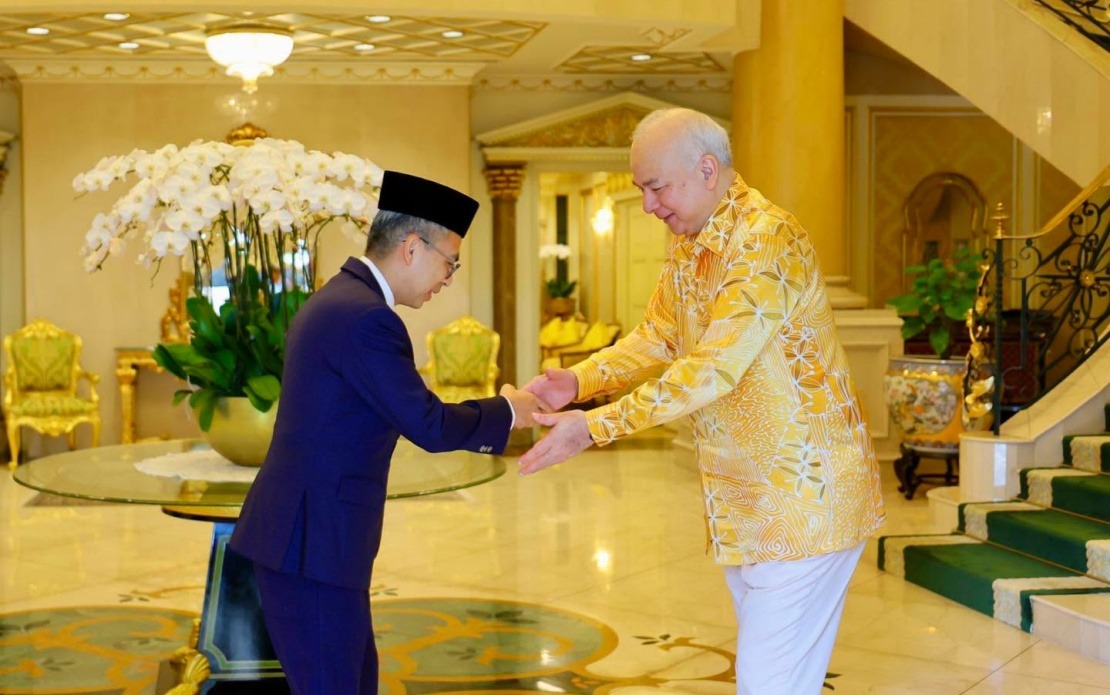
Communications Minister Datuk Fahmi Fadzil has briefed the Sultan of Perak, Sultan Nazrin Shah, on the federal government's comprehensive strategy to bolster communication infrastructure development across the state and extend service availability to underserved areas. The minister conveyed these developments during a formal audience with the ruler, reflecting the government's commitment to keeping the royal leadership informed on key initiatives affecting their jurisdiction.
The meeting underscored the administration's focus on bridging the digital divide in Perak, a state that encompasses both urban centres and rural communities with varying levels of connectivity. Infrastructure development remains a cornerstone of Malaysia's broader digital transformation agenda, particularly as the nation seeks to position itself competitively within Southeast Asia's rapidly evolving telecommunications landscape. Perak, with its strategic location and mixed urban-rural composition, represents both significant opportunities and challenges for infrastructure expansion.
Beyond the physical infrastructure component, Fahmi highlighted that online safety emerged as a critical topic during the audience, signalling growing concern at governmental and institutional levels about digital security and citizen protection in the online environment. This reflects a wider global trend where telecommunications policy increasingly encompasses not merely connectivity and coverage, but also safeguarding users from cyber threats, misinformation, and digital exploitation. The inclusion of online safety in discussions with the state ruler demonstrates how digital governance has become integral to regional development discourse.
The communications sector has witnessed substantial evolution in Malaysia over recent years, driven by competing demands for universal access, affordability, and quality of service. Perak's particular circumstances—encompassing industrial areas, agricultural regions, and growing tourism zones—create complex infrastructure requirements. Expanding coverage while ensuring service quality and sustainability requires coordinated planning across multiple stakeholders, including the federal government, state authorities, telecommunications providers, and community representatives.
Fahmi's emphasis on keeping royal leadership apprised of these initiatives reflects established protocol within Malaysia's constitutional monarchy, where state rulers play custodial roles in their jurisdictions. Such briefings serve multiple purposes: they ensure alignment between federal and state-level interests, demonstrate governmental responsiveness to local concerns, and facilitate smoother implementation of nationwide programmes by securing institutional support at the state level.
The focus on infrastructure expansion carries particular significance for Perak's economic development trajectory. Reliable communication networks form the backbone of modern commerce, education, and healthcare delivery. In rural Perak communities, improved connectivity can unlock opportunities for remote work, e-commerce participation, and access to digital services. For industrial areas, robust infrastructure supports manufacturing competitiveness and attracts investment. Enhanced telecommunications thus serves as an enabler of broader socioeconomic advancement across diverse segments of the state's population.
Online safety considerations reflect evolving challenges in Malaysia's digital ecosystem. As internet penetration deepens and more transactions migrate online, protecting citizens—particularly vulnerable groups including children and elderly persons—from fraud, cyberbullying, and privacy breaches has become paramount. Government efforts to address these concerns through regulation, education, and infrastructure standards demonstrate recognition that connectivity alone proves insufficient; the safety and trustworthiness of digital spaces matter equally for sustainable digital adoption.
The briefing also contextualises broader Malaysian telecommunications policy within state-specific realities. Perak presents a microcosm of national challenges: balancing metropolitan needs against rural requirements, managing infrastructure costs across economically diverse regions, and ensuring equitable access regardless of geography or income. Solutions implemented in Perak potentially offer lessons applicable elsewhere in Malaysia, making the state a relevant testing ground for communication policy innovations.
Minister Fahmi's reference to prayers for the Sultan's well-being and that of the Perak Royal Family reflects customary diplomatic courtesy within Malaysia's governance structures, acknowledging both the personal relationship between government officials and royal patrons, and the symbolic role of the monarchy in national life. Such expressions, while formulaic, underscore the importance of maintaining harmonious relationships between federal and state leadership, essential for effective programme implementation.
Moving forward, the outcomes of this briefing may influence how communication infrastructure projects unfold across Perak. Royal endorsement can facilitate smoother stakeholder cooperation, accelerate approvals for necessary developmental work, and enhance community acceptance of infrastructure initiatives. As Malaysia continues navigating its digital transformation, ensuring that regional rulers remain engaged and informed positions the nation better to implement coordinated, locally-responsive telecommunications strategies that serve all citizens effectively.

