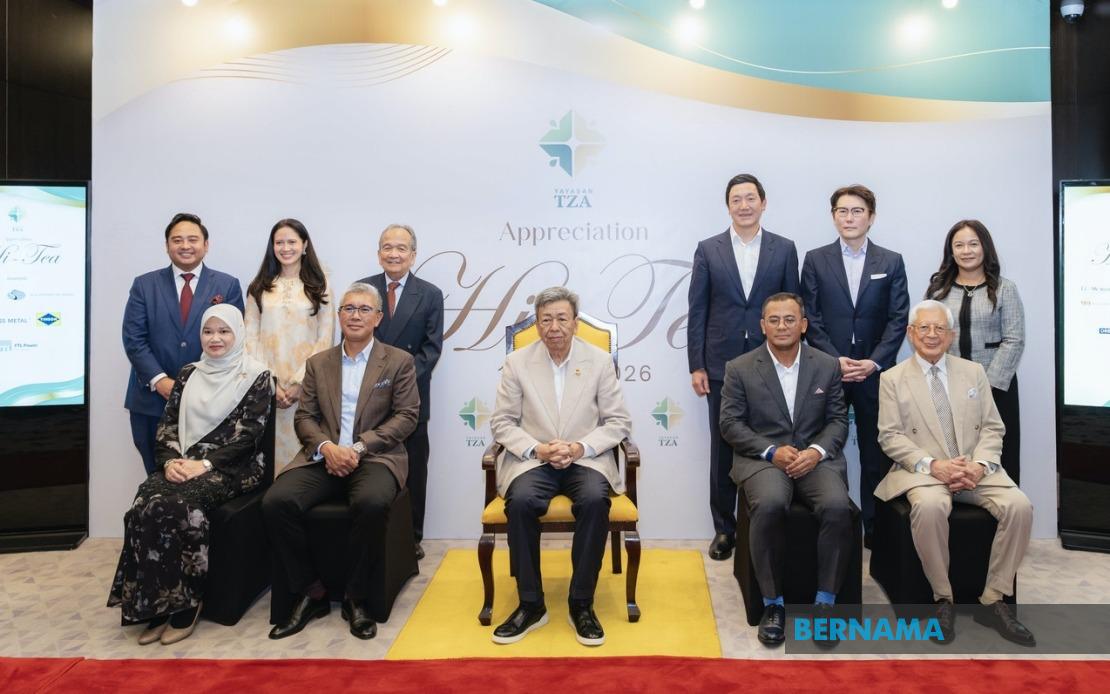
The Sultan of Selangor, Sultan Sharafuddin Idris Shah, graced the Yayasan TZA (YTZA) Appreciation Hi-Tea Ceremony in Kuala Lumpur on June 18, underscoring the royal family's commitment to philanthropic endeavours aimed at uplifting marginalised communities. The event drew prominent officials including Selangor Menteri Besar Datuk Seri Amirudin Shari and Education Minister Fadhlina Sidek, reflecting the significance of the foundation's work in educational empowerment across the nation.
The ceremony provided a platform for the foundation to showcase the tangible impact of its multi-faceted approach to social development. Yayasan TZA advisor Tengku Datuk Seri Zafrul Abdul Aziz articulated the organisation's philosophy, emphasising that interventions extend beyond immediate relief to foster sustainable community resilience. This strategic positioning distinguishes YTZA from conventional charity models that address surface-level needs without addressing structural inequalities affecting disadvantaged populations.
Central to YTZA's mandate is ACE SPM, a flagship educational support programme specifically targeting students from B40 (bottom 40%) households pursuing the Sijil Pelajaran Malaysia qualification. The initiative recognises a critical gap in Malaysia's educational landscape: despite constitutional commitments to equitable access, resource disparities continue to limit academic achievement among lower-income students. By concentrating efforts on examination preparedness, ACE SPM addresses a bottleneck in social mobility where exam performance directly determines tertiary education prospects and career trajectories.
The programme's reach demonstrates encouraging scalability. In 2025 alone, ACE SPM directly assisted 467 students across 10 Selangor schools through intensive tutoring and academic coaching. Equally significant, digital components extended engagement to more than 4,000 additional learners, reflecting how technology can democratise access to quality educational resources regardless of geographic or socioeconomic barriers. This dual approach—combining intensive in-person support with scalable digital platforms—represents a pragmatic response to Malaysia's persistent urban-rural education divide.
Corporate philanthropy played a pivotal role in sustaining these efforts. During the ceremony, the Sultan witnessed presentations of substantial donations: RM1 million from Kuok Brothers Sdn Bhd and RM300,000 from YTL Power International Berhad. These contributions underscore growing corporate recognition that social investment yields long-term dividends through improved workforce capabilities and more cohesive communities. For Malaysian businesses increasingly operating within global supply chains, demonstrating commitment to inclusive development has become strategically important for maintaining international partnerships and reputation.
The foundation's aspiration to expand ACE SPM's footprint reflects understanding of urgent demographic realities. Malaysia's youth population remains substantial, with millions still navigating secondary education. Without targeted intervention, current inequality patterns risk crystallising into intergenerational poverty. By focusing on examination success—a measurable, achievable outcome—YTZA creates pathways that individual students and families can navigate with confidence.
Beyond academic support, YTZA's portfolio encompasses community outreach, sustainability initiatives, and cultural engagement. The foundation's newest venture, Larian KITA@Klang, exemplifies this diversified strategy. Scheduled for October 10 as part of the Sultan of Selangor's Silver Jubilee celebrations, this community fun run integrates multiple social objectives: promoting inclusive participation, celebrating local culture and cuisine, and strengthening neighbourhood bonds. Such events acknowledge that community development encompasses physical health, cultural pride, and social cohesion alongside educational advancement.
Larian KITA represents the foundation's fourth iteration of this run series, indicating both consistency and institutional learning. Repeated, well-organised community events create predictability and trust, encouraging broader participation and sustaining engagement beyond single interventions. For Klang residents, particularly those from underserved communities, participation in the Sultan-patronised event offers tangible recognition and inclusion in civic celebrations.
Tengku Zafrul's remarks during the ceremony emphasised gratitude to sponsors, donors, volunteers, and strategic partners—a reminder that philanthropic impact depends on ecosystem collaboration. Educational foundations cannot function in isolation; they require government policy alignment, private sector investment, volunteer mobilisation, and community ownership. Malaysia's development challenges are sufficiently complex that siloed approaches prove inadequate. YTZA's model, spanning education, sustainability, and community engagement, acknowledges this interconnectedness.
For Malaysian policymakers and development professionals, YTZA's trajectory offers instructive lessons. The foundation demonstrates that targeting B40 communities requires sustained, multifaceted investment rather than episodic charity. Success metrics—whether exam pass rates, student cohort expansion, or volunteer engagement—must remain transparent and publicly accountable. Corporate partnerships can amplify reach when aligned with foundation missions rather than serving as mere corporate social responsibility checkboxes.
As Malaysia pursues Vision 2050 aspirations of high-income, inclusive development, institutions like YTZA occupy critical space between government capacity and market mechanisms. Educational inequality remains perhaps the most consequential barrier to genuine social mobility. Programmes like ACE SPM, supported by consistent corporate investment and royal patronage, represent concrete acknowledgment that Malaysia's future prosperity depends on translating stated egalitarian principles into resourced, measurable interventions reaching those most disadvantaged.
The convergence of royal presence, ministerial participation, substantial corporate donations, and programme expansion signals institutional maturation. YTZA has transitioned from niche initiative to recognised player in Malaysia's educational equity landscape. Yet significant challenges persist: reaching beyond 467 directly-assisted students and 4,000 digital learners to encompass the hundreds of thousands of B40 students nationally requires scaling innovations and mobilising resources at unprecedented levels. The foundation's trajectory suggests both capacity and commitment to meet this formidable challenge.