A Swedish court has upheld social welfare authorities' decision to remove guardianship of a four-year-old girl from her Hong Kong parents and assign it to the foster family caring for her, dismissing the parents' legal challenge as procedurally inadmissible. The ruling represents a significant setback for the couple in their years-long struggle to maintain custody of their daughter in Scandinavia, and raises questions about parental rights and child welfare standards across different jurisdictions.
The Swedish Social Welfare Committee, in a June 3 report, argued that the child—named Lily in public accounts—required protection from what it characterised as a "rootless and insecure existence" under her parents' care. The committee subsequently petitioned the local court to formally appoint the girl's foster carers, who have provided her home since May 2024, as her legally designated guardians. In justifying this position, welfare officials emphasised that Lily deserved to mature in an environment marked by emotional warmth, stable routines, predictability and security, qualities they asserted her parents had failed to provide.
On June 10, the Swedish court rejected the parents' attempt to mount a judicial challenge, ruling that social welfare determinations fall outside the scope of direct court review. Instead, the tribunal instructed the parents to await a formal administrative decision before pursuing legal remedies—a procedural stance that has evidently frustrated the family. Tsang, the father, expressed dismay to media outlets that the court had refused even to entertain their arguments challenging what he viewed as the welfare system's irrationality, leaving the family without meaningful recourse within the immediate judicial framework.
The roots of this custody dispute stretch back several years and across multiple countries. Lily was born at home in Finland in October 2021, the couple's second child. Their first daughter, also delivered at home, had died at just one month old in 2019—a tragedy that triggered investigations by Finnish authorities into potential negligence. When Finnish officials refused to register Lily's birth because the parents listed their permanent residence as Hong Kong rather than Finland, the family's legal status became increasingly precarious. Compounding these challenges, the couple faced accusations relating to the earlier death of their eldest daughter.
The family subsequently relocated to Sweden, seeking a fresh start. However, their circumstances deteriorated further when Swedish authorities arrested them in connection with suspected money laundering activities. Following that arrest in December 2023, Lily was taken into state care by Swedish social welfare authorities. Although prosecutors eventually dropped the money laundering charges, the child welfare matter persisted independently, becoming the focal point of the family's legal battles in Scandinavia.
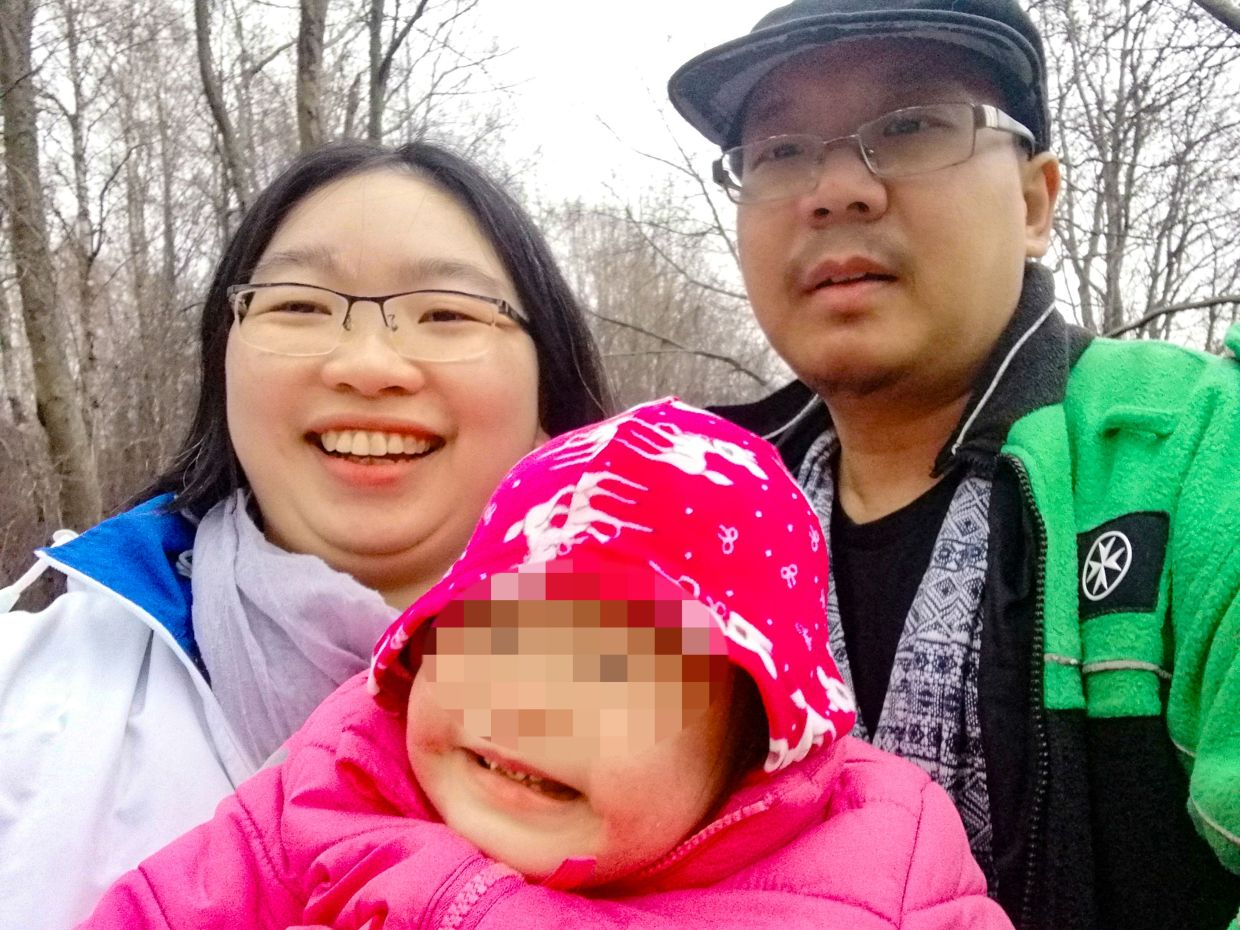
The couple's campaign to recover their daughter has extended into the digital sphere. Through a social media page titled "Save Lily," Tsang and Kwan have shared family photographs and official documents in a public appeal for their daughter's return. This strategy reflects both parental desperation and the modern tendency of families in custody disputes to mobilise online communities and international attention, though such efforts have thus far failed to sway Swedish authorities or courts.
The situation has become even more complicated by events back in Hong Kong. After returning to the territory, the couple had another child through home birth—a son named Danny—earlier in 2024. However, they declined to register him with the Hong Kong Birth Registry, citing refusal to undergo a DNA test that authorities required as verification of their biological relationship to the boy. This refusal triggered intervention by Hong Kong's Social Welfare Department, which placed the approximately three-month-old infant under its care pending further assessment of the parents' capabilities to provide adequate childcare.
The treatment of Danny in Hong Kong's welfare system mirrors, in some respects, the challenges the family faced in Sweden, though the specifics differ. While Swedish authorities emphasised environmental factors and the parents' lack of "receptivity or insight" regarding their daughter's welfare, Hong Kong authorities have focused on procedural compliance and verification of parentage. On Monday, Tsang reported that he and Kwan, operating under supervision from government social workers, brought Danny to a Department of Health maternal and child health centre for medical evaluation. Initial findings indicated no health irregularities in the infant.
The case now proceeds through Hong Kong's court system, with hearings scheduled for late this month to determine whether the parents can regain custody of Danny. That decision will hinge substantially on ongoing social worker assessments of their parenting suitability and the judiciary's evaluation of whether they meet established standards for child care. The outcome remains uncertain, as does Lily's future in Sweden.
For Malaysian and broader Southeast Asian observers, this case illuminates the tensions between parental autonomy and state intervention in child welfare matters across different legal systems. Home births, while not inherently problematic, can complicate bureaucratic registration and create vulnerabilities when combined with other risk factors. The case also demonstrates how international mobility can amplify legal complications when families move between countries with differing child protection frameworks and standards of evidence. The Swedish and Hong Kong authorities have each acted according to their respective legal standards, yet from the parents' perspective, they face an asymmetrical battle against state machinery in two jurisdictions simultaneously.
The broader implications extend to questions about how child welfare systems balance parental rights against protective mandates, how procedural rules can limit parental recourse, and whether home-birth communities face disproportionate scrutiny from state authorities. While protecting children from genuine harm remains paramount, the case raises concerns about whether families operating outside conventional medical and administrative systems receive fair treatment or whether systemic bias disadvantages them from the outset. The Swedish court's refusal even to hear substantive arguments about the welfare committee's reasoning suggests a potential gap between parental due process rights and administrative decision-making in Nordic child protection systems.