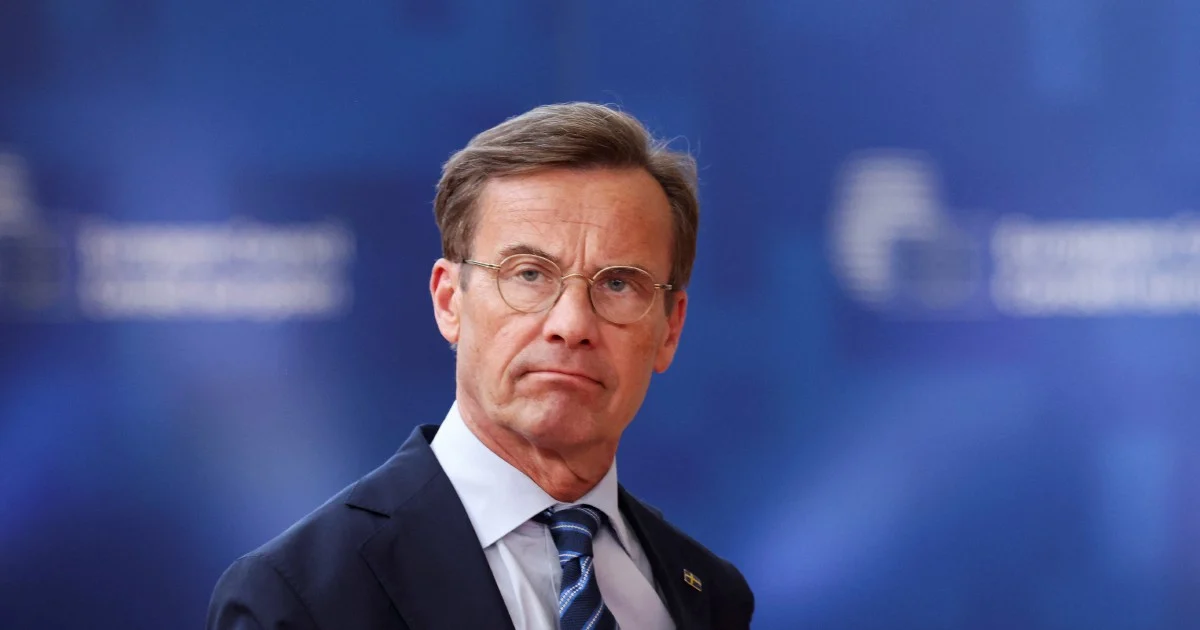
Swedish Prime Minister Ulf Kristersson remains unfazed by mounting controversy as his government approaches a crucial electoral test, having demonstrated a remarkable capacity to weather successive political storms throughout his four-year tenure in office. The latest corruption allegations against the centre-right leader emerge at a particularly sensitive moment, with legislative elections scheduled just three months away, yet observers note his consistent ability to escape meaningful political consequences from previous controversies.
Kristersson's government has navigated a treacherous landscape of scandals since taking office, each threatening to destabilise his administration yet none resulting in his removal or serious parliamentary sanctions. The pattern suggests either institutional resilience within his coalition or a political landscape where opposition forces lack the cohesion or evidence needed to mount effective challenges. His survival thus far has confounded critics who predicted his early departure from power, instead presenting Swedish voters with a leader who appears politically durable despite persistent questions about his conduct and judgment.
The timing of these fresh allegations carries particular weight in the Swedish political calendar. With elections looming, such accusations typically dominate campaign discourse and shape voter sentiment. For Kristersson, however, the challenge extends beyond merely surviving parliamentary scrutiny—he must now convince an electorate preparing to cast ballots that the new claims warrant no change in government. The proximity to polling day means voters will render judgment on both the allegations and his government's record, potentially amplifying or diminishing the impact of corruption charges depending on broader economic and social circumstances.
Sweden's political system, with its multi-party coalition structure, may partially explain Kristersson's durability. His centre-right bloc has maintained sufficient parliamentary numbers to withstand opposition attempts to remove him, assuming coalition partners remain loyal. Any serious threat to his position would require either defections within his own coalition or extraordinary cross-party consensus—a high bar in modern Swedish politics. This structural advantage shields him even when individual scandals might topple leaders in more polarised political environments.
The substance of the current corruption allegations remains significant regardless of their electoral impact. Corruption charges strike at the legitimacy of democratic governance itself, undermining public confidence in institutions and suggesting leaders place personal interest above constitutional duty. For Sweden, a nation with strong traditions of clean governance and transparency, such allegations carry particular reputational weight internationally and domestically. European observers and Nordic peers will monitor how Swedish authorities investigate and adjudicate these claims, viewing the outcome as a test of Swedish institutional integrity.
The broader pattern of scandals throughout Kristersson's tenure raises deeper questions about Swedish political culture and accountability mechanisms. If a prime minister can repeatedly face controversies without facing removal or resignation, this may indicate either that the controversies lack substance or that accountability mechanisms function inadequately. Neither interpretation flatters the system. Either the charges represent politically motivated attacks on a competent leader, or the political system lacks tools to address genuine misconduct by sitting prime ministers—both scenarios merit scrutiny.
For Malaysian and broader Southeast Asian observers, the Kristersson case illustrates how political resilience operates across diverse democratic systems. Swedish institutions differ substantially from those in Southeast Asia, yet questions of leadership accountability, scandal management, and electoral timing transcend regional boundaries. How developed democracies handle corruption allegations against sitting leaders offers instructive lessons about institutional strength, opposition effectiveness, and voter expectations regarding leadership standards.
The electoral dimension cannot be overstated. Swedish voters will cast judgment on Kristersson's handling of numerous matters—economic policy, immigration, energy security, and NATO integration—alongside these corruption allegations. A government delivering strong economic performance or popular policy outcomes may retain voter confidence despite scandals, while one struggling on substantive governance may find that allegations compound existing voter discontent. The election will reveal whether Swedish voters view Kristersson as a resilient leader unjustly attacked or a compromised figure who should be replaced.
Kristersson's coalition partners face their own political calculations. Supporting a leader dogged by corruption allegations carries reputational risk, yet abandoning him might destroy coalition cohesion and trigger an election under unfavourable circumstances. Coalition governments require careful balance between principle and pragmatism, a tension that becomes acute when leading members face serious allegations. The behaviour of coalition partners over coming months will signal whether they view the charges as credible threats to their political brand or manageable controversies.
International implications warrant attention as Sweden balances multiple strategic priorities. As a NATO member navigating complex European security dynamics, Swedish political stability matters beyond domestic borders. Sustained questions about leadership integrity could undermine Sweden's international standing or complicate diplomatic initiatives. European allies assessing Swedish reliability during tense geopolitical circumstances may factor leadership legitimacy into their calculations, making the electoral outcome consequential for Nordic and European security arrangements.
The investigation and adjudication process itself will merit close observation. Swedish judicial and prosecutorial independence will be tested as these allegations proceed through appropriate channels. How thoroughly authorities investigate, whether findings appear credible to international observers, and whether consequences match the gravity of findings will all contribute to assessing whether Swedish institutions function adequately to address high-level corruption. The outcome will speak volumes about Swedish democratic resilience beyond Kristersson's individual political fate.

