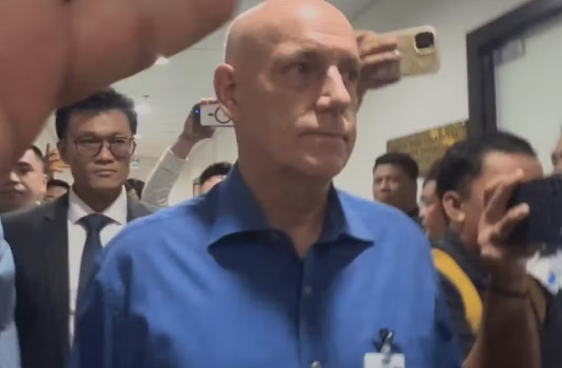
The investigation into the deaths of two Ateneo de Manila University student-athletes gained momentum on Tuesday when Tab Baldwin, the university's former men's basketball team head coach, made his initial appearance before the National Bureau of Investigation's Homicide Division. Baldwin arrived at the bureau shortly before 2pm accompanied by his attorney Karl David, breaking a pattern of non-compliance with law enforcement that had frustrated investigators since early the previous week. His presence marked a significant development in the ongoing inquiry into the drowning deaths of Rene Baterbonia and Divine Adili, both of whom lost their lives during a team training activity in Dipaculao, Aurora, earlier in June.
Baldwin's delayed appearance underscored the complexities surrounding the investigation, as the coach had twice previously failed to show up for scheduled interviews with the bureau. On June 16, his legal representative appeared in his stead, citing health concerns and indicating that Baldwin was not in an appropriate physical or mental state to participate in formal questioning. This absence prompted frustration among investigators, who were seeking to establish a comprehensive timeline of events surrounding the drowning incident that claimed the two young athletes' lives.
The second missed appointment on June 19 occurred because Baldwin had been simultaneously scheduled to provide a statement to the Philippine National Police-Criminal Investigation and Detection Group the same day. This timing conflict highlighted the coordination challenges facing the multiple law enforcement agencies involved in the investigation. The dual inquiry by both the NBI and the PNP reflected the gravity with which Philippine authorities were treating the case and the need for thorough cross-institutional verification of evidence and testimony.
NBI Director Melvin Matibag indicated that the bureau intended to use Baldwin's appearance to compare his statement given directly to NBI investigators with the testimony he had previously provided to the PNP-CIDG on June 19. This comparative analysis would serve as a critical tool for establishing consistency in his account of the events leading up to and following the drowning incident. Any discrepancies between the two statements would likely prompt further questioning and investigation into potential issues surrounding accountability and oversight during the team activity.
The investigation itself had been ongoing since the drowning incident earlier in the month, with authorities seeking to understand the circumstances that led to the deaths of Baterbonia and Adili during what was described as a team training exercise. The involvement of two separate investigative bodies—the NBI and the PNP-CIDG—underscored the seriousness with which the case was being treated. As the coach of the team whose members were engaged in the fatal activity, Baldwin's account was considered essential to reconstructing what had transpired at the Dipaculao location.
For Malaysian and Southeast Asian readers, this case reflects broader concerns about athlete safety and institutional oversight during sports training activities. University sports programs across the region often conduct training camps and team-building exercises in remote locations, raising similar questions about adequate supervision, safety protocols, and emergency preparedness. The Ateneo case serves as a sobering reminder of the potential consequences when proper safeguards are not implemented or monitored effectively during such activities.
The timeline of Baldwin's absence from questioning had also sparked public scrutiny regarding whether he had been adequately cooperative with authorities. His delays in appearing before investigators, while legally defended through his counsel's claims about his health status, nonetheless fueled questions about the investigative process and the degree to which various parties were providing timely assistance to authorities attempting to determine what went wrong during the training session.
As of the time Baldwin's appearance was reported, he remained at the NBI facility for continued questioning. The bureau had set an ambitious timeline for concluding its investigation into the deaths of the two Ateneo basketball players by the end of that week, suggesting that investigators were pressing ahead urgently to gather necessary statements and establish a clear factual record of the incident. This deadline reflected the institutional pressure to provide clarity to the families of the deceased and to the broader public about what had occurred and whether negligence or other culpable factors had contributed to the tragedy.
The investigation represents one of the most high-profile cases involving a university sports program in the Philippines in recent years, with implications extending beyond the immediate circumstances to raise questions about institutional accountability in tertiary-level athletics. Baldwin's eventual appearance, after the delays and complications of the previous week, represented a step forward in what appeared to be a complex and multi-layered investigation involving questions of responsibility, safety oversight, and the adequacy of measures designed to protect student-athletes engaged in demanding physical activities.

