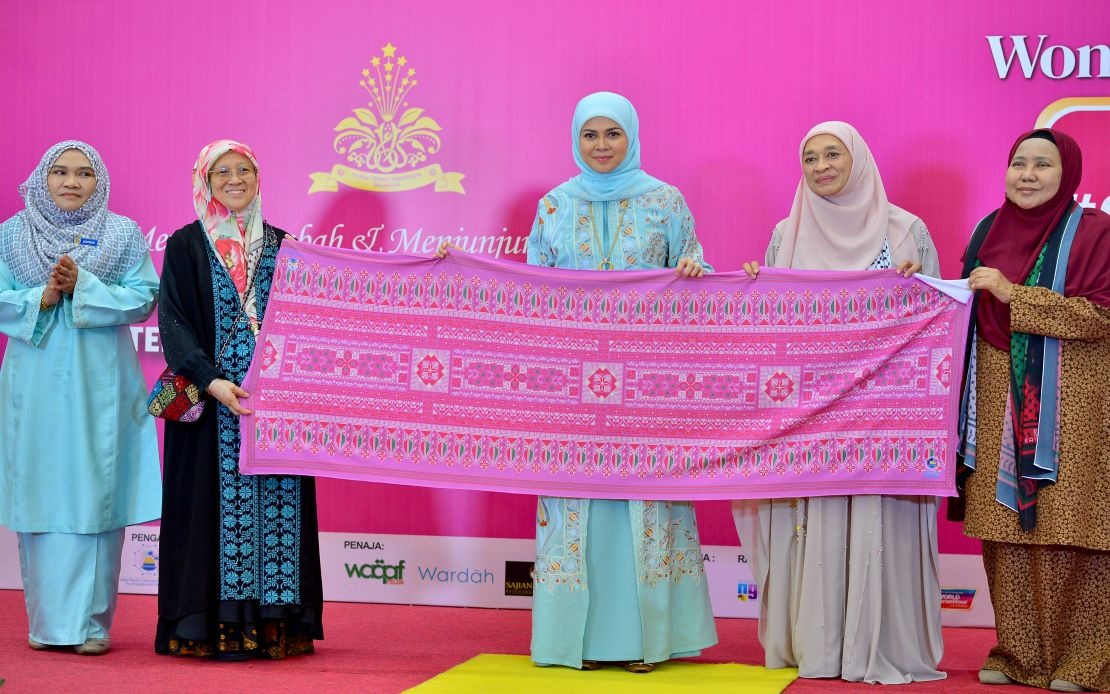
Tengku Permaisuri Norashikin of Selangor officially opened the Women Summit & Women #QuranHour 2026 programme on June 24 at the Dahlia Auditorium in Sultan Salahuddin Abdul Aziz Shah Mosque, Shah Alam, marking a significant initiative to strengthen women's spiritual and psychological wellbeing through Islamic scholarship. The royal patronage underscores the importance of women-focused religious and educational programming within Malaysia's Muslim community, particularly as such gatherings attract participants across regional boundaries and diverse socioeconomic backgrounds.
The event brought together approximately 400 women from Selangor, Singapore, Indonesia and beyond, facilitated through a collaborative partnership between Yayasan Warisan Ummah Ikhlas (WUIF) and the Asia Pacific Women's Coalition for Al-Quds and Palestine (ApWCQP). This cross-border composition reflects growing momentum in Southeast Asia for structured female participation in Islamic learning spaces, where women increasingly seek structured environments to deepen their theological understanding alongside their peers. The presence of international delegates signals that such programming has transcended purely national contexts, becoming part of a broader regional conversation about Muslim women's roles in their communities.
Centred on the theme "Women of Grit," the summit drew explicit inspiration from the resilience demonstrated by Palestinian women, particularly those enduring the humanitarian challenges in Gaza. Organisers deliberately framed their curriculum around stories of women maintaining faith, preserving family structures and ensuring educational continuity amid conflict, displacement and loss. This thematic choice reflects how contemporary Islamic women's movements increasingly situate personal empowerment within broader geopolitical and humanitarian concerns, connecting individual spiritual development to collective struggles affecting Muslims globally. By anchoring the programme in real-world contexts, the organisers moved beyond abstract religious instruction towards applied spirituality.
Programme director Gharizah Hashim articulated the core mission during media interactions, emphasising that "Women of Grit" extends beyond conventional notions of perseverance in hardship. Instead, she positioned the initiative around cultivating inner tranquility, sound decision-making and purposeful forward momentum grounded in Quranic principles. This framing deliberately addresses the psychological and emotional dimensions of resilience, acknowledging that women navigating modern complexities—whether professional pressures, family responsibilities or societal expectations—require both spiritual grounding and practical emotional coping mechanisms rooted in Islamic teaching. The programme thus represents an evolution in how Islamic scholarship engages with contemporary wellbeing frameworks.
The speaker lineup demonstrated commitment to interdisciplinary engagement with religious texts. Tirmizi Ali, a 2014 International Quran Recitation Champion, brought expertise in classical Islamic learning traditions, while Associate Professor Dr Nora Mat Zin from International Islamic University Malaysia's Department of Psychiatry connected Quranic wisdom with contemporary mental health understanding. This combination of traditional Islamic scholarship and modern psychological expertise reflects international best practices in faith-based wellbeing programming, where organisations increasingly recognize that spiritual development and mental health support operate in complementary rather than competing registers.
CEO Marhaini Yusoff outlined an ambitious expansion strategy that extends far beyond the immediate Summit event. The initiative plans to leverage the Rumah Ngaji network—a nationwide system of free Quranic study circles supported through community sponsorship—to decentralise the Women #QuranHour programming to state level. This grassroots infrastructure approach potentially reaches significantly more participants than a single flagship event could accommodate, particularly women in smaller towns and rural areas who may face transportation or financial barriers to attending centralised programmes. The strategy recognises that sustainable women's empowerment requires distributed, locally-embedded support structures rather than episodic metropolitan gatherings.
The Rumah Ngaji network represents an interesting institutional innovation within Malaysian Islam's contemporary landscape. By establishing free learning spaces supported through community financial commitment rather than government or commercial channels, the model demonstrates how civil society organisations can sustain religious educational infrastructure. The presence of Rumah Ngaji representatives from multiple states at the Shah Alam summit suggests these localised networks already possess significant reach and legitimacy, positioning them effectively as distribution channels for the expanded Women #QuranHour initiative.
From a Malaysian perspective, the event highlights ongoing efforts to position Muslim women not merely as passive recipients of religious instruction but as active agents in their spiritual development and community leadership. The emphasis on producing "women who are able to rise from trials, become a source of strength for their families and continue contributing to society and the ummah" reflects a vision of empowerment that simultaneously respects traditional Islamic frameworks around family and community whilst expanding women's agency within those structures. This represents a distinct approach to women's empowerment that differs markedly from secular feminist frameworks, yet achieves comparable outcomes in terms of women's autonomy, education and social participation.
The programme's expansion across state boundaries and international borders also reflects Malaysia's position within broader Southeast Asian Islamic networks. Women's religious education initiatives in Singapore and Indonesia share similar philosophical foundations and operational challenges, creating natural opportunities for knowledge-sharing and collaborative programme development. As Islamic learning increasingly globalises through digital platforms and cross-border movements, initiatives like Women #QuranHour that deliberately cultivate in-person regional community represent important counterbalances, preserving the relational and contextually-grounded dimensions of religious education.
Looking forward, the success of the Women Summit & Women #QuranHour 2026 programme will likely influence how Malaysian Islamic institutions approach women's programming more broadly. The demonstrated ability to attract 400 participants spanning multiple countries, secure royal patronage, and mobilise established networks like Rumah Ngaji suggests institutional readiness to scale faith-based women's empowerment initiatives significantly. Should the state-level expansion proceed as planned, the programme could establish a replicable model for women-focused Islamic education that other organisations and states might adapt to their contexts, potentially reshaping how Muslim women in Malaysia engage with religious learning and community formation.

