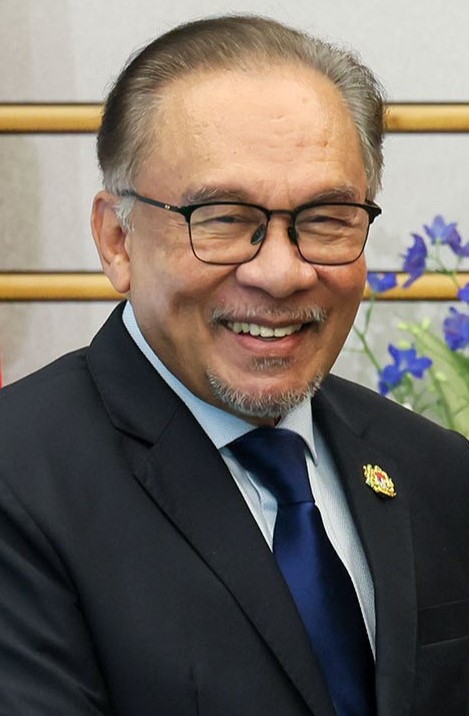
Tengku Datuk Seri Zafrul Tengku Abdul Aziz, who holds the position of senior political adviser to the prime minister, has formally signalled his intention to seek a parliamentary candidacy in Selangor for the 16th General Election (GE16). The move represents a significant stepping stone in his political trajectory, as he looks to translate his advisory influence into elected office within Malaysia's most economically developed state.
The proposal carries particular weight given Selangor's strategic importance to Malaysia's electoral landscape. With a population exceeding 6 million and 22 parliamentary constituencies, the state represents a critical battleground for all major political coalitions. Success here would not only elevate Tengku Zafrul's personal standing but also strengthen the bargaining position of his parent coalition within the federal parliament, where representation from the nation's economic heartland can determine government formation.
Tengku Zafrul's advisory role has positioned him at the intersection of policy formulation and political strategy. His move to contest an election seat reflects a pattern increasingly common among senior political operatives, who seek to leverage their behind-the-scenes influence into direct legislative power. The transition from adviser to candidate carries both advantages and risks, as it removes the insulation that advisory positions traditionally provide while offering greater autonomy in political decision-making.
The timing of this proposal warrants careful analysis. GE16 remains some distance away, yet competitive positioning within ruling coalition parties often begins well in advance of official nominations. The announcement suggests that Tengku Zafrul and his political mentors believe the moment is appropriate to secure territorial claims within Selangor's constituency map. Early announcements can deter potential rival candidacies and build momentum through grassroots mobilization.
Selangor's electoral dynamics have undergone significant shifts in recent electoral cycles. The state has witnessed competition between federal-level coalitions and state-level power structures, creating complex voter sentiment. Inserting a figure from the federal administrative establishment into this contested terrain introduces new variables. Tengku Zafrul would need to navigate not only inter-coalition rivalries but also voter perceptions regarding centralized versus localized governance priorities.
The proposal also reflects internal coalition mathematics. For Tengku Zafrul's party and the broader ruling coalition, fielding established political operators in key states enhances electoral credibility. His background as an adviser suggests familiarity with national-level policy issues, which may resonate with Selangor voters concerned about federal economic management, infrastructure development, and urban planning—matters directly affecting the state's suburban and metropolitan populations.
Historically, Selangor has demonstrated receptiveness to candidates with demonstrable connection to state-level development. Voters in constituencies spanning from Petaling Jaya to Shah Alam have consistently evaluated candidates partly on their perceived influence over resource allocation and developmental priorities. Tengku Zafrul's proximity to federal decision-making could potentially be positioned as an asset in this regard, offering constituents a direct channel to national leadership.
The broader context of Malaysian coalition politics suggests this proposal may initiate discussions within party structures regarding seat allocation. Selangor's 22 constituencies must be distributed among coalition partners according to power-sharing formulas negotiated at national levels. Tengku Zafrul's designation suggests that his party and coalition partners view his candidacy as strategically valuable enough to claim a strong constituency position, potentially displacing incumbent representatives or candidates previously considered for nomination.
From a regional Southeast Asian perspective, Malaysia's political developments influence investor confidence and governance perceptions across the broader economic zone. Senior figures transitioning from advisory to electoral roles signal stability in political institutions and suggests that Malaysia's democratic mechanisms continue functioning within established hierarchies. However, such transitions can also indicate factional developments within ruling coalitions that merit monitoring by external observers interested in Malaysian political stability.
The response from Selangor's voter base and from competing political factions will provide important signals regarding both Tengku Zafrul's personal prospects and broader coalition dynamics heading toward GE16. Should party leadership formalize his candidacy in a competitive constituency, it would demonstrate confidence in his electoral viability. Conversely, relegation to safer seats might suggest internal reservations about his vote-winning capacity beyond advisory circles.
Looking forward, Tengku Zafrul's proposed candidacy exemplifies the continuous recalibration of Malaysia's political establishment as it prepares for elections that will determine executive configurations and legislative composition. His bid for a Selangor seat brings together questions of personal ambition, party strategy, coalition positioning, and state-level electoral dynamics—elements that collectively shape Malaysia's political economy in the pre-election period.