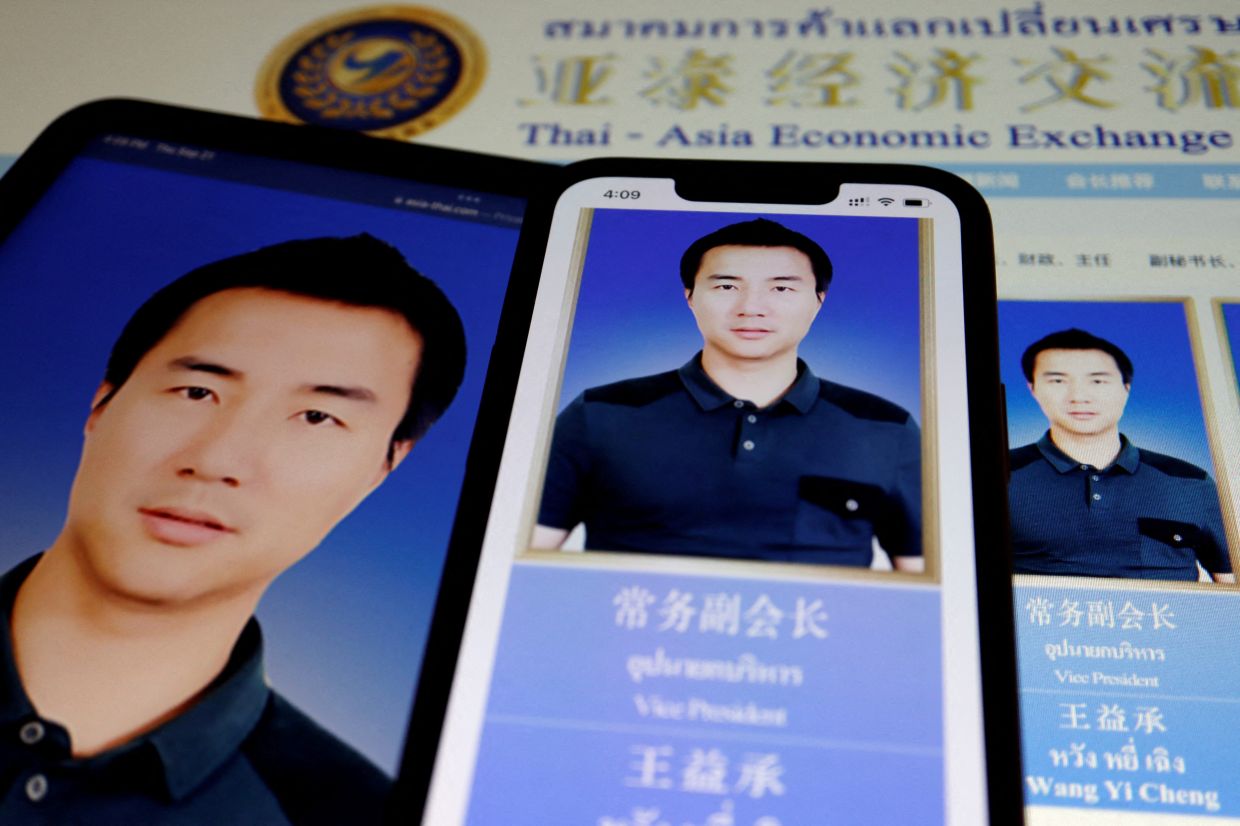
Thailand's Department of Special Investigation has intensified regional efforts to combat transnational financial crime by issuing an arrest warrant for Wang Yicheng, a Chinese businessman suspected of orchestrating one of Southeast Asia's most elaborate cryptocurrency-laundering schemes. The fugitive, whose whereabouts remain unknown, stands accused of operating at the nexus of what authorities describe as a sophisticated money-laundering network that exploited digital assets to conceal illicit proceeds from pan-Asian scam syndicates and illegal gambling operations. The case underscores how cryptocurrency has become a critical financial infrastructure for transnational organised crime groups operating across the region, with authorities only now catching up to the scale of the problem.
Wang's prominence in this investigation stems largely from a detailed 2023 Reuters investigation that exposed how an account registered in his name had received at least US$9.1 million between 2021 and 2022 from cryptocurrency wallets that blockchain analysis firms, including TRM Labs, directly linked to "pig-butchering" scams. These frauds employ an insidious methodology: perpetrators establish fraudulent romantic relationships with victims online before gradually convincing them to invest in fake cryptocurrency schemes, often resulting in devastating personal financial losses. The Reuters probe traced the flow of money from victims through multiple accounts into Wang's wallet, revealing a complex chain of financial transfers designed to obscure the criminal origins of the funds.
According to Police Major Woranan Srilam, spokesman for Thailand's Department of Special Investigation, Wang was formally charged in November with theft and violations under the Computer Crimes Act, which addresses unauthorised interference with digital systems and networks. Thai authorities now believe Wang has fled the country and are coordinating with international law enforcement partners to apprehend him. The investigation into Wang's activities is part of a broader crackdown that has identified at least eight other suspects—four identified as Chinese nationals and four from Myanmar—all operating within the same illicit cryptocurrency-mining ecosystem.
The scope of Wang's alleged operation emerges from the Department of Special Investigation's discovery that the network consumed approximately US$28 million worth of illegally diverted electricity, representing one of the largest cryptocurrency-mining theft cases documented in recent years. This staggering figure illustrates how transnational organised crime groups exploit digital currency mining not merely as a technological enterprise, but as a deliberate mechanism for generating income, obscuring criminal proceeds, and sustaining broader technology-crime ecosystems. The sheer volume of power theft required to operate such mining farms makes detection difficult but ultimately conspicuous, as electrical grid anomalies eventually alert authorities to suspicious activity.
Wang's alleged operations appear to have benefited from an unexpected advantage: his cultivation of relationships with Thai political and law enforcement officials. At the time his accounts were receiving scam-linked cryptocurrency transfers, Wang served as vice president of the Thai-Asia Economic Exchange Trade Association, an influential business organisation that explicitly promotes Thai-Chinese commercial partnerships and has reportedly maintained cordial relationships with senior officials from both nations. This positioning would have afforded Wang access to institutional legitimacy, early warning of investigations, and potential protection from routine law enforcement scrutiny—advantages that organised crime networks actively cultivate when establishing themselves in foreign jurisdictions.
US authorities have independently identified Wang as a suspect in cryptocurrency fraud cases originating in the United States. In June 2023, the US Department of Justice seized approximately US$500,000 in cryptocurrency from an account bearing Wang's name, after tracing funds stolen from a Massachusetts victim through multiple digital wallets before arriving at the seized account. This seizure demonstrates how scam victims in distant countries become entangled in the networks that Wang allegedly operated, with their stolen life savings flowing through global cryptocurrency exchanges before being absorbed into mining operations and money-laundering schemes centred in Southeast Asia.
The human cost of these fraud schemes becomes starkly apparent through individual victim accounts. One 71-year-old California resident lost his entire life savings of US$2.7 million after being deceived by a fraudster posing as a young woman through social media platforms. The victim was gradually conditioned to believe in a romantic relationship before being introduced to purported cryptocurrency investment opportunities that promised unrealistic returns. By the time the victim recognised the fraud, his entire retirement nest egg had been transferred through multiple digital exchanges and ultimately integrated into the same cryptocurrency ecosystem where Wang allegedly operated. Such cases, multiplied across thousands of victims globally, generate the billions of dollars annually that fuel these criminal enterprises.
Southeast Asia has emerged as the epicentre of global scam-syndicate operations, particularly those managed by Chinese criminal organisations. The United Nations has documented that these largely Chinese-run scam networks, frequently operated from fortified industrial compounds like KK Park on the Myanmar-Thailand border, employ partly-trafficked workforces and collectively generate annual proceeds in the billions. Thailand, alongside neighbouring countries, has recently escalated enforcement actions against these syndicates, recognising that the region's geographical position, relatively permissive regulatory environment for cryptocurrency, and established Chinese diaspora networks create ideal conditions for transnational financial crime. The arrest warrant for Wang represents this regional escalation, though his apparent flight from Thailand suggests that meaningful apprehension will require sustained international cooperation.
The investigation reveals critical ambiguities about Wang's personal culpability versus his potential role as a front for larger criminal operations. Reuters' investigation could not definitively establish whether Wang himself actively managed the accounts in his name or whether other individuals had fraudulently opened accounts using his identity—a distinction with substantial legal implications. Similarly, whether Wang knowingly partnered with cryptocurrency-mining equipment manufacturer Bitmain or whether his name was invoked without his knowledge remains unclear. Bitmain has maintained that it supplied equipment to Wang through lawful commercial channels, though the company declined to comment specifically on the Thai warrant.
Following Reuters' initial publication of its investigation, the Thai-Asia Economic Exchange Trade Association released a statement claiming that Wang had departed from its board following background checks that uncovered no criminal record. The organisation also asserted that Wang's personal affairs remained unrelated to its operations and that Thai officials serving as advisers maintained no financial interests in the association or its members. However, these retrospective clarifications emerged only after public exposure of Wang's alleged activities and cannot fully address the underlying questions about how an individual allegedly at the centre of a major cryptocurrency-laundering network maintained prominent business associations while conducting illicit operations.
The case carries significant implications for Malaysia and other Southeast Asian economies, where cryptocurrency adoption remains elevated and regulatory frameworks struggle to keep pace with technological innovation. Scam syndicates and money-laundering networks operating across the region actively recruit local operatives and establish local banking relationships, creating vectors for organised crime penetration into mainstream financial institutions. Malaysia, with its developed financial infrastructure and growing fintech sector, presents an attractive target for these networks seeking to integrate criminal proceeds into legitimate commercial channels. The Wang case demonstrates that effective regional enforcement requires not only bilateral cooperation between law enforcement agencies but also intelligence-sharing on transnational organised crime networks, capacity-building in cryptocurrency forensics, and robust vetting of business associations and their leadership.
Thailand's issuance of the arrest warrant signals official commitment to disrupting these transnational networks, though Wang's apparent flight suggests that enforcement will remain incomplete without coordinated international action. The case also raises uncomfortable questions about institutional capture, whereby senior officials in receiving countries become entangled with criminal networks through social and business relationships that create conflicts of interest. As cryptocurrency-enabled crime continues to evolve in sophistication and scale, Southeast Asian governments face mounting pressure to strengthen both their technical capacity to investigate digital financial crimes and their institutional integrity to resist the influence of criminal networks seeking legitimacy through business and political associations.

