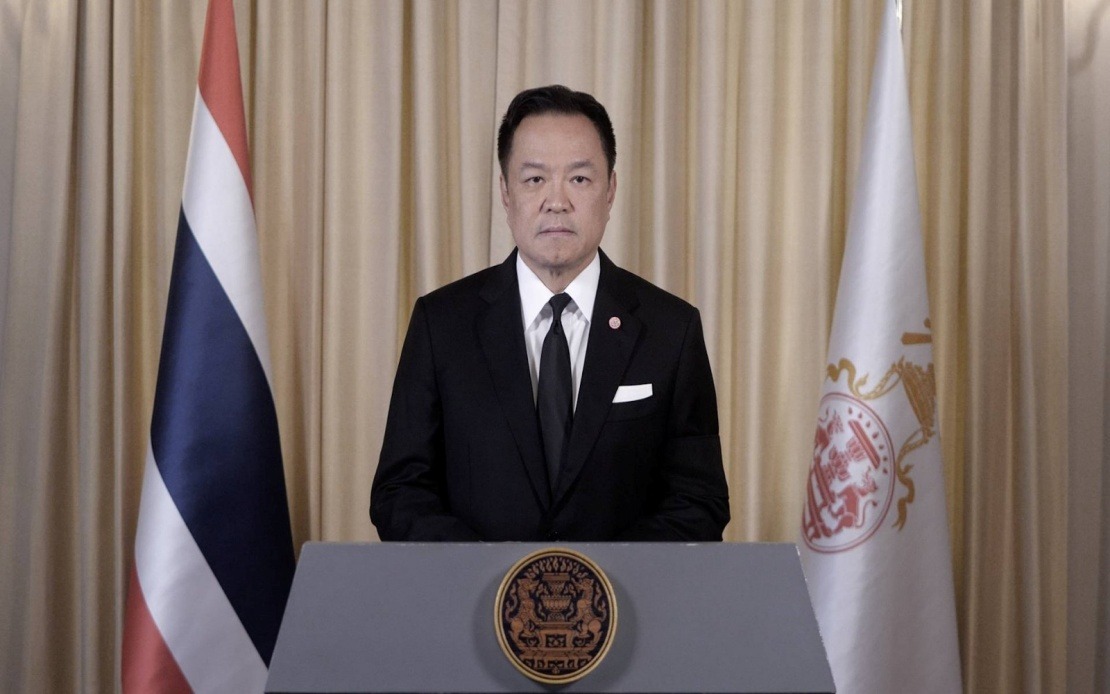
Thailand stands ready to navigate international economic headwinds and geopolitical volatility, according to Prime Minister Anutin Charnvirakul, who expressed cautious optimism regarding ongoing diplomatic efforts to resolve tensions between Washington and Tehran. Speaking from Government House on Monday, the Thai leader suggested that a settlement in West Asia would represent a significant positive development for the kingdom's economic prospects and global market conditions.
Anutin's comments come after US President Donald Trump announced that a comprehensive agreement with Iran had been reached, coupled with commitments to reopen the Strait of Hormuz and terminate a naval blockade that has constrained regional shipping for an extended period. The Thai Premier characterised such geopolitical breakthroughs as instrumental in alleviating cascading crises that have reverberated through international commerce and supply networks since heightened tensions emerged in the Middle East.
The Thai government's measured response reflects a sophisticated understanding of how regional conflicts translate into economic consequences for Southeast Asian economies heavily dependent on global trade and energy imports. Bangkok has demonstrated considerable adaptability in absorbing disruptions to supply chains that have plagued commerce since the pandemic's conclusion, according to Anutin, who emphasised that strategic foresight rather than reactive policymaking guides Thailand's economic stewardship.
Deputy Prime Minister and Finance Minister Ekniti Nitithanprapas elaborated on the economic implications, noting that cessation of Middle Eastern hostilities would yield tangible benefits for both global financial systems and Thailand's domestic economy through downward pressure on energy costs and reduced macroeconomic vulnerability. Such a development would counteract inflationary pressures that have weighed on household budgets and constrained operating margins for small enterprises across the kingdom, he suggested.
Ekniti indicated that the finance ministry intends to sustain vigilant monitoring of inflation trajectories and cost escalations affecting ordinary consumers and micro-enterprises, while simultaneously remaining alert to potential opportunities for strengthened economic expansion. The minister projected that normalisation of international conditions could support GDP growth trajectories more robust than existing forecasts contemplate, contingent upon durable stabilisation of geopolitical tensions.
For Thailand and other energy-importing nations in Southeast Asia, Middle Eastern stability carries outsized importance given the region's reliance on imported petroleum and liquefied natural gas. Energy price volatility stemming from regional instability has historically amplified inflationary pressures and constrained economic expansion throughout the Association of Southeast Asian Nations. Thailand's exposure to such fluctuations makes any reduction in regional tensions directly relevant to maintaining price stability and supporting consumer purchasing power.
Remarking on the government's commitment to longer-term energy transformation initiatives, Ekniti confirmed that Thailand would proceed with its 200-billion-baht energy transition programme irrespective of potential near-term declines in crude oil valuations. This determination underscores recognition that transitioning toward renewable and cleaner energy sources represents a strategic imperative transcending commodity market cycles, particularly given the kingdom's structural vulnerability to hydrocarbon import volatility.
The Thai government's energy transition agenda reflects broader regional recognition that renewable infrastructure investment provides both economic diversification opportunities and long-term insulation against petroleum price shocks. Even as temporary respite from geopolitical tensions might ease immediate energy costs, policymakers acknowledge that sustainable development pathways require committed capital deployment in solar, wind, and hydroelectric capacity regardless of prevailing oil market conditions.
Thailand's perspective on the potential US-Iran ceasefire aligns with wider Southeast Asian assessments that regional peace mechanisms and de-escalation in the Middle East benefit developing economies most acutely. Supply chain resilience improvements, reduced shipping insurance premiums, and stabilised energy costs collectively support manufacturing competitiveness and consumer demand trajectories across Southeast Asia, making any Middle Eastern breakthrough materially significant for the region's economic outlook.
The timing of Thai leadership's optimistic statements carries particular significance given persistent global economic uncertainty and commodity market volatility that has challenged emerging markets. By publicly welcoming diplomatic progress and reaffirming governmental preparedness for external shocks, Anutin and Ekniti appear intent on projecting confidence in Thailand's economic management while acknowledging genuine interdependencies with global geopolitical developments beyond Bangkok's direct control.