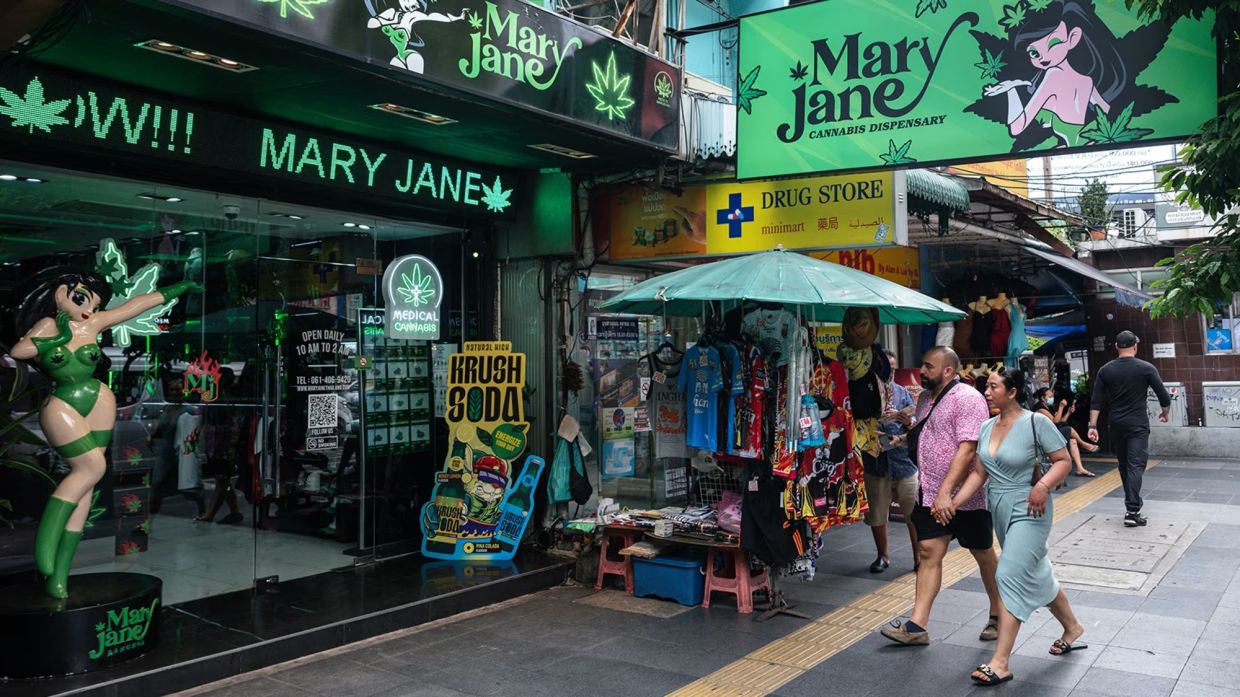
Thailand's approach to cannabis regulation is under intense scrutiny following a significant parliamentary committee hearing that exposed fundamental disagreements over how to manage the drug's legal status. The House Public Health Committee met on June 18 to weigh whether cannabis should be reclassified as a controlled narcotic—a dramatic reversal of the country's liberalisation stance adopted three years ago. The debate reflects mounting anxieties about unregulated cultivation, illicit sales networks and potential public health consequences, even as industry stakeholders warn that tighter controls could devastate legal operators attempting to build legitimate businesses.
Thailand's cannabis landscape has transformed dramatically since June 2022, when the country removed the plant from its narcotics list, becoming one of Asia's earliest adopters of cannabis liberalisation. The Department of Thai Traditional and Alternative Medicine has since regulated cannabis as a controlled medicinal herb under legislation dating to 1999. However, the rapid proliferation of cannabis-related commerce has outpaced regulatory capacity. Officials acknowledge that while the Public Health Ministry issued three fresh regulations in June 2025 governing research, sales, processing and international exports aligned with global standards, serious enforcement gaps have emerged on the ground.
Dr Tewan Thaneerat, the Department of Thai Traditional and Alternative Medicine's deputy director-general, presented the government's current regulatory framework to the committee. He outlined ongoing efforts to establish comprehensive cannabis legislation, noting that a draft cannabis and hemp bill had been prepared by his department alongside the FDA, the Department of Health Service Support and the Office of the Permanent Secretary for Public Health. The Public Health Ministry's proposed legislation was previously submitted to Cabinet but stalled when the previous parliament dissolved. Officials now anticipate completing public consultation by late July, after which the revised draft will be resubmitted for Cabinet consideration—a timeline that reflects the incremental pace of significant regulatory change in Thailand.
Proponents of reclassifying cannabis as a narcotic argue that interim controls are essential to protect public health while comprehensive legislation remains in development. Ekkapop Sittiwantana, a deputy committee chairman from the People's Party, contended that unregistered cultivation and informal direct sales have become rampant, creating vulnerabilities that illegal operators are exploiting. He emphasised that mandatory plant registration would help authorities identify legitimate growers and eliminate grey-market operations. Assoc Prof Dr Smith Srisont, representing a coalition of medical professionals, academics and anti-drug advocacy groups, reinforced this position by pointing out that although cannabis extracts exceeding 0.2 per cent THC remain classified as narcotics, the practical consequence of flower legalisation has been widespread availability with inadequate oversight.
The current system contains troubling structural weaknesses that complicate enforcement. While cannabis flowers are designated as controlled herbs, other plant materials—leaves, stems, roots—occupy a regulatory grey zone where cultivation may not trigger criminal liability. This classification inconsistency enables operators to exploit jurisdictional ambiguities. Furthermore, the FDA's oversight mechanisms, though theoretically comprehensive, struggle to monitor informal sales channels entirely beyond the licensed distribution network. The agency maintains licensing authority over production facilities, processing plants, imports and certified retail outlets, and officials reported that most products passing inspection met labelling standards and raw material tests. Nevertheless, the committee acknowledged that enforcement against unregistered vendors remains a persistent challenge.
Cannabis industry representatives and civil society groups advocating for liberalisation presented a sharply contrasting perspective. The Thai Cannabis Future Network articulated concerns that legal operators face existential pressure from black-market competition and unpredictable regulatory environments. Network members alleged that certain officials have demanded financial benefits or applied coercive leverage linked to licensing decisions—allegations that suggest corruption or administrative abuse. They further criticised prescription requirements that farmers find economically prohibitive and noted instances of prescribed medications being diverted to non-medical channels. These grievances underscore the practical difficulties facing entrepreneurs attempting to operate within a framework that many regard as deliberately obstructive.
The cannabis industry coalition emphasised that the plant possesses broader economic and cultural significance beyond pharmaceutical applications. They argued that regulatory design should accommodate traditional uses and enable small-scale farmers to participate in the emerging market, rather than concentrating wealth among large corporate investors. This position reflects the tension between public health advocates seeking restrictive frameworks and entrepreneurs viewing cannabis liberalisation as an economic opportunity for rural communities historically dependent on agriculture. The network advocated for inclusive legislative design incorporating stakeholder participation, warning that unilateral government action risks entrenching unjust market structures.
Committee chairman Sakoltee Phattiyakul concluded the hearing by directing officials to compile comprehensive inventories of licensed cannabis retailers in Bangkok and FDA-certified products for detailed review. He emphasised alarm at cannabis's apparent accessibility and signalled that any future legislation must include spatial restrictions preventing cannabis facilities from operating near schools. The committee requested a broader epidemiological assessment of cannabis-related harms and affected populations, suggesting that evidence-based policymaking has become a priority. Significantly, Sakoltee indicated willingness to consider alternative legislative proposals from diverse government agencies, signalling openness to competing approaches and rejecting any predetermined conclusion.
The practical stakes for Southeast Asia are considerable. Thailand's regulatory choices may influence cannabis policy trajectories across the region, where most countries maintain strict prohibition. A renewed emphasis on control could signal that liberalisation experiments encounter unsustainable social costs, potentially strengthening prohibition advocates throughout the region. Conversely, successful development of balanced regulations could encourage other Southeast Asian nations to reconsider their approaches. Malaysia, which maintains harsh cannabis penalties, would likely scrutinise Thailand's outcomes regarding youth access and public health consequences before entertaining policy reconsideration.
The fundamental challenge facing Thai lawmakers involves reconciling three competing imperatives: protecting public health, particularly among young people; enabling legitimate economic activity and protecting farmers' livelihoods; and preventing illicit market expansion. None of these objectives automatically aligns with the others. Stricter controls may protect health but could eliminate legal industry opportunities. Minimal regulation might support legitimate businesses but risks increasing youth access. Robust enforcement requires resources and institutional capacity that the current system demonstrably lacks. The committee's trajectory suggests that Thailand will likely pursue middle-ground solutions combining temporary reclassification with parallel development of sophisticated permanent legislation—an approach attempting to buy time for comprehensive lawmaking while reducing immediate regulatory chaos.
The coming weeks will determine whether Thailand embraces reinvigorated controls or charts a course toward refined liberalisation. The Public Health Ministry's determination to advance new legislation suggests that complete reversal remains unlikely, yet the committee's evident concerns indicate that unrestricted access will not continue indefinitely. How Thai officials balance these competing pressures while navigating bureaucratic and political complexity will substantially shape regional drug policy for years ahead. The outcome carries implications extending far beyond Thailand's borders, potentially influencing how Southeast Asia responds to emerging challenges at the intersection of public health, economic development and criminal enforcement.

