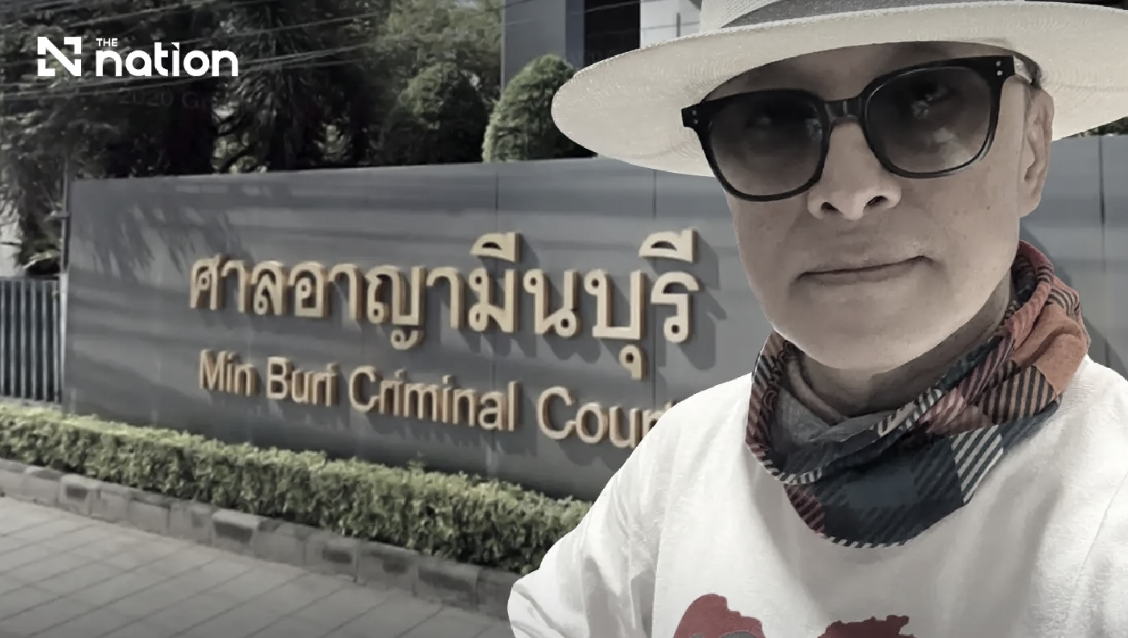
A Bangkok criminal court has sentenced Manasawin Nantasen, the Thai singer known as Tik Shiro, to two years in prison for causing the deaths of two people while driving under the influence of alcohol. The 64-year-old performer, who gained prominence in the late 1980s and throughout the 1990s as Thailand's answer to Michael Jackson—complete with signature fedora hats, leather jackets, and polished dance choreography—has become the face of a rare accountability moment in a nation where wealthy and prominent individuals frequently escape serious legal consequences. The sentencing, delivered on Wednesday by the Bangkok court, represents a significant development in a high-profile case that captured national attention and sparked conversations about justice and equality within Thai society.
The incident that led to Manasawin's conviction occurred in October 2024, when the entertainer was operating his vehicle across a Bangkok bridge while intoxicated. His vehicle collided with a stationary motorcycle, triggering a tragic sequence of events that would ultimately claim two lives. The collision killed a 28-year-old woman who was riding the motorcycle at the moment of impact. Her younger brother, aged 21, was struck by the force of the collision and thrown from the bridge, sustaining injuries so severe that he required immediate hospitalization. Despite receiving medical treatment for his critical condition, the young man succumbed to his injuries while in hospital care, bringing the death toll to two.
The court's decision to impose a two-year prison sentence acknowledged several mitigating factors in Manasawin's favour, though these did not spare him from immediate incarceration. According to court records, the singer had cooperated fully with investigators, surrendering voluntarily and providing testimony that aided the prosecution's case. Furthermore, the court noted that Manasawin had demonstrated genuine remorse following the tragedy. He attended the funeral services for both victims and provided financial compensation to their grieving families, actions the judicial system considered relevant to sentencing. Nevertheless, the court issued an additional penalty beyond imprisonment: the revocation of Manasawin's driving licence, ensuring he cannot legally operate a motor vehicle in the future.
The case gained particular resonance across Thailand following the release of a video showing Manasawin kneeling at the accident scene, visibly overcome with grief. The footage spread rapidly through Thai social media and news outlets, drawing unprecedented public attention to a case involving a member of the entertainment establishment. For many Thais, the image represented either a genuine moment of contrition or, skeptically, a calculated attempt at damage control—interpretations that divided public opinion. The widespread circulation of this footage transformed what might have remained a routine accident case into a national conversation about accountability, particularly regarding how the wealthy and famous are treated by Thailand's legal system.
The Manasawin case emerges within a broader context of concern among Thai citizens about unequal justice. Thailand's reputation for allowing privileged individuals to escape accountability has been reinforced by numerous high-profile incidents over the decades. The most infamous example involves Vorayuth Yoovidhya, heir to the Red Bull fortune, who in 2012 was involved in a collision with a police officer in an affluent Bangkok neighbourhood. The incident proved fatal for the officer, but despite a formal investigation, Yoovidhya was never charged with any crime, a decision that stunned the Thai public and raised serious questions about the influence of wealth on the justice system.
Another notable case illustrating systemic inequality involved the son of Chalerm Yubamrung, a former member of parliament from the Pheu Thai party. The young man was accused of shooting and killing another individual in a crowded Bangkok nightclub in 2001 following an altercation. Despite the serious nature of the charges and the circumstances of the incident, he was ultimately acquitted on grounds of insufficient evidence, a verdict many Thais viewed as reflecting his family's political connections rather than the actual facts of the case.
The contrast between these instances and Manasawin's sentencing suggests a potential shift, however modest, toward more consistent legal treatment. Rock musician Sek Loso was released from prison on the same day as Manasawin's sentencing, having completed slightly more than one year of his sentence for drug possession and illegal firearm charges. While Sek Loso's earlier release demonstrates that the justice system continues to apply varying standards, the fact that both cases were being processed and concluded relatively swiftly—without the decades-long delays or non-prosecution that have characterized other celebrity cases—may indicate a degree of institutional pressure to avoid the appearance of impunity.
For Malaysian observers and Southeast Asian audiences more broadly, the Manasawin case carries particular relevance. Malaysia and Thailand share similar concerns regarding judicial fairness, the influence of wealth and status on legal outcomes, and public confidence in law enforcement. The case provides a cautionary example of the dangers of drink-driving, a persistent problem across the region, while simultaneously offering a rare instance of legal accountability for a prominent figure. The sentence, though relatively moderate for causing two deaths, may represent a pragmatic compromise between ensuring that justice is seen to be served and avoiding the appearance of persecution that could provoke sympathy for the defendant.
The two-year prison term will likely be served in a Thai correctional facility, and Manasawin's entertainment career has effectively ended, at least for the duration of his incarceration and potentially beyond. His reputation, once synonymous with 1990s glamour and international-calibre performance, is now inseparably linked with a tragic incident that claimed two lives and devastated two families. The case serves as a reminder that neither fame, age, nor past achievements provide immunity from the consequences of reckless behaviour that endangers others. For Thai society and the broader Southeast Asian region, the conviction represents a modest but meaningful affirmation that even prominent entertainers are subject to the rule of law, though the underlying questions about systemic inequality in the justice system remain far from resolved.

