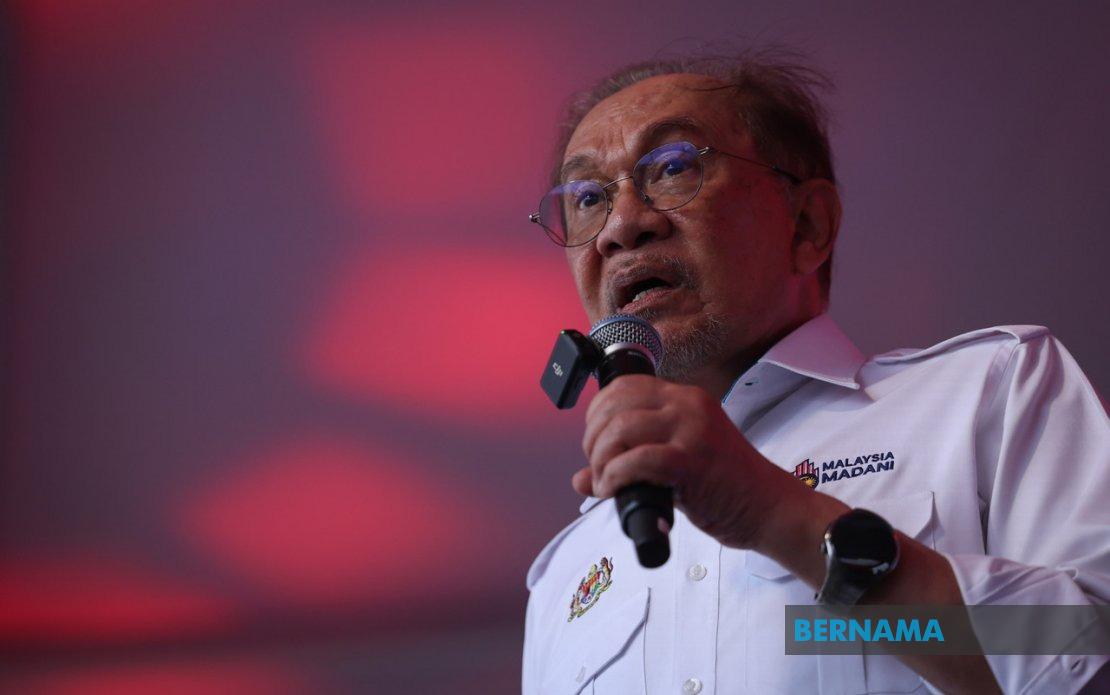
Prime Minister Datuk Seri Anwar Ibrahim has vowed that anyone found culpable for financial losses at Lembaga Tabung Haji will face prosecution, following the public release of findings from a Royal Commission of Inquiry into the troubled pilgrimage fund. Speaking at a political gathering in Negeri Sembilan, Anwar underscored the government's determination to hold wrongdoers accountable and pursue accountability across all levels of the organisation, signalling a zero-tolerance approach to corporate misconduct within state institutions.
The RCI report, released earlier this week, has laid bare systematic issues within Tabung Haji, with investigators identifying instances of misappropriation, fraudulent conduct, and the misuse of official authority. Anwar stated that any evidence of wrongdoing uncovered by the inquiry will trigger comprehensive investigations by multiple enforcement bodies, including the Royal Malaysia Police, the Malaysian Anti-Corruption Commission, and the central bank, ensuring that no credible lead goes unexamined.
The Prime Minister's public commitment reflects growing pressure on the administration to demonstrate tangible consequences for those implicated in the scandal. Tabung Haji, which serves as a savings and loan institution for Malaysian Muslims planning the Hajj pilgrimage, has faced mounting scrutiny over its financial management and governance failings in recent years. The scale of losses and the apparent laxity in oversight have raised serious questions about institutional controls and fiduciary responsibility within a body entrusted with hundreds of thousands of ordinary Malaysians' life savings.
Anwar's remarks underline the government's assertion that the rule of law will be applied uniformly, regardless of the seniority or prominence of those involved. He explicitly stated that individuals charged with offences will be tried in court, with imprisonment as a potential consequence for those found guilty. This framing contrasts sharply with earlier decades, when corporate scandals involving state bodies sometimes resulted in minimal accountability, and seeks to position the current administration as committed to institutional reform and transparent justice.
The involvement of Bank Negara Malaysia in the investigation adds a regulatory dimension to the inquiry, as the central bank possesses specialised expertise in financial institutions and securities law. The tripartite approach involving the police, the anti-corruption agency, and the banking regulator suggests a comprehensive effort to examine both criminal conduct and violations of financial sector regulations. This multi-agency coordination reflects lessons learned from previous high-profile corporate failures, where fragmented investigations sometimes resulted in incomplete pictures of systemic malfeasance.
Transport Minister Anthony Loke Siew Fook, who accompanied Anwar at the event and is himself contesting the Chennah state seat in the forthcoming Negeri Sembilan state election, has similarly signalled support for robust accountability measures. The convergence of messaging from senior government figures suggests that political support for prosecutions is sufficiently consolidated to withstand potential resistance from entrenched interests within the civil service or corporate world.
The Tabung Haji scandal carries profound implications for Muslim Malaysians, many of whom have entrusted the institution with savings accumulated over decades for a religiously significant journey. The prospect of institutional reform and prosecutions may provide some reassurance to account holders, though many remain concerned about the possibility of recovering losses or accessing their remaining funds. Public confidence in state-run financial bodies has been shaken, with implications for future policy design around pension funds, savings schemes, and other collective financial instruments overseen by government entities.
From a governance perspective, the RCI's investigation and the ensuing prosecutions may catalyse broader reforms in how Malaysian public institutions are audited, regulated, and supervised. The Tabung Haji case has exposed vulnerabilities in internal controls, board oversight, and the speed with which regulators respond to irregularities. A successful prosecutorial process could establish precedents that embolden enforcement agencies to pursue similar cases elsewhere in the public sector, potentially signalling a lasting shift in institutional culture toward accountability.
The timing of Anwar's comments, made while campaigning in support of a Pakatan Harapan candidate in a state election, reflects the political salience of the issue. Voters in Negeri Sembilan, where Tabung Haji has significant membership, are likely to view promises of accountability as relevant to their assessment of government credibility. Anwar's explicit framing of justice as a fundamental feature of the rule of law attempts to elevate the prosecutions beyond mere retribution, positioning them instead as intrinsic to constitutional governance and public trust.
Legal observers will be monitoring how swiftly investigations progress and whether the stated commitment to prosecution translates into actual charges and convictions. Previous Malaysian corporate scandals have sometimes seen delays, political interventions, or negotiated settlements that fell short of full public accountability. The degree to which the Tabung Haji prosecutions advance without such impediments will itself constitute a bellwether for the government's sincerity in pursuing institutional reform and may influence public and investor confidence in Malaysian financial governance more broadly.

