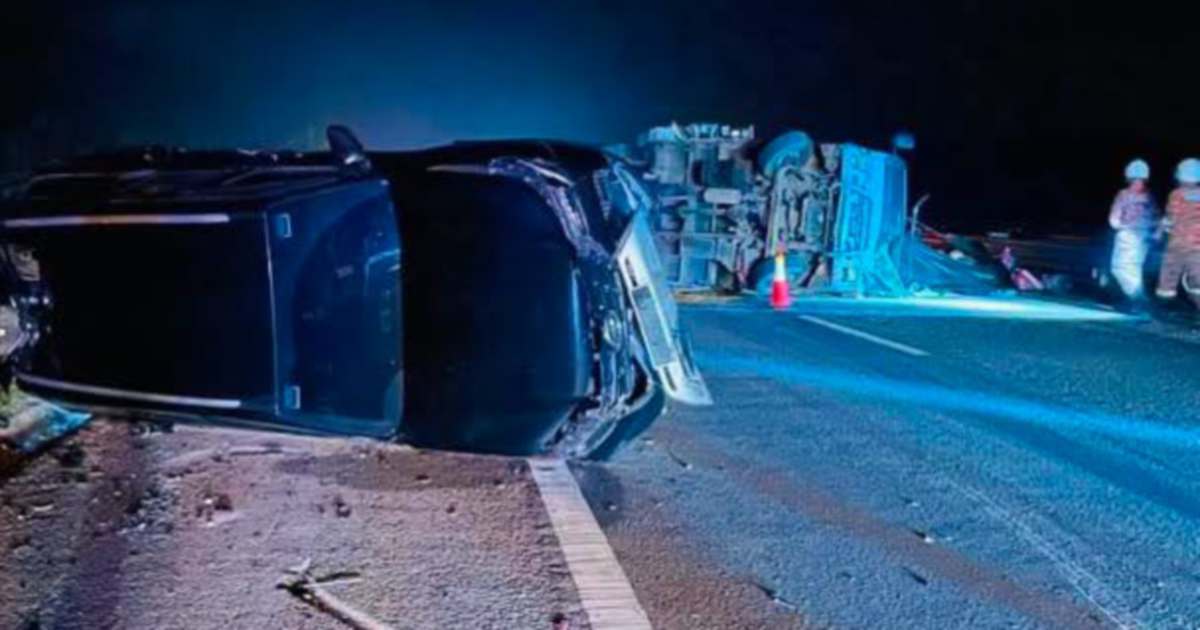
A collision involving three vehicles on the East Coast Expressway near Maran left seven people injured early Wednesday, including three members of the media contingent accompanying Deputy Prime Minister Datuk Seri Dr Ahmad Zahid Hamidi. The incident occurred at Kilometre 144 of the expressway, a major north-south transportation artery serving the east coast corridor that connects Johor to Terengganu.
The media officers, part of the official team travelling with the Deputy Prime Minister, were fortunate to sustain only minor injuries in the multi-vehicle pile-up. While emergency services responded promptly to the scene, authorities indicated that the situation could have resulted in far more serious consequences given the nature of high-speed expressway collisions. The identity of the other four injured individuals and full details of their conditions were not immediately available following the incident.
Accidents along the East Coast Expressway have become increasingly concerning for authorities and commuters alike. The corridor, which serves as a critical economic and transportation link for the eastern states and beyond, witnesses regular traffic movements involving both commercial and private vehicles. The presence of official convoys adds complexity to road safety dynamics, as coordinated movements of multiple vehicles at varying speeds can create unpredictable conditions during peak and off-peak hours.
The three-vehicle collision underscores ongoing road safety challenges in Malaysia despite improvements in highway infrastructure and safety measures. Expressways, while designed to facilitate faster travel, demand heightened vigilance from all road users. Early morning conditions, fatigue, and visibility concerns often contribute to accident causation during these periods. Initial investigations would typically examine factors including vehicle maintenance, driver condition, weather circumstances, and compliance with speed regulations.
Depending on the direction of travel and positioning of vehicles, such incidents can trigger secondary collisions as other motorists respond to sudden obstacles. The involvement of an official convoy adds another layer of complexity, as accompanying vehicles may maintain closer spacing during coordinated movement, potentially reducing reaction time in emergency situations. Authorities managing traffic flow and accident response must also contend with additional variables when high-profile travellers are involved.
The incident reflects broader concerns about road safety in Malaysia's transportation network. While expressway fatality rates remain a focus for the Road Safety Board and enforcement agencies, non-fatal collisions often receive less attention despite their frequency and cumulative impact on public health infrastructure. The fact that all seven injured escaped serious harm suggests either the collision occurred at moderate speeds or modern vehicle safety features successfully protected occupants.
Response protocols for accidents involving government officials typically involve coordination between police traffic divisions, emergency medical services, and security personnel. The expressway corridor, particularly at Kilometre 144 in Pahang, falls within jurisdiction boundaries that require coordinated response from multiple agencies. Early morning timing may have initially hampered response speed, though dedicated emergency lanes and rapid communication systems on expressways generally enable faster assistance than on conventional roads.
Local authorities in Maran would have activated standard incident management procedures, potentially including temporary lane closures and diversionary signage for oncoming traffic. The three-vehicle nature of the collision suggests cascading impact, where an initial contact triggered subsequent contacts. Understanding the precise sequence of events becomes crucial for accident investigators working to identify causation factors and recommendations for prevention of similar incidents.
The Deputy Prime Minister's office would likely issue statements once investigations advance and all affected individuals receive medical clearance. As the highest-ranking official involved in the incident, even peripherally through the presence of his media team, the incident may prompt discussions about official vehicle protocols, road safety training for convoy operations, and broader expressway management strategies. Media coverage often intensifies scrutiny on such incidents when government officials are involved, bringing public attention to transportation safety more broadly.
For Malaysian road safety advocates, incidents involving official parties serve as opportunities to reinforce the universality of road risk. Regardless of status or vehicle type, expressway travel demands constant attention and defensive driving practices. The near-miss outcome in this instance, where serious injuries were avoided, stands in contrast to other expressway collisions that result in fatalities or permanent disabilities. This variation highlights how marginal differences in collision dynamics can produce vastly different consequences for all parties involved.

