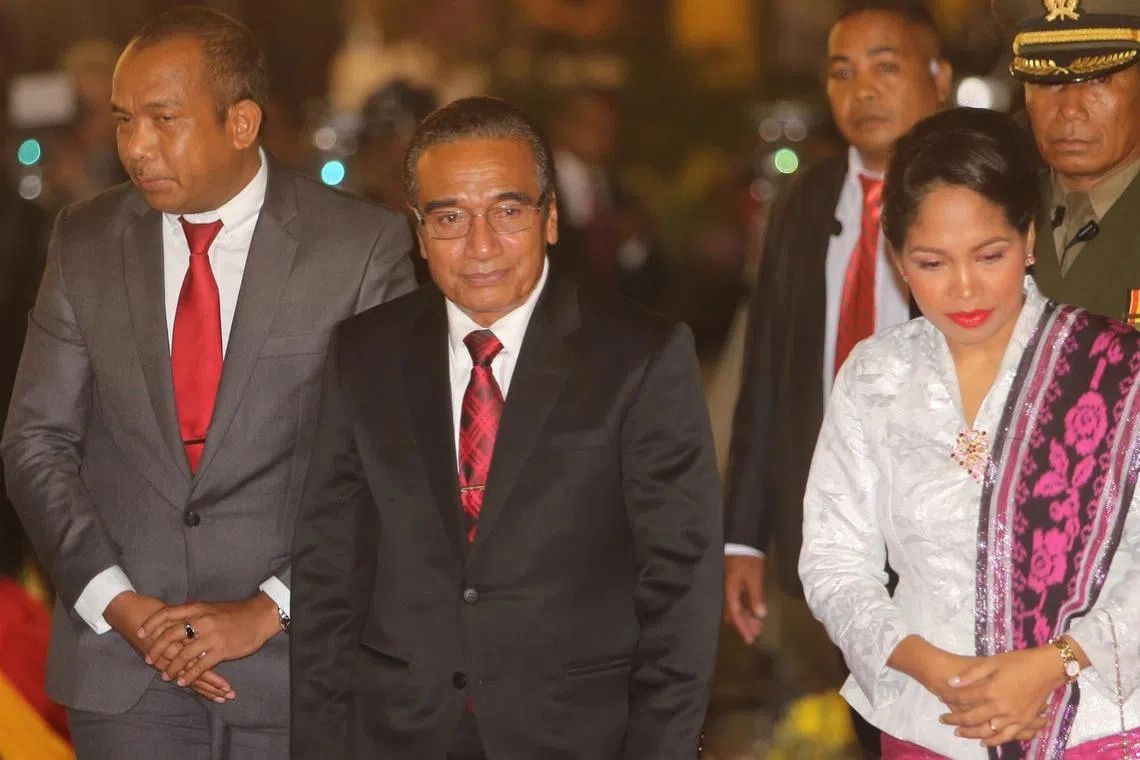
Timor-Leste entered a period of national mourning on June 22 after former president Francisco "Lu-Olo" Guterres succumbed at a Malaysian hospital, marking the loss of one of Southeast Asia's most iconic liberation figures. The 71-year-old, who served as the nation's sixth president between 2017 and 2022, had carved out a remarkable political legacy spanning decades of armed struggle and diplomatic engagement that fundamentally shaped the small island nation's trajectory toward sovereignty.
Guterres's death represents a significant moment for the newly independent nation, which continues to define itself in the shadow of its remarkable journey to freedom. His passing comes as Timor-Leste consolidates its democratic institutions and navigates complex regional relationships, particularly with its larger Southeast Asian neighbours. The mourning period reflects not merely the loss of a political figure, but the symbolic passing of a generation of leaders who experienced the brutal realities of occupation and fought directly for their nation's existence.
Government authorities have implemented ceremonial measures befitting a national hero, ordering flags to be lowered to half-mast across all public institutions, diplomatic missions abroad, and consular offices. This unprecedented display of respect underscores Guterres's towering stature within Timorese society, where veterans of the independence struggle occupy a privileged place in the national consciousness. The governmental response signals recognition of his contributions that extended far beyond his presidential tenure into the foundational years of nation-building following the 2002 independence achievement.
Guterres's younger brother, Domingos Guterres, informed the media that the former president's remains would return to the capital Dili on Tuesday, though specific details regarding the state funeral and commemorative ceremonies remained under discussion among family members and government officials. The timing and location of funeral arrangements carry symbolic weight within Timorese culture, where such ceremonies often become occasions for national reflection and collective remembrance of shared historical struggles.
Incumbent President Jose Ramos-Horta, who defeated Guterres in a competitive 2022 presidential runoff, issued a gracious statement acknowledging his former political rival's unwavering dedication to national interests. Ramos-Horta's characterization of Guterres as a "great patriot" and recognition of his passing as "a great loss for the nation" demonstrated the capacity for political leadership in Timor-Leste to transcend electoral competition and honour genuine contributions to national development. Such gestures carry particular importance in post-conflict societies, where institutional stability depends partly on demonstrated respect across political divides.
The Fretilin party, which Guterres formerly chaired, joined the broader expressions of condolence circulating throughout Timorese society. The extended family's request for privacy amid public mourning reflects the particular challenges facing prominent political figures whose personal grief becomes intertwined with collective national sentiment. Guterres's family emphasized their appreciation for public support while seeking space to process their loss away from continuous public scrutiny.
Guterres's life story encapsulates the extraordinary sacrifices demanded by Timor-Leste's independence movement. From modest circumstances, he emerged as a leadership figure within the armed resistance during Indonesia's 24-year occupation, a period marked by systematic violence, displacement, and international isolation. His evolution from guerrilla commander to elected president represented a broader transformation within Timorese society from armed struggle to democratic governance, though one marked by tensions between revolutionary legitimacy and institutional democracy.
His 2017 presidential victory, achieved through a decisive mandate capturing more than 57 percent of the vote, positioned him to lead a nation still grappling with post-conflict reconstruction, institutional development, and economic challenges. During his five-year presidency, Guterres navigated regional diplomacy, sought to consolidate national institutions, and attempted to build consensus across competing political factions. His subsequent defeat by Nobel laureate Ramos-Horta in 2022 demonstrated Timorese voters' willingness to periodically rotate leadership, even among nationally revered figures.
Malaysian Prime Minister Datuk Seri Anwar Ibrahim extended his nation's official condolences, noting that Guterres died in a Malaysian hospital and would be remembered with respect throughout Malaysia. This diplomatic gesture reflects Malaysia's broader interest in Southeast Asian stability and its relationship with Timor-Leste as a fellow ASEAN member-state and regional neighbour. Malaysia's historical engagement with Timor-Leste's independence struggle, including provision of humanitarian assistance during the occupation, provides context for the expressed solidarity during this moment of national grief.
Guterres's passing removes from active public life a figure whose very existence symbolized Timorese resilience and determination. His death occurs amid broader regional dynamics where aging independence-era leaders gradually depart from the political stage, transferring custodianship of national narratives to younger generations. For Malaysia and other ASEAN neighbours, Guterres's legacy serves as reminder of the shared regional commitment to self-determination and sovereignty that bound Southeast Asian nations together during crucial post-colonial transitions. His absence will reshape Timorese political discourse as the nation continues crafting its identity and place within the region.

